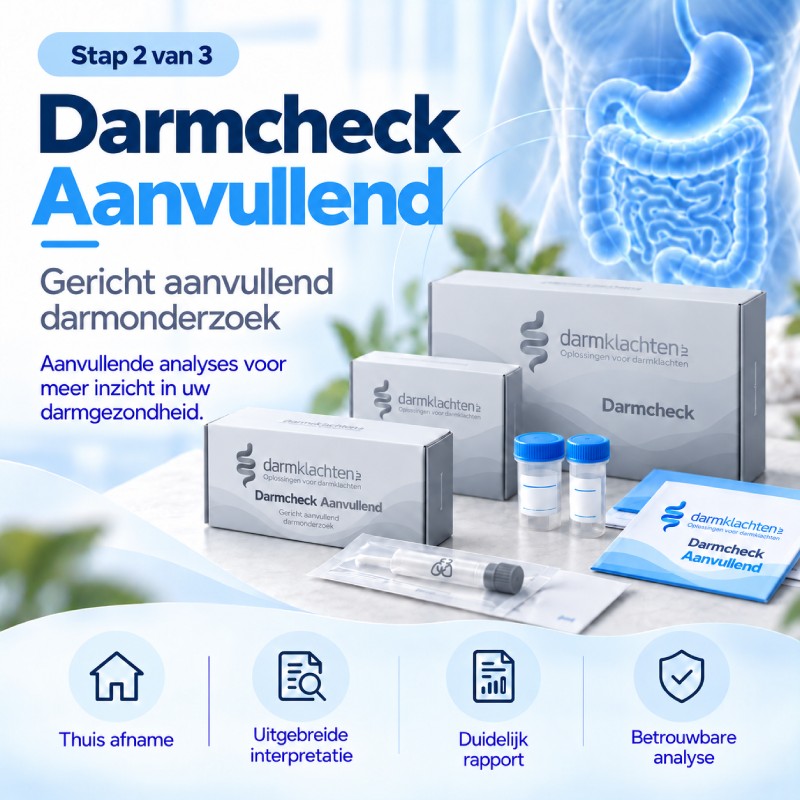

Chronic gastrointestinal complaints – Irritable Bowel Syndrome (IBS) package
Price range: € 350,00 through € 475,00
Several analyses are carried out simultaneously in the Chronic gastrointestinal complaints (IBS) package. This increases the chance of identifying the cause of the symptoms and shortening the duration of illness. This very comprehensive package is designed to rule out other causes of symptoms in people diagnosed with irritable bowel syndrome.
Price range: € 350,00 through € 475,00
Description
Extensive stool testing
Chronic gastrointestinal complaints Irritable Bowel Syndrome (IBS) package – extensive stool testing
Do you have persistent abdominal pain, bloating, flatulence or a changing bowel pattern? Even if you have been diagnosed with irritable bowel syndrome (IBS), you may want more insight. This package combines testing of digestion, inflammatory markers, gut bacteria, yeasts and parasites.
The results can provide additional clues and help determine which targeted follow-up tests may be useful. The package is not a substitute for appropriate medical assessment.
Quick links
show
hide
Go directly to the information you are looking for.
When is this package suitable?
For people with persistent symptoms who want several specific questions investigated at the same time.
- You have persistent or recurring abdominal pain or abdominal cramps.
- You often have bloating or a lot of flatulence.
- Your bowel pattern alternates between diarrhea, constipation or mushy stools.
- You have fatty, sticky stools or visible food remnants.
- You have been diagnosed with IBS and still have specific unanswered questions.
- Previous testing has not provided sufficient clarity and you want several aspects assessed at the same time.
Important: The package is primarily intended as an addition to previous, appropriate medical assessment. Not everyone with IBS needs extensive stool testing.
What do we test?
The package assesses several aspects of intestinal function and stool at the same time.
Digestion
pH, fat content, starch, plant fibers and stool characteristics.
Gut bacteria
Including E. coli, lactobacilli, bifidobacteria, Akkermansia muciniphila and Faecalibacterium prausnitzii.
Yeasts and fungi
Presence and quantity of culturable yeasts, including Candida species.
Inflammation and immune defense
Calprotectin, beta-defensin-2 and secretory IgA.
Intestinal barrier
A zonulin-related marker.
Gluten-related antibodies
Antibodies in stool against gliadin and tissue transglutaminase.
Intestinal parasites
Depending on the package option, testing for DNA from two or six single-celled organisms.
With certain options, Helicobacter pylori may be available as an additional test. The exact current contents of the package should be confirmed when ordering.
What can the results tell you?
Different types of results each answer a different follow-up question.
People who have had abdominal pain, flatulence and changing stools for a long time often need a new direction for investigation more than another general description of their symptoms. This IBS package therefore brings together several stool measurements with different purposes. Each group was selected with a possible follow-up question in mind.
- Digestive parameters: is more fat or undigested material left in the stool than expected? With sticky stools, this may be a reason to investigate digestion and, where appropriate, pancreatic function more specifically.
- Gut flora: how are selected groups of bacteria represented? An abnormal pattern, together with diet, stool consistency and other results, may help support a more focused discussion of the intestinal environment.
- Yeasts and fungi: are live, culturable yeasts found, and in what quantity? This finding can be considered in persistent symptoms, especially alongside abnormal digestive values.
- Calprotectin, beta-defensin-2 and secretory IgA: are there signs of inflammatory activity or responses of the local intestinal immune system? Calprotectin in particular can help determine whether conventional medical follow-up is needed.
- Zonulin-related marker: is there an additional finding to consider alongside the other results? This marker does not directly measure intestinal permeability.
- Gluten-related antibodies: are there stool findings that warrant further discussion of gluten and celiac disease? Standard blood testing is required to diagnose or rule out celiac disease.
- Intestinal parasites: is DNA from, for example, Dientamoeba fragilis or Giardia detectable? Depending on the organism and your symptoms, this may be a reason for targeted follow-up testing or a discussion with a doctor.
The combination provides context. Sticky stools with elevated fat content lead to a different follow-up question than diarrhea with elevated calprotectin. If Dientamoeba fragilis is detected alongside elevated beta-defensin-2, this may warrant careful assessment of how the findings relate to each other. None of these combinations proves the cause of your symptoms on its own.
Explanation of the values tested
What the different results may mean when considered alongside your symptoms and other findings.
In this package, each value is assessed separately, but the greatest benefit often comes from considering the results together. A single abnormality rarely tells the whole story. When symptoms and several laboratory findings point in the same direction, this can help determine more specifically where follow-up testing or discussion with a healthcare professional may be useful, without automatically establishing a diagnosis.
Digestive parameters
Fat, starch, plant fibers, pH and stool characteristics are assessed mainly in relation to your symptoms. Sticky stools or stools that are difficult to flush, for example, may be more meaningful when an elevated fat content is also measured.
This does not establish a diagnosis, but it may be a reason for follow-up testing of fat digestion, intestinal transit or, for example, pancreatic elastase.
Gut bacteria
The bacteria measured provide information about a selected part of the gut flora. A high or low value is not a diagnosis, and there is no universally ideal bacterial profile.
The relationship with pH, stool consistency, digestive values and markers of the intestinal mucosa may provide useful starting points for a more focused discussion of diet, intestinal transit or other factors.
Yeasts and fungi
A culture examines whether live yeasts that can be cultured under the conditions used are present and to what extent. Candida species may also be present without causing symptoms.
The combination with digestion, local immune defense and other findings may be a reason to investigate further. Detectable yeast does not prove that it is causing your symptoms.
Inflammatory markers and local immune defense
Within conventional diagnostics, calprotectin has clear clinical significance for inflammatory activity. Beta-defensin-2 and secretory IgA provide additional information about local immune defense and the intestinal mucosa.
If, for example, beta-defensin-2 is elevated and Dientamoeba fragilis DNA is detected, these are two findings that deserve consideration together. This does not prove a causal relationship.
Zonulin and the intestinal barrier
The zonulin-related measurement is an additional marker. The test does not diagnose a “leaky gut” and does not directly measure the permeability of the intestinal wall.
The specificity and clinical significance of commercial zonulin measurements are limited. The value should therefore not be interpreted in isolation from the other results.
Gluten-related antibodies
Antibodies against gliadin or tissue transglutaminase are measured in stool. These values are not suitable for diagnosing or ruling out celiac disease.
If celiac disease is suspected, conventional blood testing remains the appropriate next step, possibly followed by further medical diagnostics.
Intestinal parasites
Depending on the package option, the test looks for DNA from Dientamoeba fragilis and Blastocystis, possibly supplemented with Giardia, Cryptosporidium, Entamoeba histolytica and Cyclospora.
A positive PCR detects DNA but does not prove that the organism is causing symptoms. Its significance depends on the organism, your symptoms and other test results.
How does the test work?
From receiving the collection materials to reporting the requested tests.
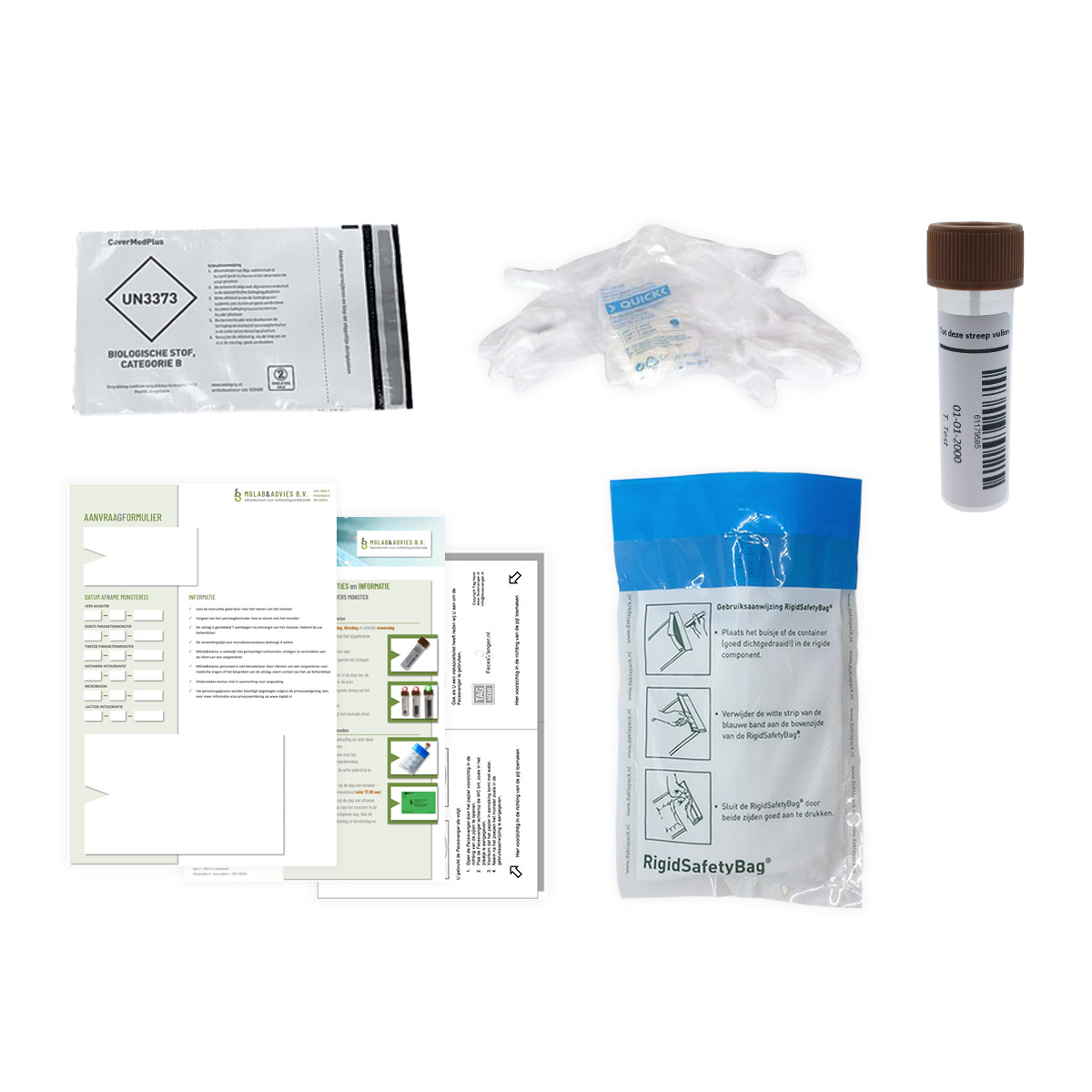
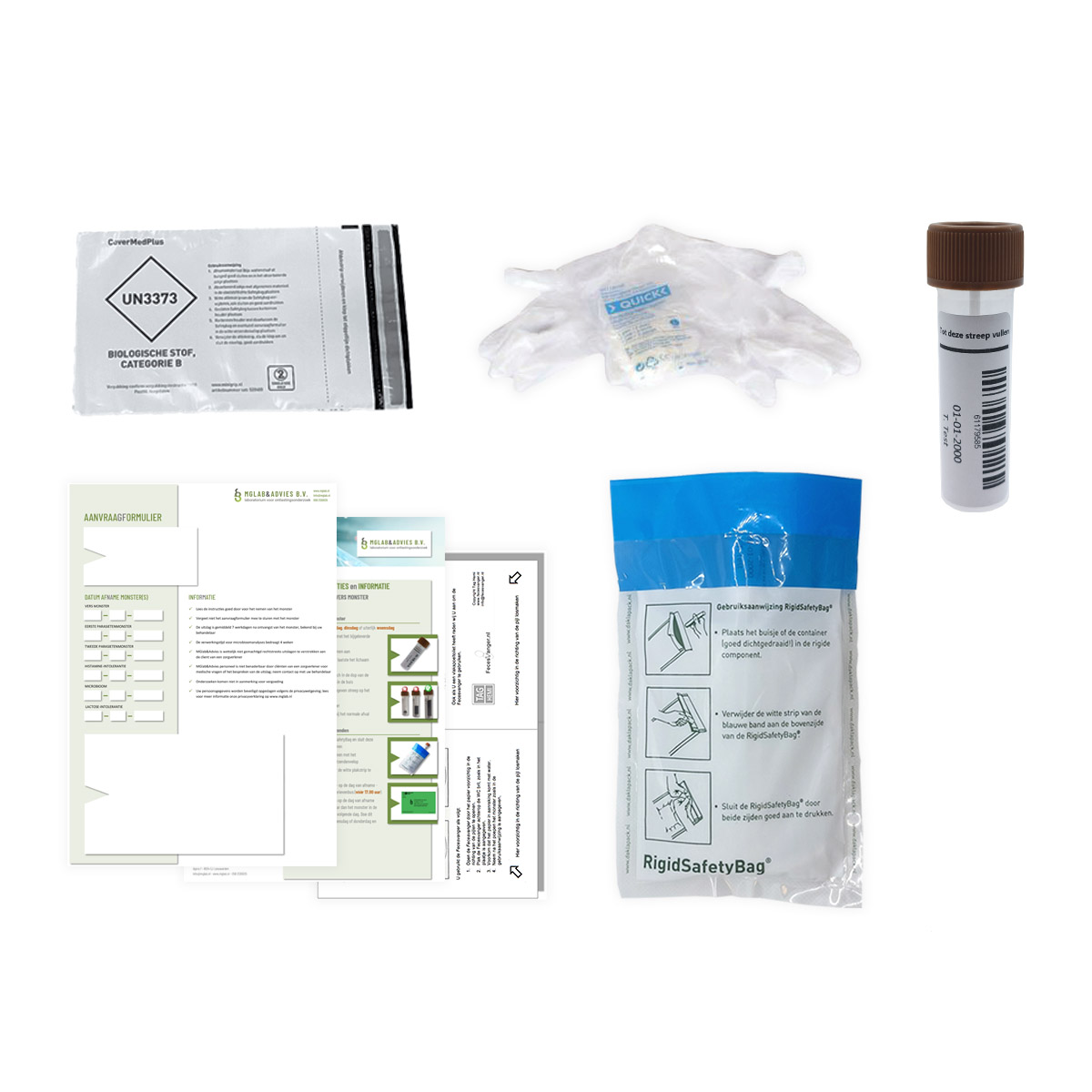
- You order the package and receive collection materials with instructions.
- You collect the required stool samples at home; some analyses require separate tubes or collection days.
- You package and send the samples according to the instructions.
- The laboratory performs the different tests.
- You receive the report for the requested tests.
Results and next steps
Which findings require extra attention depends on your symptoms, medical history and previous tests.
For each test, the report shows a value with the corresponding reference range or a positive or negative assessment. Which abnormalities deserve attention depends on your symptoms, medical history, medication and previous tests.
Discuss relevant findings with your doctor. Abnormal inflammatory values may require conventional intestinal investigations; digestive abnormalities may, for example, warrant targeted testing of the pancreas; and if a relevant parasite is found, treatment may be considered.
When medical assessment takes priority: if you have blood in the stool, unexplained weight loss, anemia, or severe or rapidly worsening symptoms, you should be assessed by your general practitioner.
Frequently asked questions
Practical questions about the value of the package and the interpretation of different results.
The package examines several areas at the same time: digestion, selected gut flora, inflammatory activity, local immune defense, yeasts and parasites. This can reveal specific findings that lead to a new, focused question, even when previous tests did not provide sufficient clarity.
Discuss with your healthcare professional especially the values that fit your symptoms and may complement one another. For example, elevated stool fat may be a reason for more targeted digestive testing, elevated calprotectin for medical assessment, and a detected relevant parasite for discussion of follow-up testing or treatment.
Consistency is important. Watery stools contain a lot of fluid, so some measured concentrations may be lower because of dilution. Not every measurement is affected in the same way: a positive parasite PCR remains a detectable DNA finding. Therefore, consider the symptom pattern, sample quality and the other results together.
Questions about this package?
Not sure whether extensive testing is needed or whether a targeted test is sufficient?
Not sure whether this extensive package suits your symptoms or whether targeted testing is sufficient? Contact Darmklachten.nl for help choosing.
Order the Chronic gastrointestinal complaints (IBS) package
Extensive stool testing of several aspects of intestinal function.
Would you like to have several aspects of your intestinal function tested at the same time?
You can order the Chronic gastrointestinal complaints (IBS) package at the top of this page. Check which measurements are included in the package option you select.
Additional information
Related products
- Sale
 +
Chronic diarrhea – comprehensive stool testing
Original price was: € 563,00.€ 450,00Current price is: € 450,00. meer informatie