

Leaky Gut Package
Original price was: € 572,00.€ 458,00Current price is: € 458,00.
Do you have long-term intestinal complaints, bloating, or changing bowel movements?
This comprehensive Leaky Gut Package stool test combines a zonulin-related marker with testing of digestion, gut flora, gluten, histamine, local immune defense, inflammation markers, and six intestinal parasites. This gives you a broader picture of different processes in your intestine and possible leads for follow-up testing.
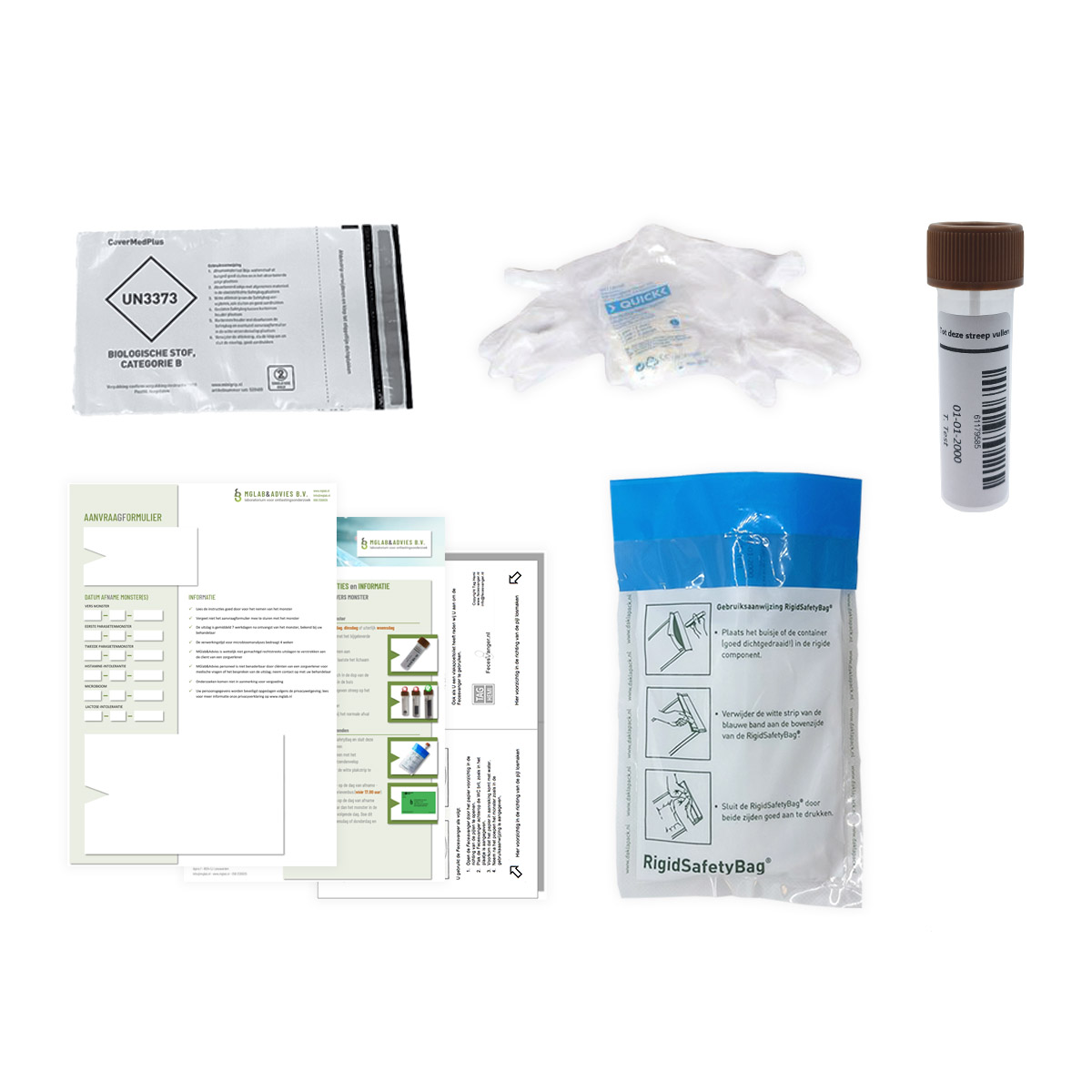
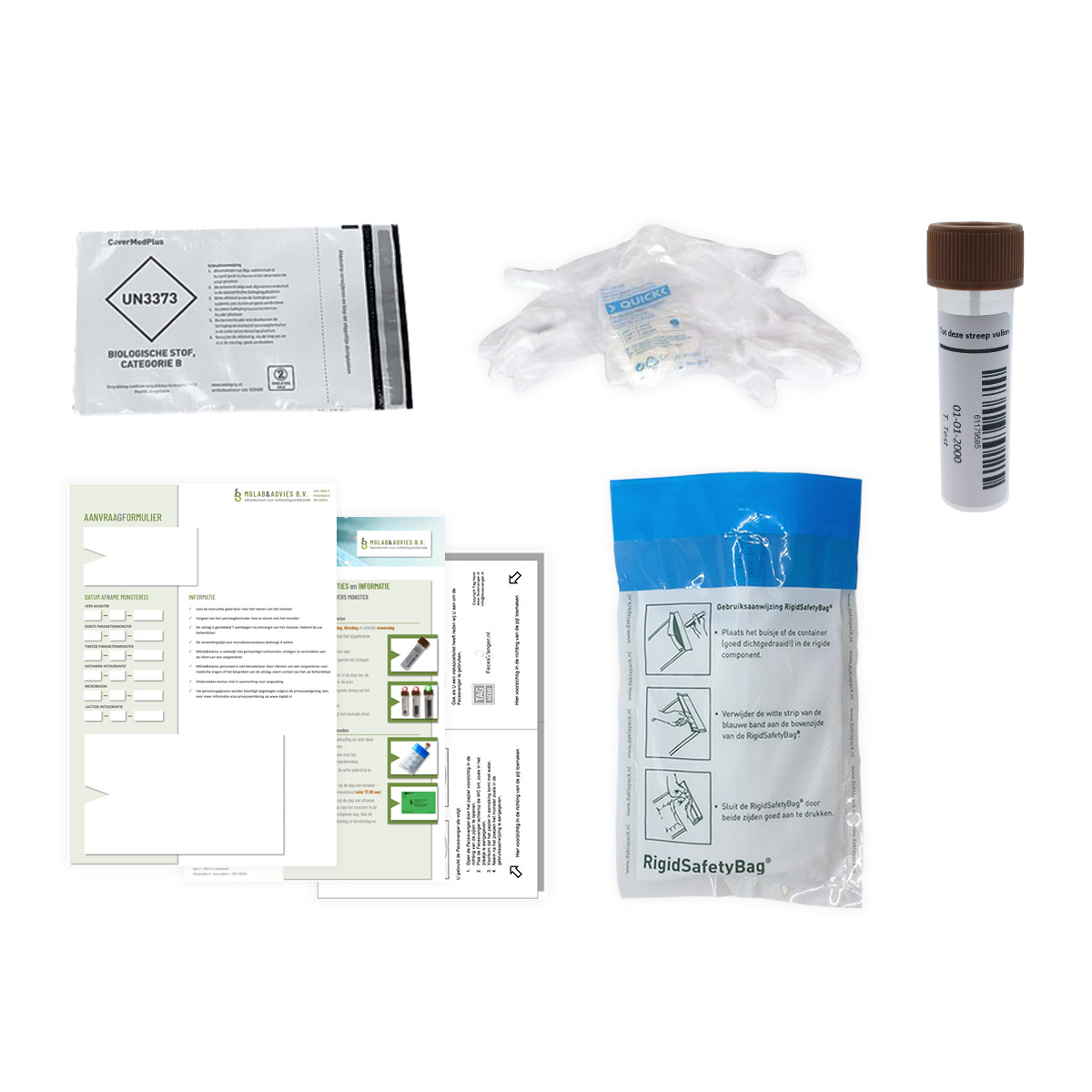
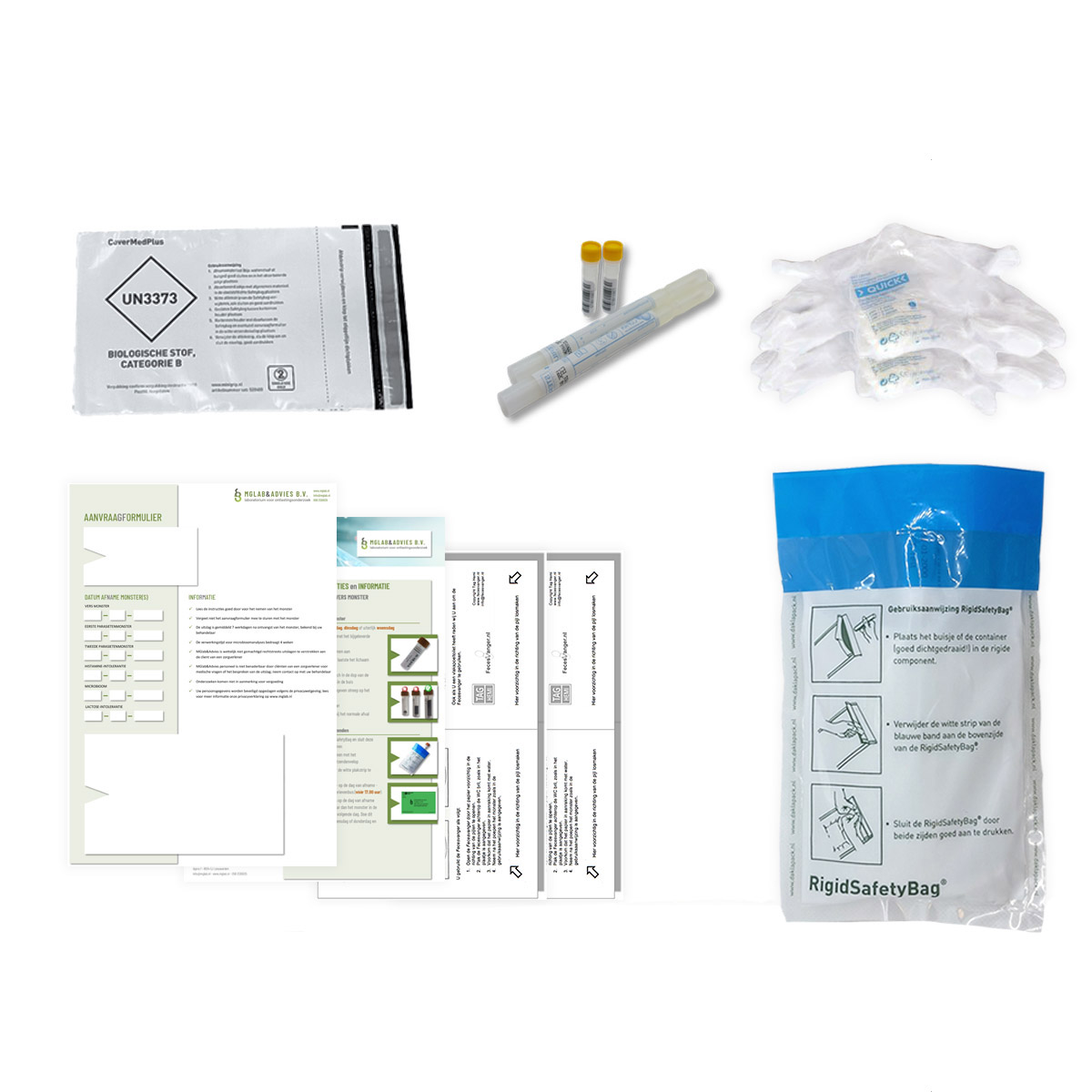
The Leaky Gut Package consists of:
Original price was: € 572,00.€ 458,00Current price is: € 458,00.
Description
Comprehensive stool testing
Leaky Gut Package – broad testing for intestinal complaints
Do you have long-term intestinal complaints and want to look beyond a single zonulin result? With the Leaky Gut Package you test several values that can provide information about the intestinal environment. The intestinal wall forms an important barrier between the contents of the intestine and the rest of the body.
This package combines a zonulin-related marker with testing of bile and pancreas, selected gut flora, gluten values, histamine, immune and inflammation markers, and six intestinal parasites. No single result on its own diagnoses a ‘leaky gut’ or directly measures the permeability of the intestinal wall.
Quick links
show
hide
Go directly to the information you are looking for.
When is this package suitable?
For long-term symptoms and questions about the intestinal barrier, digestion, local immune defense, and other gut-related factors.
- You have long-term or recurrent abdominal pain, bloating, flatulence, or changing bowel movements.
- You want more information about the intestinal barrier while also mapping other intestinal factors tested.
- You previously had an abnormal zonulin-related result and want additional values tested.
- Your symptoms seem related to diet and you want histamine, gluten values, and local immune markers assessed, among other things.
- You have fatty or difficult-to-flush stools, long-term diarrhea, or symptoms for which digestion or intestinal parasites are a question for investigation.
- Previous testing did not provide sufficient direction and you want to combine several areas of investigation in one package.
Important: the term ‘leaky gut’ is not an independent medical diagnosis. If there are warning symptoms or a suspicion of celiac disease, intestinal inflammation, or an intestinal infection, appropriate standard diagnostic testing is important.
What do we test?
Several tests that together provide a broader picture than a zonulin-related marker alone.
Bile and pancreas
Bile acids and pancreatic elastase, as additional tests for questions about digestion.
Gut flora panel 1
Enterobacteriaceae and E. coli, Enterococcus spp., Lactobacillus spp. and Bifidobacterium spp.
Gluten and sIgA
Secretory IgA, anti-human tissue transglutaminase, and anti-gliadin sIgA in stool.
Histamine and EDN
Histamine in stool and eosinophil-derived neurotoxin (EDN), as additional tests for immune-related questions.
Zonulin-related marker
An additional test associated with the intestinal barrier, but not a direct permeability measurement.
Calprotectin and beta-defensin-2
Inflammatory activity and additional information about the local immune defense of the intestinal mucosa.
Lactoferrin and transferrin
Additional markers of inflammatory activity and possible blood components in stool.
Six intestinal parasites
Dientamoeba fragilis, Blastocystis hominis, Giardia lamblia, Cryptosporidium spp., Entamoeba histolytica and Cyclospora cayetanensis.
A broad package, not a complete intestinal test. The test maps only a selection of the gut flora and does not include a test that directly measures how permeable your intestinal wall is. The results are mainly assessed together.
What can the results tell you?
The combination helps place different possible directions for investigation side by side in persistent intestinal complaints.
People who suspect that the intestinal barrier may play a role in long-term symptoms often want to know more than one marker can show. This package therefore combines information related to the intestinal barrier with measurements of digestion, selected gut flora, immune defense, inflammation, and parasites.
- Zonulin-related marker: is this additional value abnormal? The test does not directly measure intestinal permeability.
- Bile acids and pancreatic elastase: are there indications for more targeted assessment of fat digestion or pancreatic function, for example with fatty or loose stools?
- Gut flora: how are the selected bacterial groups represented, and how do they fit with other results?
- Gluten and secretory IgA: are there additional findings relating to gluten-related stool antibodies and local intestinal immunity?
- Histamine and EDN: do the values warrant further discussion of diet- or immune-related symptoms?
- Calprotectin, lactoferrin, and beta-defensin-2: are there signs of inflammatory activity or local immune responses?
- Transferrin: are possible blood components detectable in the stool? A positive result warrants medical assessment.
- Six intestinal parasites: is DNA from one of the organisms tested detected, and what does that mean in combination with your symptoms?
The combination can make a follow-up question more specific. An abnormal zonulin-related value together with elevated inflammation markers raises a different question than the same marker alongside abnormal digestive values or detected Giardia. None of these combinations proves that the cause of your symptoms or an altered intestinal barrier has been found.
Explanation of the values tested
What the different measurements describe and which limitations are important when interpreting them.
The added value of a broad package arises mainly when laboratory values, stool characteristics, symptoms, and previous investigations are assessed together. An abnormality or combination does not automatically constitute a diagnosis.
Bile acids
Bile acids play a role in the digestion and absorption of fats. This test can provide additional information in long-term loose stools or when there are questions about fat digestion.
The clinical significance of a bile acid value in stool depends on the method used. An abnormality alone does not prove bile acid malabsorption or disruption of the intestinal barrier.
Pancreatic elastase
Pancreatic elastase in stool is a commonly used marker of the enzyme-producing function of the pancreas. A low value may be a reason for targeted investigation of reduced exocrine pancreatic function.
With watery stools, dilution can lower the measured value. Stool consistency and the presence of fatty stools are therefore also important.
Gut flora panel 1
Measurements of Enterobacteriaceae and E. coli, Enterococcus, Lactobacillus and Bifidobacterium provide information about a selected part of the gut flora.
This is not a complete microbiome analysis. High or low counts are not a diagnosis by themselves, and there is no generally accepted bacterial score for a ‘leaky gut’.
Secretory IgA
Secretory IgA (sIgA) is an antibody involved in the local defense of mucous membranes. An abnormal value can provide additional information about the immune activity being examined.
The result does not prove ‘low immunity’ and does not point to a specific cause. Other immune and inflammation markers can provide context.
Gluten-related antibodies
Anti-gliadin sIgA and anti-tissue transglutaminase are tested in stool. Their clinical usefulness is limited: these tests do not diagnose celiac disease and do not rule it out either.
If celiac disease is suspected, standard blood testing through a doctor remains important while you are consuming gluten, unless your doctor advises otherwise.
Histamine
Histamine is a naturally occurring signaling substance in the body and is involved, among other things, in immune responses. The test provides information about the measured amount of histamine in the sample.
An elevated stool value does not diagnose histamine intolerance or food allergy. Meal-related symptoms and other immune markers may be reasons to investigate further.
EDN
Eosinophil-derived neurotoxin is a protein released when eosinophils, a type of white blood cell, are active. An elevated value may be consistent with eosinophilic immune activity.
EDN does not show which food or organism is responsible. Its clinical significance in unexplained chronic intestinal complaints is not yet well established.
Zonulin-related marker
The intestinal wall forms a selective barrier. Connections between intestinal cells help regulate which substances pass through. Research has associated zonulin with this barrier function.
This package measures a zonulin-related marker in stool. This is not a direct measurement of intestinal permeability and not a diagnosis of a ‘leaky gut’.
Calprotectin
Calprotectin is a commonly used stool marker of inflammatory activity in the intestine. An elevated value may be a reason to further investigate an intestinal infection or chronic intestinal inflammation.
The significance depends on how high the result is and on your symptoms. A normal value does not rule out every form of inflammation.
Beta-defensin-2
Beta-defensin-2 is involved in the innate immune defense of the intestinal mucosa. An abnormality can provide additional information about local immune activity.
Its clinical significance is less clearly established than that of calprotectin. An elevated value alongside a detected parasite does not prove a causal relationship.
Lactoferrin
Lactoferrin is a protein found, among other places, in certain white blood cells. It can increase in stool when there is inflammatory activity.
Elevated lactoferrin and calprotectin are two findings that together may warrant medical assessment, but they do not constitute a diagnosis on their own.
Transferrin
Transferrin is a protein from the blood. This package tests whether human transferrin is detectable in stool; the result is positive or negative.
A positive result may indicate blood loss and warrants medical assessment. The test does not show where any blood loss originates. A negative result does not completely rule out blood loss.
Six intestinal parasites
Targeted testing looks for DNA from Dientamoeba fragilis, Blastocystis hominis, Giardia lamblia, Cryptosporidium spp., Entamoeba histolytica and Cyclospora cayetanensis.
The significance differs by organism. A positive DNA test does not automatically prove that the parasite is causing your symptoms or has affected the intestinal barrier. A relevant finding can, however, be a reason for medical follow-up.
How does the test work?
From collecting the sample at home to receiving a report with the requested results.
- You order the Leaky Gut Package and receive the collection materials with instructions.
- You collect the required stool samples at home according to the collection schedule provided. Parasite testing and other analyses may require separate samples or collection days.
- You package and send the samples according to the current instructions supplied with the package.
- The laboratory performs the requested tests on the appropriate samples.
- You receive a report with measured values, reference ranges, and/or positive or negative assessments.
Please note: always follow the current collection and shipping instructions provided. Different tests may have different sample requirements.
Results and next steps
Discuss relevant findings with your treating physician in the context of your symptoms and medical history.
The report shows which values fall within or outside the reference ranges used and which parasites were or were not detected. The next step depends on the pattern, your symptoms, medication, and previous testing.
A low pancreatic elastase value with fatty stools can raise a different follow-up question from elevated calprotectin and lactoferrin. A medically relevant parasite that is detected may be a reason for targeted testing or treatment. Abnormalities in gut flora, histamine, or zonulin-related values generally need to be interpreted more cautiously.
Even if several values are abnormal, this does not mean that one of them is causing the other abnormalities or a ‘leaky gut’.
When medical assessment takes priority: in case of blood in the stool, black stools, unexplained weight loss, anemia, fever, severe abdominal pain, or persistent severe diarrhea. In these situations, contact your primary care doctor or out-of-hours medical service promptly.
Frequently asked questions
Answers to questions about zonulin, the additional tests, and interpretation of the results.
An individual zonulin-related test provides, at most, additional information about a marker associated with the intestinal barrier. This package simultaneously looks at processes that may be relevant in persistent intestinal complaints, such as digestion, inflammatory activity, local immune defense, and parasites. This can lead to more specific follow-up questions.
Discuss the overall pattern with your healthcare provider. An elevated calprotectin value, for example, requires a different assessment from abnormal digestive parameters or a medically relevant parasite that has been detected. The combination can help determine what follow-up testing or discussion of treatment may be appropriate.
Stool consistency can affect certain concentration measurements. Especially with watery stools, dilution can lead to a relatively low pancreatic elastase value. A positive parasite PCR remains a specific DNA finding. Therefore assess the symptom pattern, sample quality, and different results together.
Questions about this package?
Help choosing between an individual zonulin-related test and broader stool testing.
Are you unsure whether an individual Zonulin test is sufficient, or whether the Leaky Gut Package better matches your symptoms and questions for investigation? Contact Darmklachten.nl. We are happy to help you choose an appropriate test.
Order the Leaky Gut Package
Broad stool testing for a zonulin-related marker and additional gut-related values.
Would you like to look beyond a single zonulin-related result?
This package combines several areas of testing, from digestion and gut flora to immune and inflammation markers and six intestinal parasites.
You can order the Leaky Gut Package at the top of this page.
Contents
The LEAKY GUT package contains the following analyses:
- Bile and pancreas module
- Bile acids
- Pancreatic elastase
- Gut flora panel 1 module
- Enterobacteriaceae/E. coli
- Enterococcus spp.
- Lactobacillus spp.
- Bifidobacterium spp.
- Gluten module
- Secretory IgA
- Anti-ht-Transglutaminase
- Anti-Gliadin sIgA
- Histamine intolerance module
- Histamine
- EDN module
- Eosinophil-derived neurotoxin
- Zonulin module
- Zonulin
- Inflammation panel 1 module
- Calprotectin
- β-Defensin-2
- Inflammation panel 2 module
- Lactoferrin
- Transferrin
- Intestinal parasites module (6 species)
- Dientamoeba fragilis
- Blastocystis hominis
- Giardia lamblia
- Cryptosporidium spp.
- Entamoeba histolytica
- Cyclospora cayetanensis]
Additional information
Related products
- Sale
 +
Gut flora & Inflammation package
Original price was: € 226,00.€ 200,00Current price is: € 200,00. meer informatie