

Bile and pancreas laboratory test
€ 80,00
The gallbladder releases bile acids to emulsify fats, and the pancreas produces the enzyme pancreatic elastase to break food down into small components. Measuring these parameters indicates whether these organs are functioning properly. Digestive problems can arise from an irritated or damaged intestinal wall or a deficiency of enzymes or bile acids. The cause may be related to the foods consumed. Not everyone tolerates grains, nuts or dairy products.
The module BILE AND PANCREAS measures the concentration in the stool of:
- Bile acids
- Pancreatic elastase
€ 80,00
Description
Bile and pancreas – testing bile acids and pancreatic elastase
Do you regularly experience upper abdominal complaints, especially after eating, or is your stool noticeably fatty, pale in colour or difficult to flush? With this stool test, we measure two substances that provide information about food digestion: bile acids and pancreatic elastase.
The result can help guide further investigation into whether the pancreas or the processing of bile acids may play a role in your complaints.
Quick links
show
hide
Go directly to the information you are looking for.
When is this test suitable?
Targeted testing when digestive complaints may be related to the pancreas or bile acids.
- You regularly experience upper abdominal complaints, especially after a meal.
- Your stool is often fatty, shiny, sticky or difficult to flush.
- Your stool is noticeably pale in colour.
- A previous stool test found an increased fat content.
- You have persistent digestive complaints and want targeted testing of the pancreas and bile acids.
This test can be a useful next step when earlier testing, for example of food digestion or Helicobacter pylori, has not provided a sufficient explanation.
Important: persistent clay-coloured stool, dark urine or yellowing of the skin or eyes requires direct medical assessment.
What do we test?
Two different parts of digestion: pancreatic elastase and bile acids in stool.
Pancreatic elastase
Pancreatic elastase is an enzyme from the pancreas. The amount in stool provides information about the production of digestive enzymes.
Bile acids
Bile acids are substances made by the liver and released into the intestine through bile. We measure the amount of bile acids in stool.
Good to know: the combination provides information about two different parts of digestion. The test does not directly measure gallbladder function or the absorption of nutrients through the intestinal wall.
What can the result tell you?
Each of the two values provides information about food digestion from a different perspective.
Pancreatic elastase
A normal pancreatic elastase value makes a clear deficiency of digestive enzymes less likely. A low value may be consistent with reduced enzyme production and may be a reason for further investigation.
Bile acids
An increased amount of bile acids in stool may be consistent with increased bile acid loss through the intestine, for example in certain forms of chronic diarrhoea. A low bile acid value does not prove that the gallbladder is releasing insufficient bile.
The practical value of the combination is that two different aspects of digestion are examined. An abnormal result can help guide possible follow-up testing, but does not by itself establish which condition is causing the complaints.
Explanation of the values tested
What pancreatic elastase and bile acids can indicate within this stool test.
Pancreatic elastase
The pancreas produces enzymes that help break down fats, proteins and carbohydrates. Pancreatic elastase remains relatively well preserved during passage through the intestine. A low value may indicate reduced enzyme production.
This may be associated with fatty stools, bloating, diarrhoea and sometimes weight loss. With watery stools, the value can be artificially low because of dilution.
Bile acids
Bile acids are made by the liver and stored in the gallbladder. During digestion, they help divide fats into small droplets. Most are reabsorbed in the small intestine.
When more bile acids enter the large intestine, they can contribute to watery diarrhoea and urgency. Measuring bile acids in stool is not a direct test of gallbladder function.
How does the test work?
From collecting the sample at home to the laboratory result for both values.
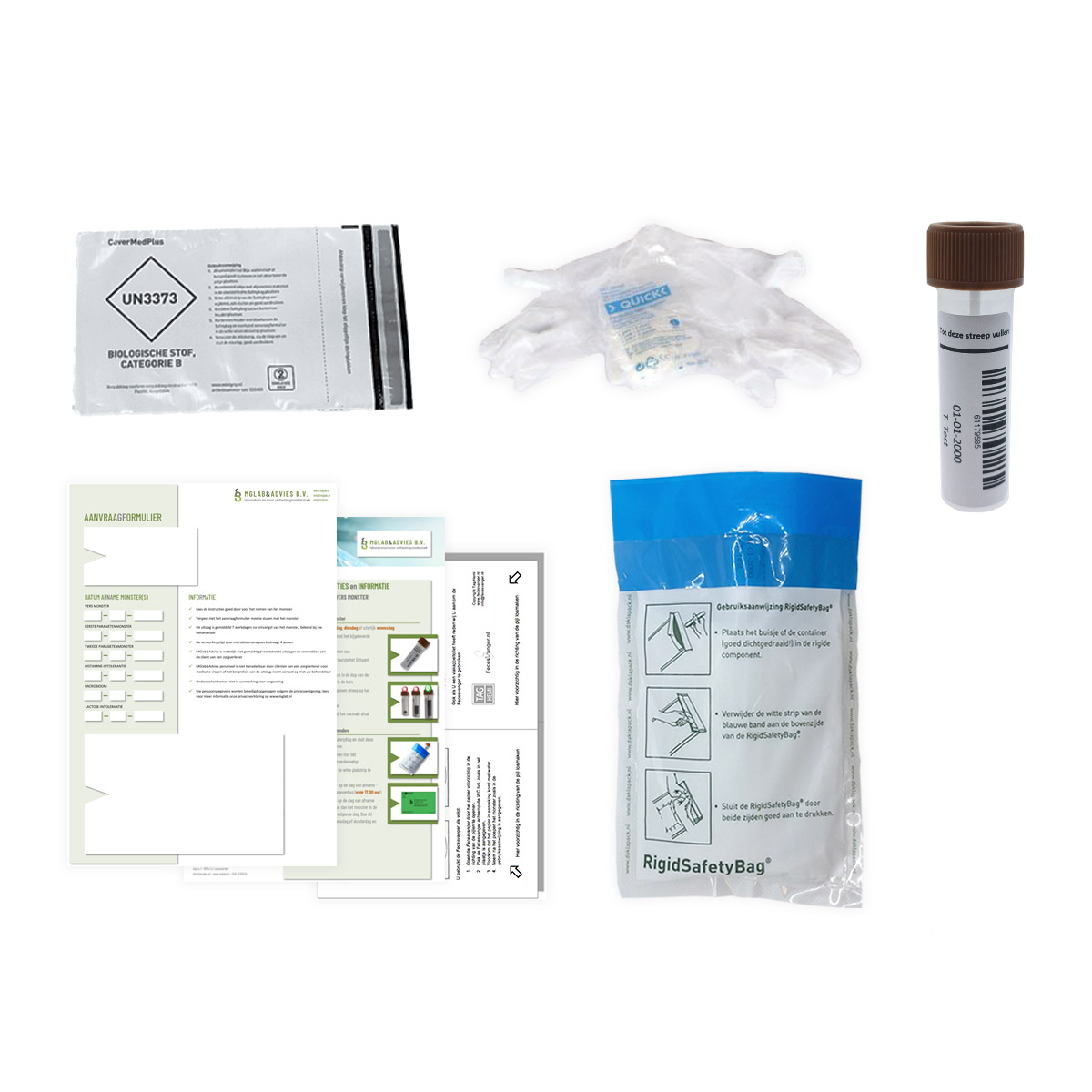
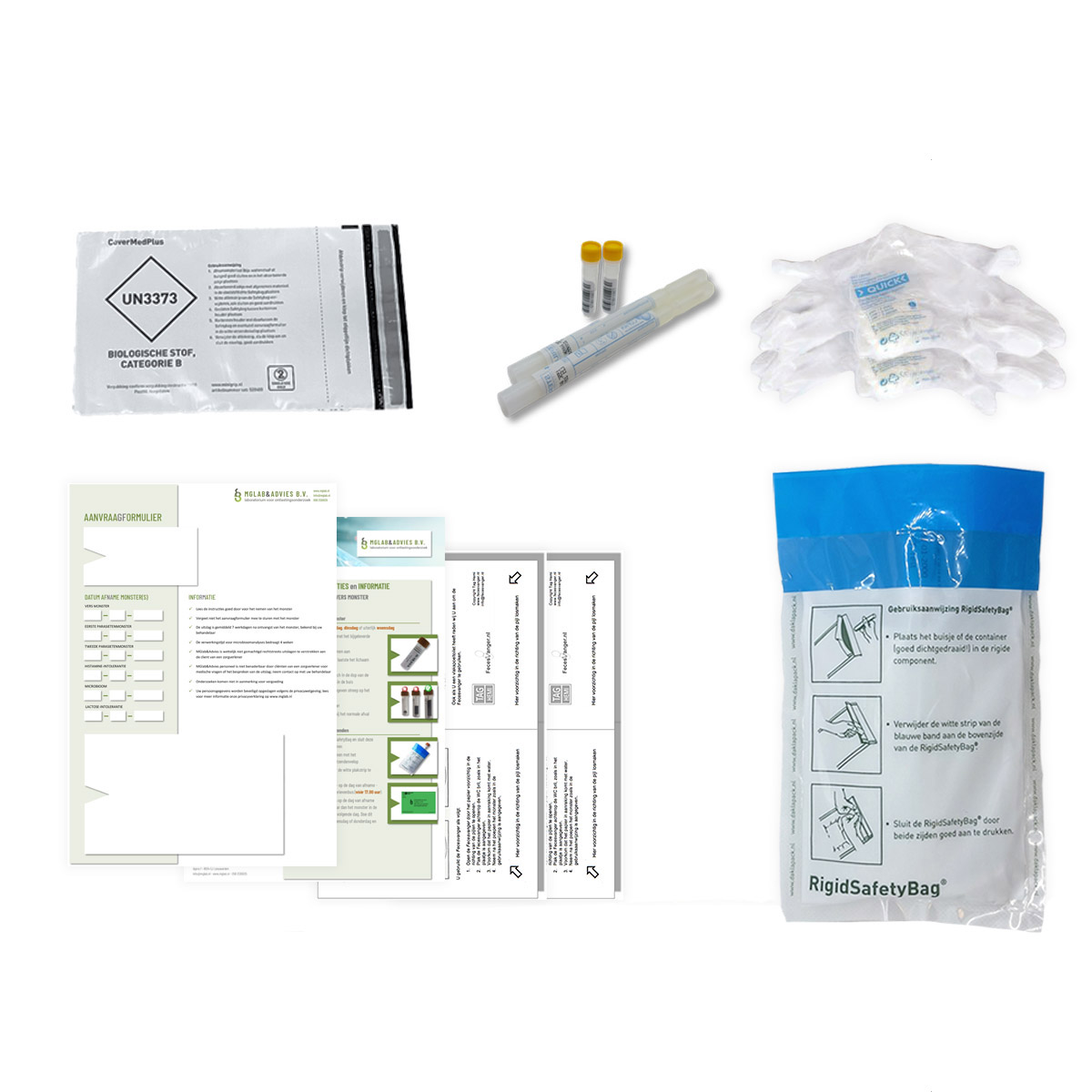
- You order the test and receive sampling materials with instructions.
- You collect a stool sample at home according to the supplied instructions.
- You package and send the sample according to the instructions.
- The laboratory measures pancreatic elastase and bile acids.
- You receive the laboratory result with the measured values and assessment.
Results and next steps
The appropriate next step depends on the result, your complaints, medical history and previous tests.
The report shows both results with the corresponding laboratory reference values.
If pancreatic elastase is low, a doctor can assess whether repeating the test on formed stool, additional blood tests or imaging are needed. If bile acids are abnormal and you have long-term watery diarrhoea, targeted testing for bile acid loss may be considered.
With very pale stool or complaints consistent with bile duct problems, blood tests and an ultrasound are often more appropriate. Diet, medication, medical history and previous results determine the next step.
Frequently asked questions
Answers to frequently asked questions about the Bile and Pancreas test.
No. The test measures bile acids in stool; it does not directly measure contraction of the gallbladder or whether the bile ducts are open.
An increased fat content can have various causes. Pancreatic elastase helps assess whether reduced enzyme production by the pancreas may be a possible explanation.
Yes. A mild reduction in enzyme production in particular may go undetected. Other pancreatic conditions are not ruled out by this test.
No. Complaints after dairy products, grains or nuts can have various causes. The test does not examine food allergies or specific intolerances.
If complaints are mainly located in the stomach area, testing for this bacterium may be more appropriate. If there are indications of digestive problems, additional testing of pancreatic elastase and bile acids may be useful.
Follow the supplied instructions. Do not stop taking medicines on your own initiative. If you have watery stools, consult beforehand because this can affect the pancreatic elastase measurement.
Questions about this test?
Contact us if you are unsure whether this targeted test suits your digestive complaints.
Are you unsure whether this targeted test suits your complaints or whether more extensive digestive testing would be better? Contact Darmklachten.nl. We are happy to help you choose appropriate testing.
Order the Bile and Pancreas test
Targeted stool testing of bile acids and pancreatic elastase.
Would you like targeted testing to find out whether the pancreas and the processing of bile acids may play a role in your digestive complaints?
You can order the Bile and Pancreas test at the top of this page.