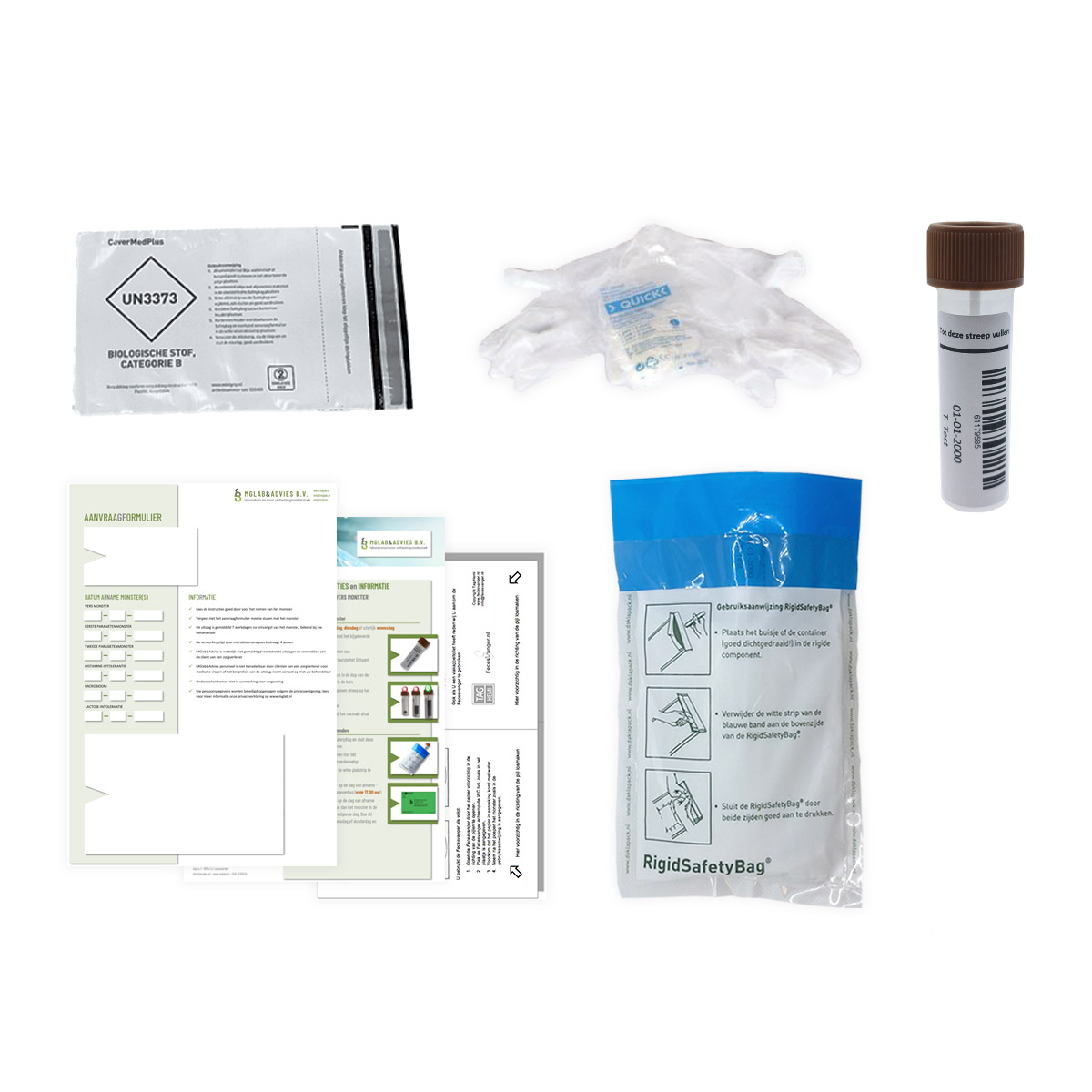


Stomach – stomach complaints laboratory test
€ 97,00
Helicobacter pylori is the bacterium that can cause inflammation of the stomach lining, and a stool test for H.pylori is a reliable way to detect a stomach ulcer. An elevated calprotectin value may indicate inflammation, and transferrin is a marker for bleeding occurring in the upper part of the gastrointestinal tract.
The module STOMACH tests for the presence or absence in stool of:
- Helicobacter pylori
- Calprotectin
- Transferrin
€ 97,00
Description
Helicobacter pylori – stool test for stomach complaints
Do you regularly have stomach complaints? For example, pain in the upper abdomen, a burning sensation, nausea or bloating? The bacterium Helicobacter pylori may play a role. With this stool test, we specifically investigate whether Helicobacter pylori is present.
The bacterium can live in the stomach and in some people cause complaints or inflammation of the stomach lining. A positive result detects the bacterium, but does not by itself establish whether you have a stomach ulcer or another stomach condition.
Quick links
show
hide
Go directly to the information you are looking for.
When is this test suitable?
Targeted testing when you want to know whether Helicobacter pylori may play a role in recurring stomach complaints.
- You regularly have pain or a burning sensation in the upper abdomen.
- You have recurring stomach complaints for which no clear cause has yet been found.
- You experience nausea, bloating, frequent belching or feel full quickly after eating.
- You want to know whether Helicobacter pylori may play a role in your complaints.
- You have previously had a Helicobacter pylori infection and want to discuss with your treating doctor whether follow-up testing after treatment is needed.
Important: not everyone with Helicobacter pylori has symptoms. Do you have severe symptoms, such as vomiting blood, black stools, severe abdominal pain or unexplained weight loss? Contact your GP or out-of-hours GP service immediately.
What do we test?
We test your stool for Helicobacter pylori.
If the bacterium is present, small components of it can be found in the stool. A stool sample can therefore be used to investigate whether Helicobacter pylori is likely to be present.
You do not need a blood test for this and no examination of the stomach is required.
What does the result mean?
The test indicates whether Helicobacter pylori was detected in the stool sample tested.
Helicobacter pylori was detected
If the test is positive, Helicobacter pylori was found in your stool.
The bacterium may be a cause of your stomach complaints. However, a positive result does not automatically mean that you have a stomach ulcer or another stomach condition.
Helicobacter pylori was not detected
If the test is negative, Helicobacter pylori was not found in the stool sample tested.
Do your stomach complaints persist? They may then have another cause. Certain medicines can also affect the result. Therefore, follow the test instructions carefully.
Was Helicobacter pylori detected? Discuss the result with your treating doctor or another BIG-registered doctor. They can assess the result together with your complaints and medical history and discuss whether treatment or further testing is needed.
What is Helicobacter pylori?
A bacterium that can live in the stomach and does not cause symptoms in everyone.
Helicobacter pylori is a bacterium that can live in the stomach. It is common worldwide. Some people have it for years without any complaints. In others, the bacterium can cause irritation or inflammation of the stomach lining.
Helicobacter pylori may be involved in:
- inflammation of the stomach lining;
- a stomach ulcer;
- a duodenal ulcer.
If Helicobacter pylori is found, a treating doctor can discuss whether treatment is needed and prescribe medication if necessary.
Which complaints can occur?
An infection with Helicobacter pylori can cause various stomach complaints.
For example, pain in the upper abdomen, a burning sensation in the stomach, nausea, bloating, frequent belching or feeling full quickly after eating.
These complaints can also have other causes. This test therefore only investigates whether Helicobacter pylori is present.
How does the test work?
You collect a stool sample at home and then receive a clear laboratory result.
- You order the Helicobacter pylori test and receive the materials needed to collect a small amount of stool at home.
- You collect the sample according to the supplied instructions.
- You package and send the sample as described in the instructions.
- The laboratory tests whether Helicobacter pylori is present in your stool.
- You receive a clear result: Helicobacter pylori was detected or was not detected.
The test does not indicate how many bacteria are present.
Results and next steps
What you can do with a positive or negative result.
If the result is positive, you can discuss it with your treating doctor or another BIG-registered doctor. They can assess whether your complaints are consistent with a Helicobacter pylori infection, whether treatment is needed and whether further testing is advisable.
After treatment, a stool test can also be used to check whether the bacterium is no longer detectable. It is important to carry out this follow-up test at the right time.
If the result is negative but your stomach complaints continue, there may be another cause. A negative result does not rule out other stomach problems.
Preparing for the test
Some medicines can affect whether Helicobacter pylori can be detected.
Some medicines can temporarily make Helicobacter pylori more difficult to detect. This includes certain acid-suppressing medicines and antibiotics.
Never stop taking medicines on your own initiative. If in doubt, consult the doctor who prescribed them.
If you have a practical question about preparing for the test, contact Darmklachten.nl. Also follow the supplied instructions for collecting and sending the stool sample carefully.
Frequently asked questions
Answers to frequently asked questions about the Helicobacter pylori stool test.
No. The test only examines whether Helicobacter pylori is present. The bacterium can play a role in the development of a stomach ulcer, but this test cannot show whether you actually have a stomach ulcer.
Yes. Some people do not notice the bacterium. In others, it does cause stomach complaints.
No. This test examines your stool for signs that the bacterium is present. A blood test looks for antibodies that your body has produced against the bacterium. These may sometimes still be present after the bacterium itself has disappeared.
Yes. A stool test can also be used to check whether the bacterium is no longer detectable after treatment. It is important to leave enough time between the treatment and the test. Discuss the right timing with your treating doctor.
There may then be another cause for your stomach complaints. You can discuss persistent complaints with your treating doctor or another appropriate healthcare provider. If you have severe or rapidly worsening symptoms, contact your GP or out-of-hours GP service.
Questions about this test?
Contact us if you have practical questions about the test, preparation or sample collection.
Do you regularly have stomach complaints and want to know whether Helicobacter pylori may play a role? With this stool test, we specifically investigate whether the bacterium is present.
Do you have questions about the test, the use of medicines or collecting the sample? Contact Darmklachten.nl. Never change prescribed medication on your own initiative; discuss this with the prescribing doctor.
Order the Helicobacter pylori test
Targeted stool test for stomach complaints.
Would you like to know whether Helicobacter pylori may play a role in your stomach complaints?
With this stool test, you specifically investigate whether the bacterium is present.
You can order the Helicobacter pylori test at the top of this page.
Additional information
| Symptomen | Abdominal pain, Bloating, Flatulence, Heartburn, Nausea and vomiting, Poor digestion, Stomach pain |
|---|---|
| Aandoeningen | Helicobacteriosis – Helicobacter pylori infection, Stomach Ulcer |