

Gut flora – Akkermansia + Faecalibacterium
€ 65,00
Akkermansia muciniphila and Faecalibacterium prausnitzii have an important function in the gut, as they contribute to a healthy mucus layer in the intestinal wall and adequate resistance. Together, these two bacteria make up approximately 15% of the total gut flora, and a decrease in their numbers may contribute to inflammation and irritation of the intestinal wall.
The GUT FLORA PANEL 2 module examines the amounts per gram of stool of the bacteria:
- Akkermansia muciniphila
- Faecalibacterium prausnitzii
€ 65,00
Description
Akkermansia & Faecalibacterium
This stool test measures Akkermansia muciniphila and Faecalibacterium prausnitzii. Both are part of the normal gut flora and are of particular interest because of their relationship with the intestinal mucus layer and the production of butyrate.
On its own, measuring these two bacteria provides limited information. The result is mainly valuable in combination with other gut parameters.
Quick links
show
hide
Go directly to the information you are looking for.
Why are these bacteria interesting?
Both bacteria provide additional information about specific aspects of the intestinal environment.
Akkermansia muciniphila
Akkermansia muciniphila lives close to the intestinal mucus layer and uses mucin as a source of nutrition. This makes this bacterium particularly interesting when factors related to the intestinal wall, mucus layer or gut barrier are also being assessed.
An abnormal value is most meaningful when it fits with other abnormal gut parameters.
Faecalibacterium prausnitzii
Faecalibacterium prausnitzii is a common gut bacterium that converts dietary fibre and, in doing so, produces butyrate (butyric acid), among other substances. This makes the bacterium particularly interesting in relation to diet, other gut bacteria and the condition of the intestinal mucosa.
Here too, the combination with other results is more important than the individual value.
When is this test especially useful?
This test is mainly intended as an addition to other stool tests.
The result can provide additional information in combination with, for example:
- other gut flora bacteria;
- inflammatory markers such as calprotectin;
- markers that provide information about the gut barrier;
- digestive parameters;
- yeasts and other micro-organisms;
- symptoms, diet, medication and medical history.
The value of the test lies mainly in the overall picture: do several results point in the same direction?
What do we test?
Targeted measurement of two specific bacterial species from the gut flora.
Akkermansia muciniphila
Of interest in relation to the mucus layer and the environment of the intestinal wall.
Faecalibacterium prausnitzii
Of interest as an important butyrate-producing gut bacterium.
The test examines only these two bacterial species and does not provide a complete picture of the gut flora.
What can the result tell you?
The individual values are most meaningful when viewed as part of broader gut testing.
A low or high value for Akkermansia or Faecalibacterium is not a diagnosis and does not independently explain gastrointestinal complaints. The result can, however, help assess whether a broader gut test shows a pattern consistent with altered gut flora.
The most important question is therefore not only whether one bacterium is too low or too high, but especially whether the result fits with the other findings from the gut testing.
How does the test work?
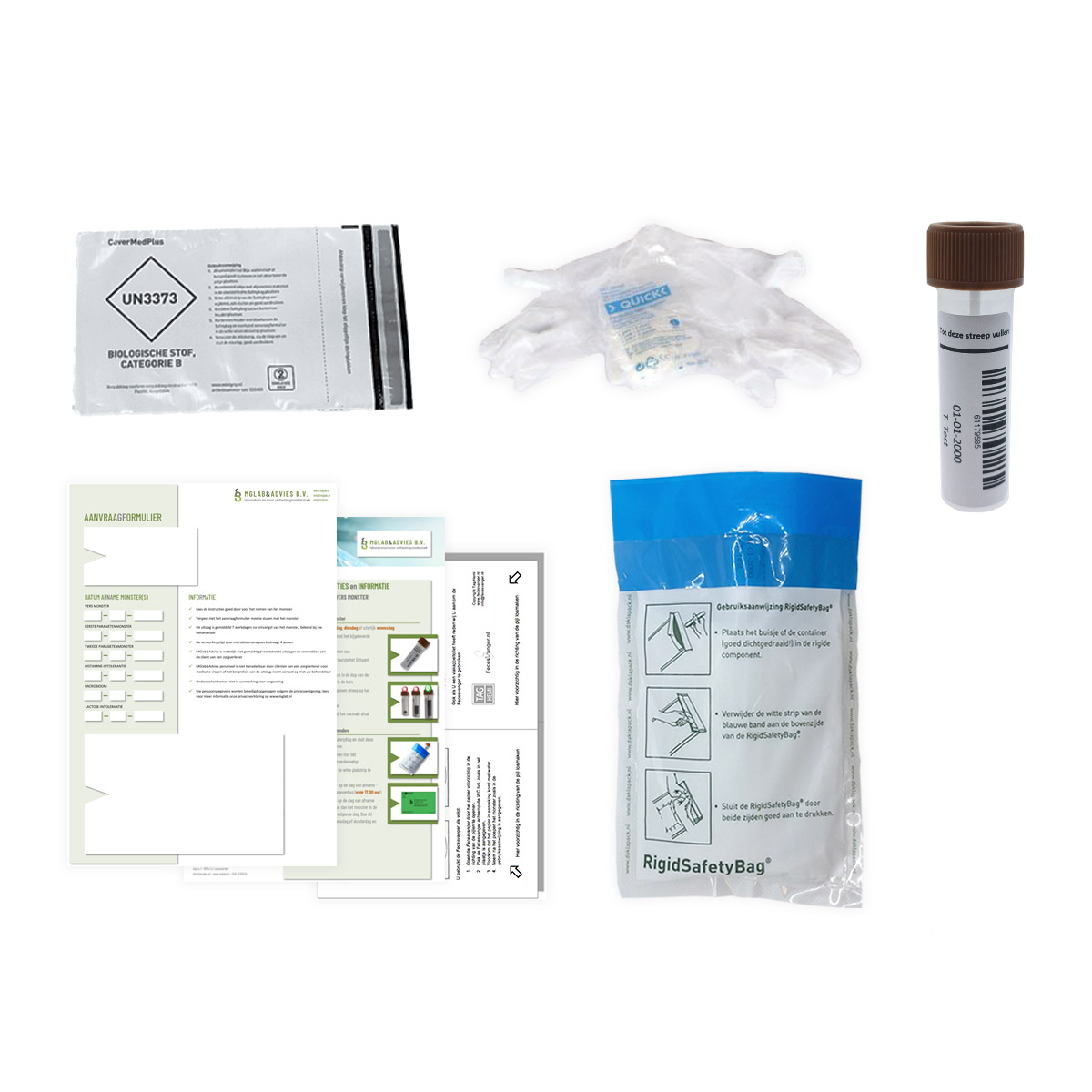
You collect a stool sample at home and then receive the results for both bacteria.
- You receive the sampling materials and collect a stool sample at home.
- You send the sample to the laboratory according to the enclosed instructions.
- You receive a report with the results for both bacteria.
Results and next steps
Preferably assess the result together with other gut parameters and your symptoms.
An abnormal value does not necessarily mean there is a problem, and a normal value does not rule out other causes of gastrointestinal complaints.
Depending on the overall picture, additional testing or discussion with a healthcare professional may be useful.
Frequently asked questions
Answers to frequently asked questions about measuring Akkermansia muciniphila and Faecalibacterium prausnitzii.
No. Two bacterial species do not provide a complete picture of the gut flora. The test is mainly intended as an addition to other measurements.
Because they can provide additional information about specific aspects of the intestinal environment. Akkermansia is particularly interesting in relation to the mucus layer; Faecalibacterium because of its production of butyric acid.
Limited. The result becomes particularly useful when combined with other gut parameters and the symptoms or medical history.
No. Two specific bacterial species are tested.
Questions about this test?
Contact us if you would like to know which combination of tests best suits your symptoms.
This test is mainly suitable as an addition to broader gut testing. Do you have questions about which combination of tests best suits your symptoms? Please contact Darmklachten.nl.
Order the Akkermansia & Faecalibacterium test
Targeted measurement of two specific bacterial species as an addition to broader gut testing.
Would you like to have Akkermansia muciniphila and Faecalibacterium prausnitzii measured specifically?
You can order the test at the top of this page.
Additional information
| Symptomen | Bloating, Chronic diarrhea, Flatulence, Mucus in Stool, Rumbling Bowels |
|---|---|
| Aandoeningen | Abnormal Gut Flora, Irritable Bowel Syndrome / Spastic Colon |
Related products
-
Sale

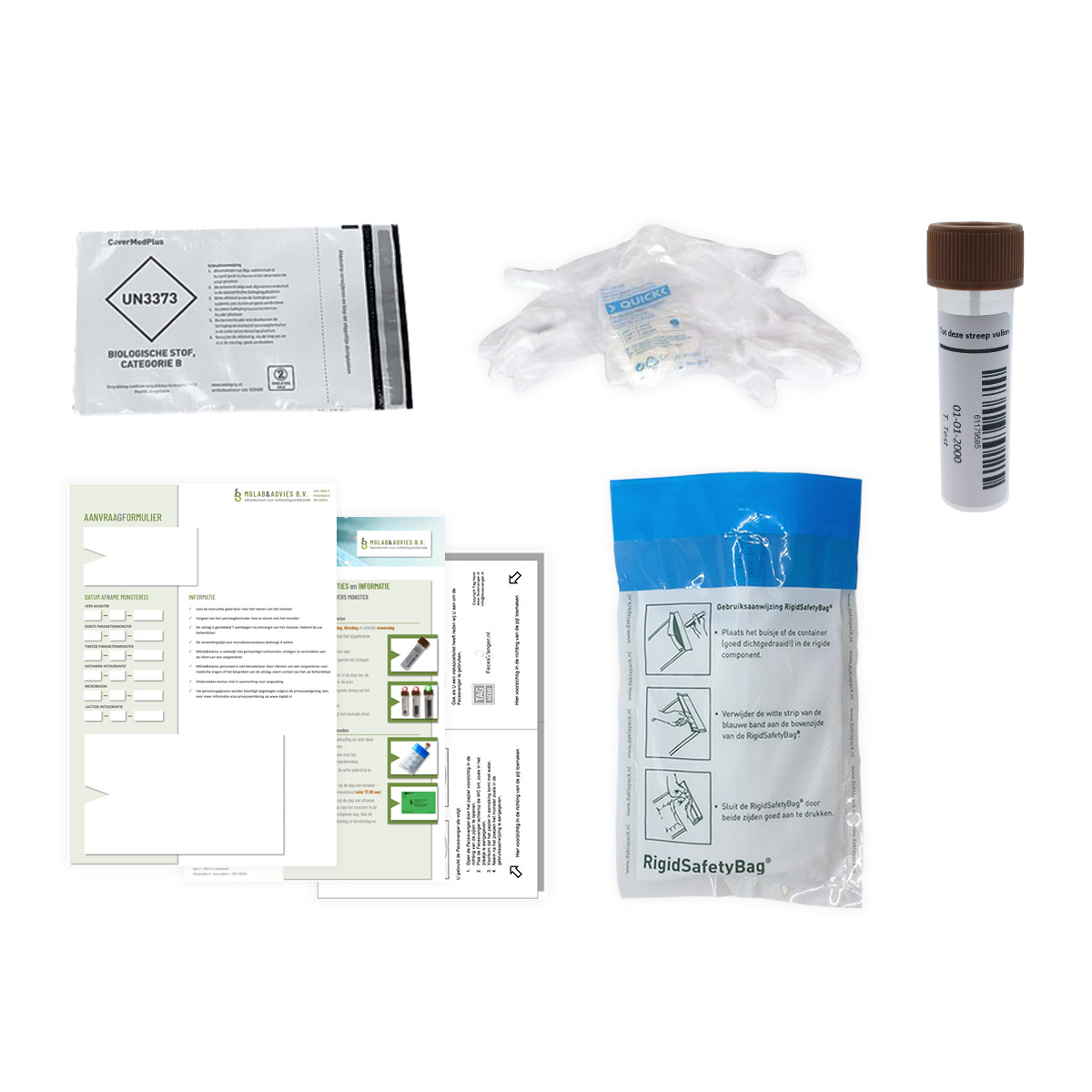 +
Gut flora & Inflammation package
Original price was: € 226,00.€ 200,00Current price is: € 200,00. meer informatie