
What you need to know about nausea and vomiting
Nausea presents as a queasy feeling in the stomach area; sometimes your mouth waters or you feel as if you are going to vomit. You may also start sweating. Nausea is sometimes accompanied by vomiting. During vomiting, the stomach muscles contract and the contents of the stomach move upward and are then expelled through the mouth. If the stomach is empty, not much comes out, sometimes only mucus or bile. Vomiting is controlled by the vomiting centre in the brainstem. Acute nausea is often short-lived. Nausea symptoms can persist throughout the day; when they remain present for weeks, this is referred to as chronic nausea.
 What you can do for nausea
First of all, it is important to drink enough. Mint tea and ginger can help. If you are nauseous, avoid strong smells, perfume, smoke, stuffy rooms, heat and humidity. Use broth and easily digestible foods and avoid fatty and spicy foods. Diagnosis is important; the cause should be identified so that targeted treatment can be provided.
Symptoms of nausea
- A queasy feeling in the stomach
- Watering of the mouth
- Vomiting
- Sweating
- Belching
- Stomach cramps
Tests for nausea
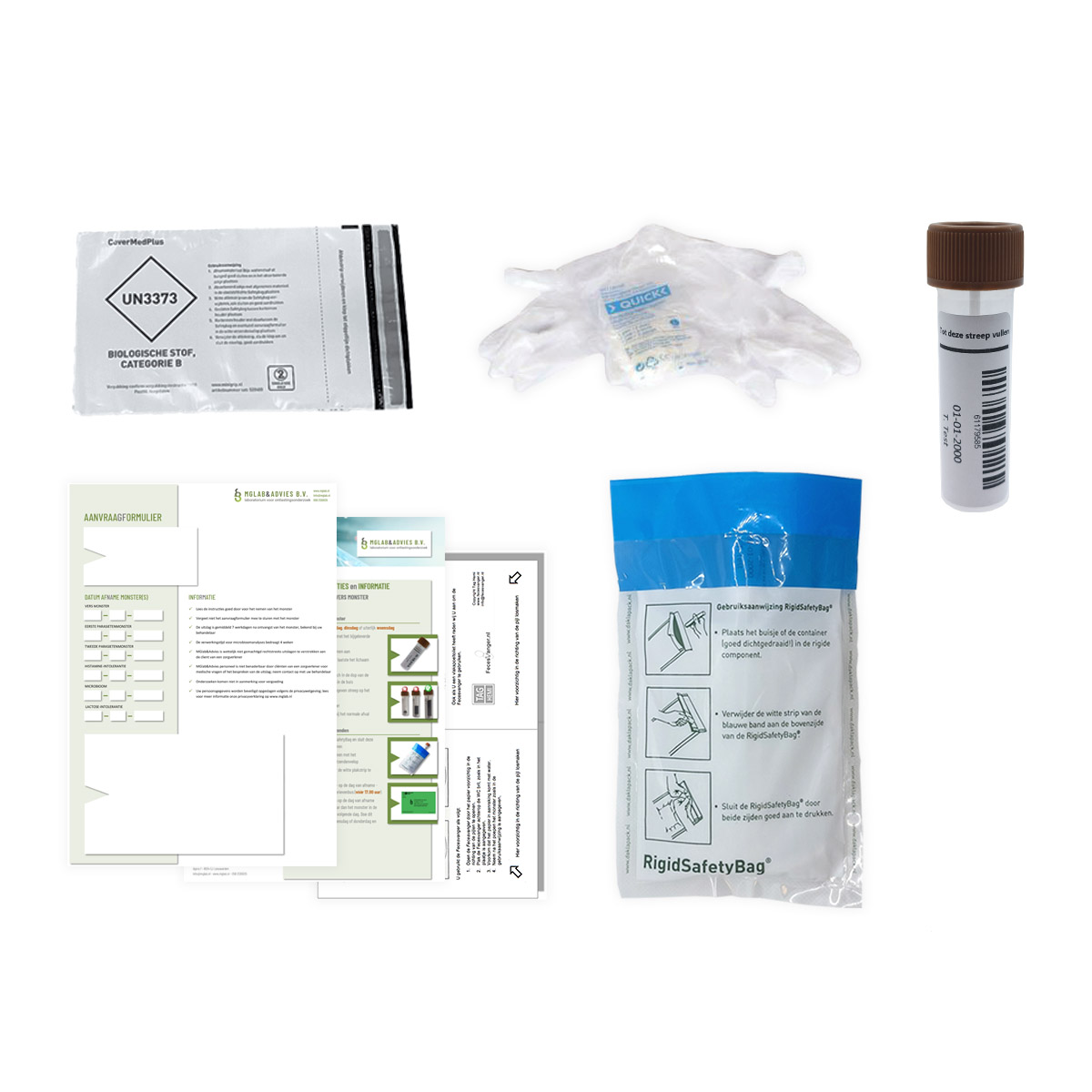
For persistent nausea and vomiting, stool testing through Darmklachten.nl may help. See our recommended test packages and individual modules below.





Additional examinations
If nausea persists, it is important to consult a doctor. This includes vomiting that lasts longer than two days in adults. For children, the period is 24 hours. This also applies to periods of nausea and vomiting that continue for more than a few weeks. Specific blood tests carried out by a GP or specialist are necessary to detect serious conditions.
Causes of nausea with intestinal complaints
- Acute nausea:
- Bacterial infection
In many cases, acute nausea is related to eating spoiled food. The nausea usually occurs 2 to 4 hours after you have eaten something that was not good. Vomiting is a way of emptying the stomach again and often begins 6 hours after consuming spoiled food. In food poisoning, the intestine becomes inflamed; this is caused by bacteria such as Salmonella and Campylobacter. It often occurs together with acute diarrhoea; see bacterial infection. Another cause may be a vital infection. See acute diarrhoea.
- Bacterial infection
- Chronic nausea due to conditions of the oesophagus or stomach:
- Reflux or irritation of the oesophagus
The oesophagus can become irritated by food coming back up from the stomach. Stomach acid irritates the oesophagus; in that case there is no bacterial infection. - An allergic reaction
Nausea can be caused by a condition of the oesophagus, for example an allergic reaction, which can make you lose your appetite. This occurs more often in children and young people. - Oesophageal irritation
- Stomach irritation or inflammation caused by Helicobacter pylori
This stomach bacterium can cause nausea and stomach complaints, especially stomach pain. With an infection, the symptoms may decrease spontaneously over time, but they can also persist for years. - Lack of stomach acid
A lack of stomach acid is in many cases accompanied by a vitamin B12 deficiency and reduced fat absorption of vitamin D. Acid-suppressing medicines can cause these complaints. - Medicines, such as anti-inflammatory painkillers
Inflammation of the stomach lining can be caused by the use of anti-inflammatory painkillers such as Diclofenac, Ibuprofen and Naproxen. These are Non Steroid Anti Inflammatory Drugs (NSAIDs). Other medicines can also cause stomach pain and stomach complaints.
- Reflux or irritation of the oesophagus
- Chronic nausea due to diet:
- A food allergy, for example to soy or nuts
- Certain types of vegetables or fruit
- Gluten intolerance (coeliac disease)
If eating bread makes the symptoms worse, it is advised to request a test for antibodies against gluten.
- Chronic nausea and the intestine:
- Infection with parasites can cause nausea (Giardia lamblia, Dientamoeba fragilis and Blastocystis hominis)
- Intestinal inflammation, ulcerative colitis and Crohn’s disease; markers such as calprotectin are elevated
- Gallstones, a gallbladder disorder, are associated with fatty stools
- Inflammation of the appendix, appendicitis
- Intestinal obstruction
- Irritable bowel syndrome
- Pancreatic disease or pancreatic cancer
Other causes of nausea:
- Unpleasant smells
- Seeing unappetising or shocking things can sometimes make you vomit
- Motion sickness can occur due to movement in a car or at sea on a boat
- Poisoning and the use of certain medicines
- Morning sickness is a sign of early pregnancy
- Excessive alcohol consumption
- Radiation therapy and chemotherapy
- Anorexia nervosa
- Bulimia nervosa
- Diabetic ketoacidosis
- Use of painkillers such as Diclofenac, contraceptives, heart medication, antibiotics
- Hepatitis
- Concussion
- Brain tumour or meningitis
- Severe pain
- Hyperthyroidism (overactive thyroid)
- Hypoparathyroidism (underactive parathyroid gland)
- Migraine
- Fever (more common in children)
- Overactive parathyroid glands
- Ear infection (middle ear)
- Frontal sinus inflammation; any infection can be accompanied by nausea
- In rare cases, nausea and vomiting can indicate a serious or even life-threatening problem. For example heart failure, liver failure or liver cancer
More information about the tests
- Digestive parameters pH, fat, starch, colour and consistency of the stool – read more…
- Bacterial infection with Salmonella, Campylobacter, Shigella, Yersinia and Clostridioides diffile – read more…
- Helicobacter pylori – Bacterium that causes stomach ulcers – read more…
- Antigliadin and anti-ht-Transglutaminase – Markers for gluten intolerance – read more…
- Intestinal parasites – Testing for infections with intestinal parasites – read more…
- Calprotectin – Inflammation marker for Crohn’s disease and ulcerative colitis – read more…
- Pancreatic elastase – Breakdown of fat, starch and proteins – read more…
- Bile acids – Digestion of fat – read more…
About Darmklachten.nl
Darmklachten.nl is an initiative of MGlab&Advies, a laboratory specialising in stool testing. …read more