
Stool testing to determine the cause of gastrointestinal complaints
Many people who have had gastrointestinal complaints for a long time choose to have a stool test. Microbiological testing can show whether disease-causing bacteria, viruses or parasites may be present in your intestines. The presence of so-called occult blood in the stool can be an indication of an intestinal polyp or tumour. The amount of calprotectin in your stool can help show whether chronic intestinal inflammation is present, such as Crohn’s disease or irritable bowel syndrome. We have this testing carried out by MGlab&Advies, which specialises in stool testing for people with gastrointestinal complaints. By examining your stool, we can gain insight into how your digestion works and what may be causing your gastrointestinal complaints. Below you can read more about stool testing at Darmklachten.nl.
One in five people in the Netherlands has chronic gastrointestinal complaints
Many people suffer from abdominal pain, flatulence, diarrhoea, constipation or an abnormal bowel pattern. These symptoms occur with around ten different intestinal disorders, but are often referred to as ‘irritable bowel syndrome’ (IBS). Extensive laboratory testing of the stool can determine, for many people with chronic gastrointestinal complaints, whether the cause is inflammation, an intestinal parasite infection, gluten intolerance or an overgrowth of yeasts such as Candida albicans. One or more abnormal values are measured in two thirds of all stool samples submitted. Stool testing for gastrointestinal complaints is therefore certainly worthwhile. During stool testing, the colour, structure and composition of the stool are examined.
How does stool testing work?
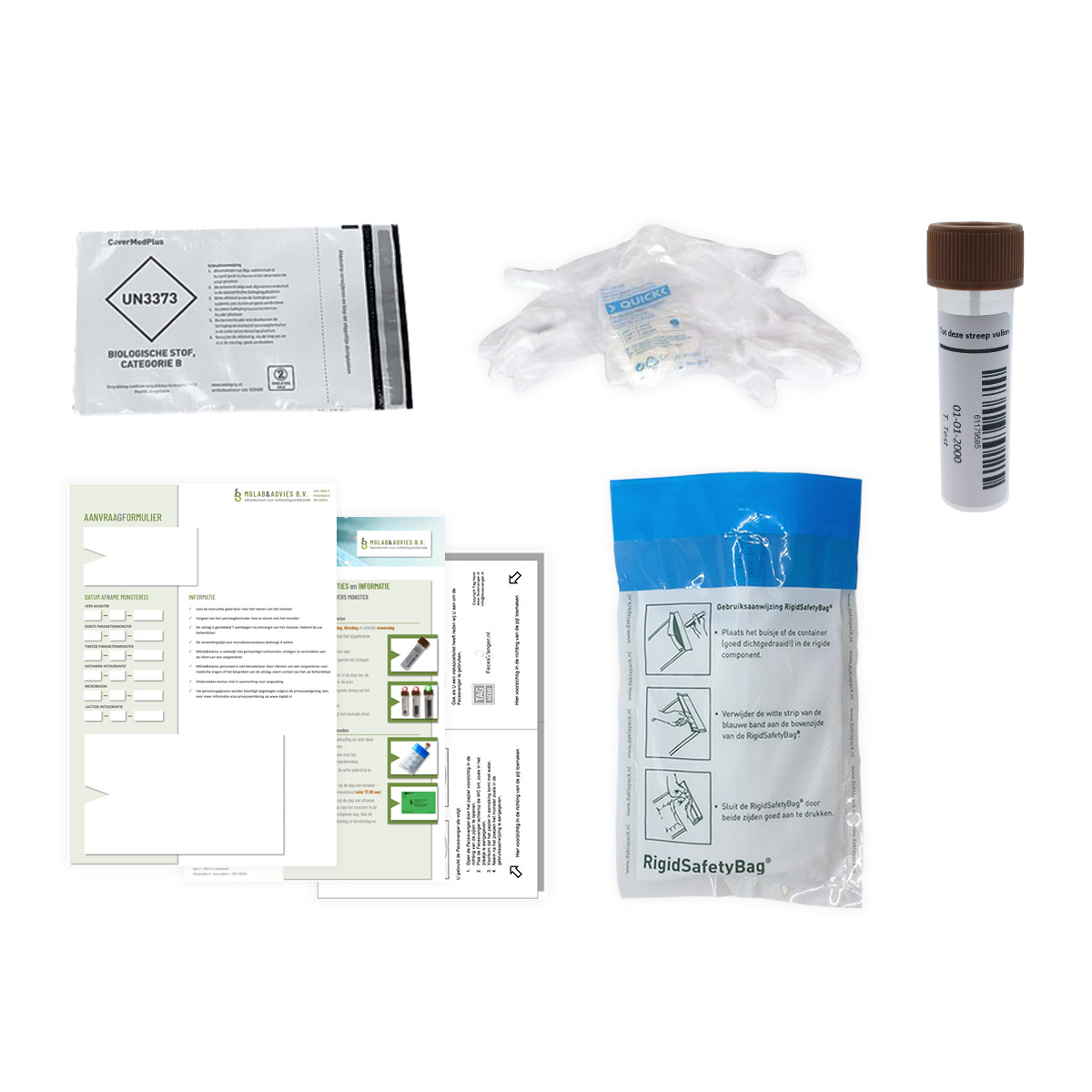
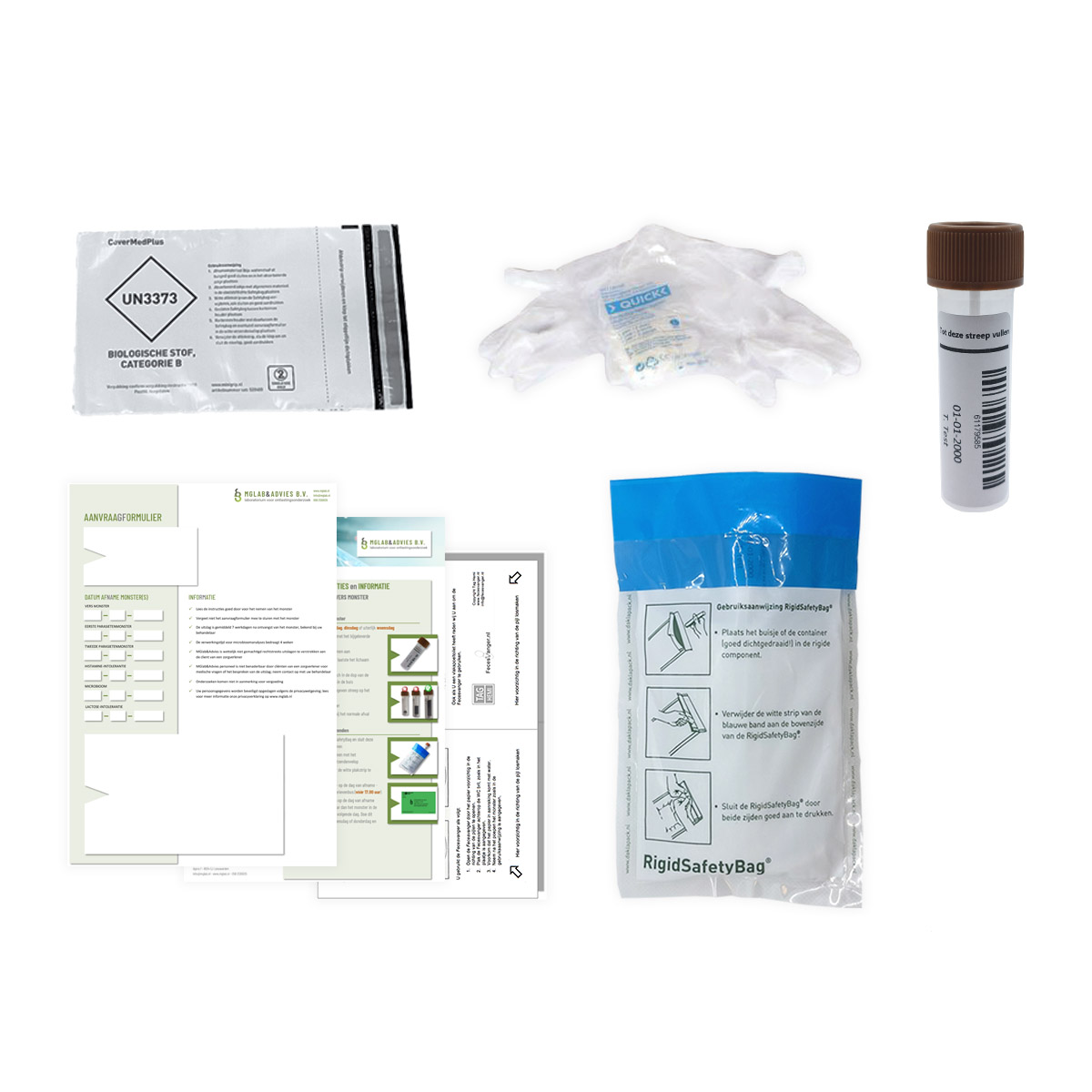
A stool test is easy to do. You can carry out the test quickly and easily from home. At home, you put a small amount of stool in a container and send it to the laboratory. There, your stool is examined. What does it look like? Hard, soft, with or without pieces? What is the colour? Dark or light? Are there bacteria, parasites or inflammatory cells present? If blood is found in the stool, you will be referred to a doctor for an internal examination of the large intestine, a colonoscopy. Based on the colonoscopy results, the doctor can make a definitive diagnosis and start the appropriate treatment. Other factors, such as the colour of your stool, its consistency and whether pieces are present, can provide information about the health of your gut flora.
CHOOSE THE TEST THAT SUITS YOU
If you order before 12:00 noon on a working day, your order will be sent the same day.
TAKE A SAMPLE AT HOME
You can easily take the sample at home, package it safely and send it to the laboratory in the mailing envelope.
SAMPLE TESTED
Once we receive your envelope at the laboratory, the sample will be processed immediately.
TEST RESULT
Within 7 working days, you will receive a notification and can log in online to view the test results and interpretation.
For which symptoms should you consider stool testing?
Various symptoms may be a reason to have a stool test performed. We list them for you below.
Yellow stools
Yellow stools are usually accompanied by diarrhoea and a strong odour. A strong odour is caused by bacteria, protein breakdown products and gases, particularly hydrogen sulphide. A strong odour can often indicate a condition. Yellow stools therefore often occur as a result of an intestinal disorder and accelerated intestinal transit.
Green stools
Green stools are often the result of your diet. Do they persist for a long time? Green stools can be tested to determine the cause. Digestion, bile acids, gluten, bacteria and traces of blood in the stool can be examined. Treatment of green stools depends on the cause. Do you also suffer from any of the other complaints mentioned above? In that case, consulting a doctor and having a stool test is advisable.
Black stools
Do you have black stools? Be alert. In this case, it is advisable to contact your doctor. Black stools can be stool mixed with blood. The combination of blood and gastric juices causes the dark colour. The blood can also make the stool sticky. It is important to determine the cause of black stools, because blood in the stool can be dangerous. Black stools can also be caused by a stomach ulcer, intestinal diseases, intestinal inflammation or cancer. Are the black stools accompanied by severe abdominal and stomach pain? This can be a sign of internal bleeding.
Weight loss
Weight loss means a reduction in body weight. Weight is influenced by calorie intake, the amount of physical activity and, to a limited extent, age. Unexplained weight loss, meaning losing weight without changing your diet or lifestyle, can be a sign of an underlying physical condition.
Which tests can you take?
In addition to stool testing, Darmklachten.nl offers several other tests to assess the health of your gut flora. These include:
- Irritable Bowel Syndrome test (IBS)
- Intestinal parasite test
- Microbiome test
- Basic package for a gluten-free diet
- Basic package with gluten markers
- Gut flora package
- Histamine intolerance test
- Candida species and fungi test
- Gluten sensitivity test
- Digestion and intestinal permeability combination test package
- Leaky gut (zonulin) test
- Stomach complaints test when a stomach ulcer is suspected
- Immune system test
- Gut flora, overweight and gastrointestinal complaints (enterotypes) test
- Candida swab test (vaginal/rectal)
- Candida/Enterococcus swab test (mouth/urethra)
- Pinworm (adhesive tape test)
- Stool test for worms and worm eggs
Testing at Darmklachten.nl
 +
Chronic gastrointestinal complaints (IBS) package
Price range: € 350,00 through € 475,00 meer informatie






Contact Darmklachten.nl
Do you have practical questions about the stool tests? Feel free to contact us by calling 058-2120025 or emailing info@darmklachten.nl.