
What you need to know about blood in the stool
Under normal circumstances there is no blood in the stool, but the lining of the stomach and intestines is sensitive and can bleed easily. When ulcers, polyps, inflammation or tumors are present in the gastrointestinal tract, minor bleeding can occur. Blood in the stool is in many cases a symptom that may indicate various stomach or intestinal disorders. The traces of blood are usually not visible. Blood in the stool may, however, be noticeable when there is bleeding in the last part of the large intestine, as with hemorrhoids. It can also sometimes be visible in the case of inflammation. The blood is then often mixed with mucus from the intestine. To detect blood in the stool, two markers can be tested: occult blood and transferrin.
Occult blood is a test that detects human hemoglobin. Hemoglobin is a protein in red blood cells that transports oxygen and carbon dioxide in the body. Another test that can be performed when there is blood in the stool is the transferrin test. Like hemoglobin, transferrin is part of the blood and is a transport protein for zinc and iron. It has a function in the defense of the mucous membranes because it binds iron molecules, making it harder for harmful bacteria that need iron to thrive.
 IMPORTANT: Legislation relating to occult blood testing
Under the Population Screening Act, Darmklachten.nl does not offer the occult blood test. Under this law, the test may only be performed if the request is submitted by a BIG-registered physician (Individual Healthcare Professions Act – Wet BIG) under the following conditions:
The patient falls outside the 55-to-75-year age group
There is an individual request for care or a medical indication
Are you concerned about colorectal cancer, for example because it runs in your family, or do you see traces of blood in your stool? Contact your general practitioner. In this article, we provide more information about the causes of blood in the stool and offer tests that are relevant to inflammation – where blood loss can be a symptom. After a positive occult blood test, an internal examination (endoscopy) will be needed to detect inflammation, polyps or colorectal cancer.
Symptoms associated with blood in the stool
When there is blood in the stool – visible or not – it may be the result of colorectal cancer or inflammation of the intestine. This is often accompanied by other symptoms such as:
- Mucus in the stool
- False urge to defecate
- Intestinal complaints combined with fatigue and/or weight loss
- Weight loss
- Abdominal pain
- A bloated abdomen
- Diarrhea
- A changing bowel pattern
Tests for blood in the stool
If you are concerned about colorectal cancer, contact your general practitioner for a test for hidden blood in the stool (occult blood). This test cannot be offered through this platform under the Population Screening Act and the Individual Healthcare Professions Act.
Additional tests
In addition to occult blood testing in stool through your general practitioner and tests through Darmklachten.nl, additional blood testing for anemia can be performed. Internal blood loss is sometimes discovered because anemia develops. Contact your general practitioner for blood testing for anemia.
- Sale

 +
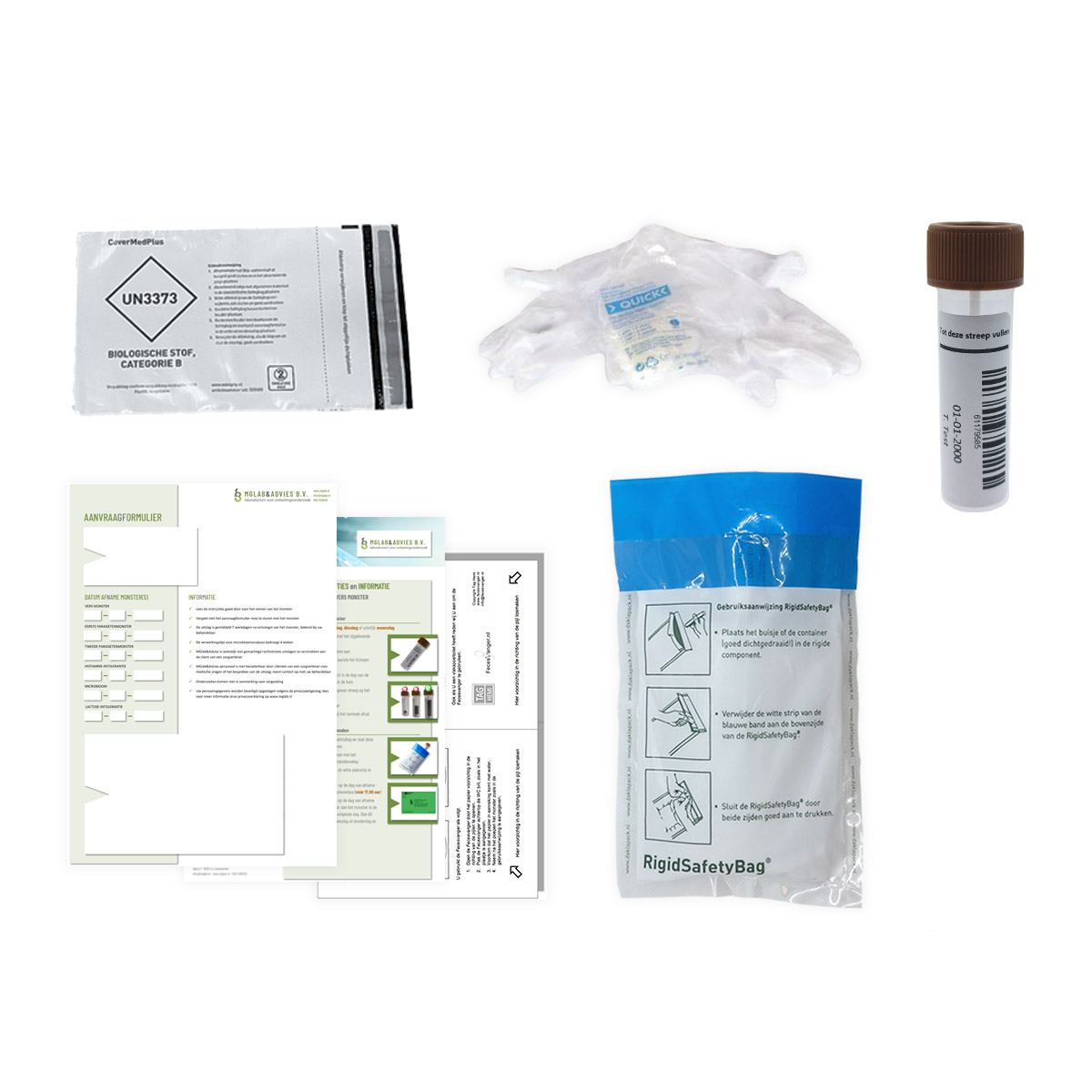
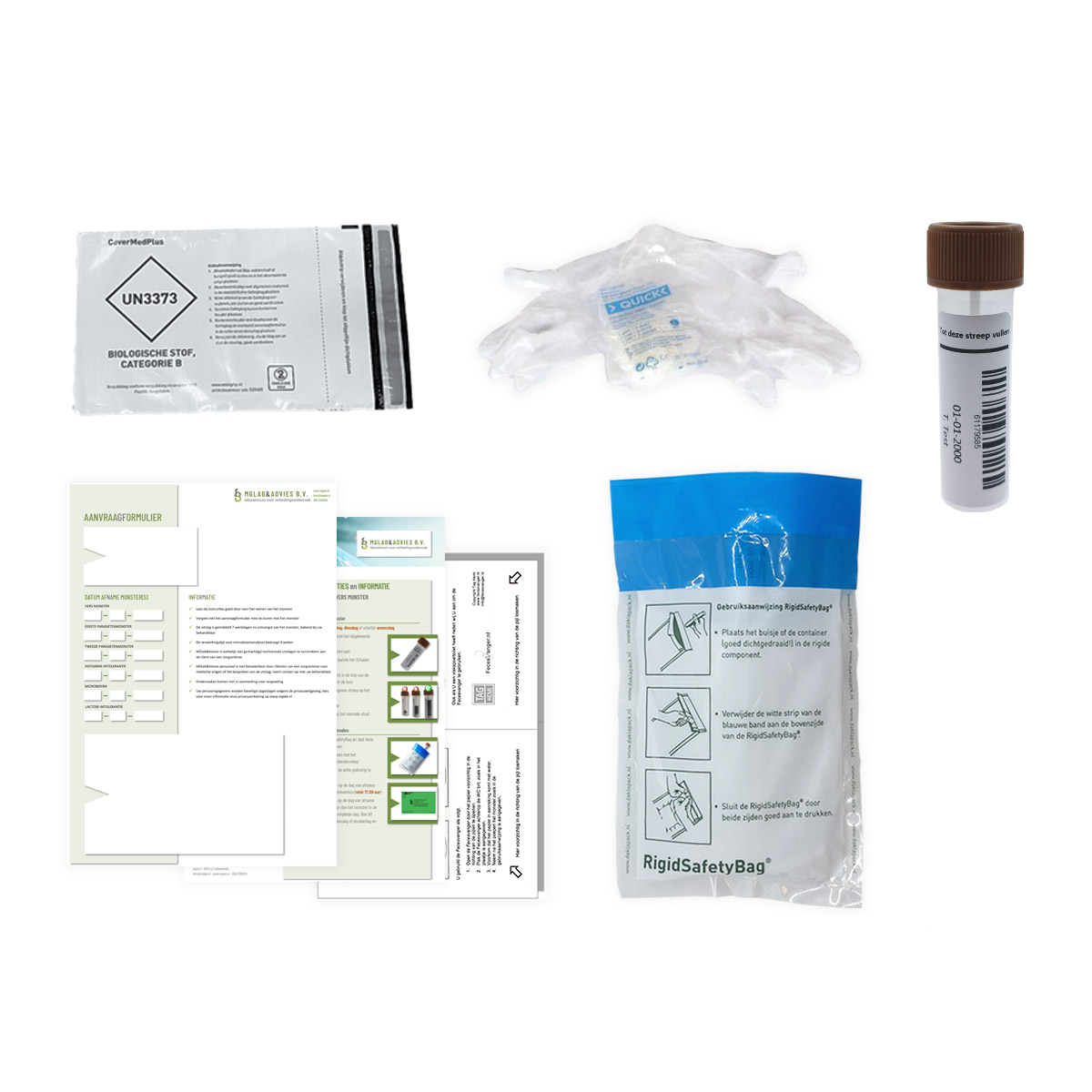
+Gut flora & Inflammation package
Original price was: € 226,00.€ 200,00Current price is: € 200,00. meer informatie




Causes of blood in the stool
Blood when defecating can have various causes, and we have listed a number of them for you:
- Colon cancer:
- With cancer of the intestine or rectum, there is usually no visible blood in the stool. When the mucous membranes bleed slightly, this blood mixes with the stool, becomes dark in color and cannot be seen with the naked eye. The stool can be tested for the presence of traces of blood. This is used to detect colorectal cancer and inflammation.
- There are various situations in which there is a higher risk of colorectal cancer. For example:
- Colorectal cancer in the family
- People who are overweight
- Meat consumption, especially fatty meat
- Insufficient vegetable consumption
- Smokers have an increased risk
- High acidity of the stool
- Age over 55
- Excessive alcohol consumption
- Intestinal diseases such as Crohn’s disease and ulcerative colitis
- Polyps
- Irritation of the stomach or esophagus
- Bleeding gums
More information about the tests
- Calprotectin – Inflammation marker for Crohn’s disease and ulcerative colitis – read more…
- Lactoferrin – A natural antibiotic that helps immune cells eliminate harmful bacteria in the body – read more
- TNF-alpha – Messenger molecules (cytokines) that increase during the acute phase of an infection and help fight the infection by inducing fever, stimulating cell death and suppressing appetite – read more
- Beta-Defensin-2 – Anti-inflammatory substance that is produced exclusively in the large intestine and protects it – read more
About darmklachten.nl
Darmklachten.nl is an initiative of MGlab&Advies, a laboratory specializing in stool testing. …read more