
Abnormal gut flora
The term gut flora refers to the total population of bacteria present in the intestine. In total, more than 100 trillion bacteria are present in our intestines and, in an adult, these bacteria together weigh 1 to 1.5 kilograms. A single bacterium weighs almost nothing, so 100 trillion bacteria are needed to reach this mass. Bacteria are distinguished from one another by analysing their DNA. In the large intestine, there are one hundred billion bacteria per gram of stool. Fewer bacteria are found in the small intestine. Gut bacteria work so closely with the intestinal wall and immune system that they effectively form an organ. Single-celled yeasts such as Candida are present in the intestine in low numbers.
Gut flora analyses
Gut flora analyses carried out in the laboratory initially focus on bacteria that can be cultured. The species that can be cultured include:
- Escherichia coli
- Lactobacillus spp.
- Enterococcus spp.
Culturing only these bacteria obviously does not provide a complete picture of the gut flora, but such an analysis can show whether the gut flora has decreased. A decrease in the gut flora is called dysbiosis. In the gut flora, 99% of bacteria are anaerobic, meaning that the bacteria cannot tolerate oxygen. For this reason, these bacteria cannot be cultured in the laboratory. When bacteria are cultured, they are exposed to oxygen and die, making culture impossible. It is therefore only possible to map the gut flora using genetic techniques. Relatively recently, a technique was developed that can determine the ribosomal RNA (the 16S gene) of bacteria. Such a test is called a microbiome test.
The DNA of gut bacteria contains an incredible amount of genetic information, far more than human DNA, which has 25,000 gene pairs. The gut microbiome has 2,500,000 gene pairs. It is worth noting that the vast majority of the genes available to humans are non-human; 99% of our genes are bacterial. The body is, in effect, a vessel filled with bacteria.
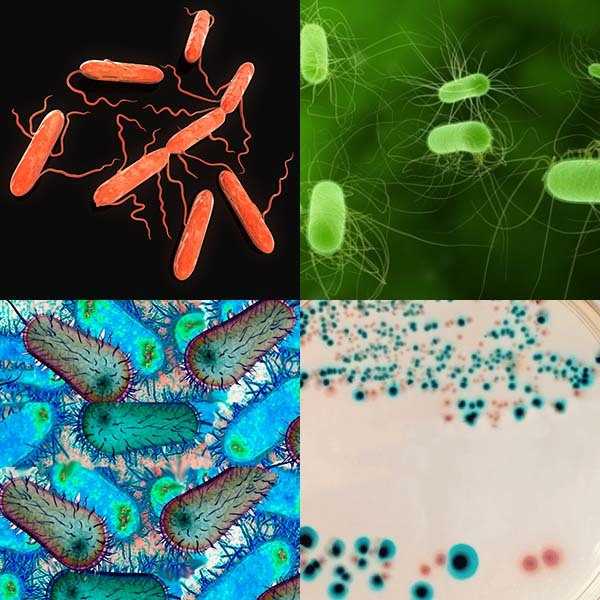
Phyla
All bacteria belong to the domain or kingdom Bacteria. This kingdom is further divided into phyla. Approximately 80% of all gut bacteria belong to the two phyla Firmicutes or Bacteroidetes. The ratio between these two ‘major groups’ is of crucial importance. In a healthy intestine, there are two to three times as many Firmicutes as Bacteroidetes. The phylum Firmicutes includes, for example, Clostridium spp. and Lactobacillus spp. The phylum Bacteroidetes includes the large classes Bacteroides and Prevotella. Broadly speaking, every person has the same gut flora, but there are major differences between individuals.
Tests for abnormal gut flora
If you have abnormal gut flora, stool testing through Darmklachten.nl can help. View our recommended test packages and individual modules below.






Functions of gut bacteria
Beneficial gut bacteria help inhibit the growth of harmful microorganisms. Plant fibres provide food for bacteria, which in turn produce healthy fatty acids. They also produce mucus that contributes to good resistance. In addition, they programme immune cells and produce brain hormones. Bacteria do this in a complex relationship with their host, the intestine. This close cooperation and mutual dependence between organisms is called symbiosis. Intestinal disorders and intestinal infections can in fact only be understood when viewed in relation to the gut microbiome.
Variation in the gut flora
A wide variety of bacterial species contributes to good health. This variation develops in several ways:
- During childbirth, bacteria are transferred from the mother to the baby. The baby’s intestine is inoculated during birth.
- Breast milk contains bacteria and is an important source of bacterial diversity.
- Contact with soil, animals and plants is important.
- Vegetables that you grow yourself contain bacteria that live in the soil.
Important elements for healthy gut flora include:
- The acidity of the intestinal contents
- The numbers of yeasts and fungi
- Immunoglobulin, sIgA
- Calprotectin and other substances indicating intestinal inflammation
- Bile salts
A decrease in diversity is caused by:
- Eating foods made from genetically modified products
- Sugars
- The use of vegetable oil
- Flavourings
- Chemicals
- Antibiotics
Symptoms of declining gut flora
A decrease in the number of beneficial bacteria and an overgrowth of harmful bacteria is associated with:
- A bloated abdomen
- Flatulence
- An abnormal bowel pattern
- Strong-smelling stools
- An increase in yeasts
- Inflammatory reactions
- Depressive symptoms
- Fatigue
- Symptoms that develop after a course of antibiotics
Causes of a decrease in gut flora
Possible causes of reduced gut flora include the use of antibiotics, following a low-fibre diet or using acid-suppressing medicines.
Available tests
The following is analysed in the gut-flora test:
- The acidity and digestion of food
- Aerobic flora (Enterobacteriaceae/E. coli, Enterococcus spp., Lactobacillus spp. Bifidobacterium spp.)
- Anaerobic flora (A. muciniphila and F. prausnitzii)
- The numbers of yeasts and fungi
- Enterotypes (Bacteroides spp., Prevotella spp., Ruminococcus spp.)
Treatment of dysbiosis
Dysbiosis can be treated in various ways. In some cases, following a diet or taking supplements may be sufficient. In other cases, the use of probiotics is recommended. Other possibilities include:
- Diet: a diet rich in vegetables increases the number of bacteria; see also the anti-inflammatory diet.
- Supplements: Zinc is important for resistance and the height of the intestinal villi. For adults, 15 mg per day is recommended; half this amount is recommended for children. Vitamin D is also important for the intestine.
- Probiotics: Lactobacillus rhamnosus LGG® originates from healthy human gut flora and is cultured in the laboratory. Three capsules per day are recommended.
- Symbioflor II contains healthy E. coli bacteria. This probiotic should only be used when E. coli levels are reduced. A maximum of 3 × 15 drops per day is taken.
- Gluten markers.
- Calprotectin and substances indicating intestinal inflammation.
- Bile salts
About Darmklachten.nl
Darmklachten.nl is an initiative of MGlab&Advies, a laboratory specialising in stool testing. …read more