
Histamine intolerance laboratory test
€ 64,00
The histamine level in the intestine rises with the consumption of certain foods such as chocolate, mature cheese, nuts and red wine. The enzyme diamine oxidase (DAO) is present in the small intestine in most people and breaks down histamine. With a DAO deficiency, gastrointestinal complaints occur together with itching, a blocked nose, insomnia or headache after eating histamine-rich products. This test does not measure the DAO level, but the histamine concentration after deliberately provoking a reaction by eating histamine-rich products. A high histamine level in the stool may then indicate a DAO deficiency.
The HISTAMINE module measures the concentration in the stool after provocation of:
- Histamine
€ 64,00
Description
Histamine intolerance test – histamine in stool
Do you have recurring symptoms after certain foods and suspect histamine may play a role? With this stool test, we measure how much histamine is present after you have first followed the instructions for a provocation with histamine-increasing foods. An elevated value can provide an additional indication that histamine is involved in your symptoms or is being processed less efficiently.
The result is not a diagnosis, but it can help investigate your symptoms more specifically.
Quick links
show
hide
Go directly to the information you are looking for.
When is this test suitable?
An additional test when symptoms may be related to histamine from food.
- You regularly experience gastrointestinal complaints, such as diarrhoea, abdominal pain or bloating, after certain foods.
- After eating or drinking, you also notice symptoms such as facial flushing or warmth, itching, headache, a runny nose, dizziness or palpitations.
- You suspect your symptoms occur more often after products that contain a lot of histamine or can release histamine.
- Your symptoms occur in episodes and you want to investigate how high the histamine level in your stool is after consuming histamine-rich foods beforehand.
- You want to use the histamine level in stool as additional information when investigating your symptoms further.
These symptoms are not specific to histamine and can have many different causes. The test is therefore intended as an additional investigation. The result only becomes meaningful when considered together with your symptoms, diet, medication use and any other test results.
What do we test?
The test measures the amount of histamine in your stool and compares it with the laboratory’s reference values.
Histamine in stool
We measure the amount of histamine present in the stool sample after the agreed preparation and provocation.
Reference values
The result shows whether the measured amount falls within or outside the laboratory’s reference values.
Important: this test measures histamine itself. The enzyme diamine oxidase (DAO), which is involved in breaking down histamine in the intestine, is not measured with this stool test. The result therefore cannot directly show whether you have a DAO deficiency.
What can the result tell you?
The measurement shows how much histamine is present after you have followed the agreed provocation.
If the histamine level remains elevated after the provocation, this may indicate that histamine is being processed or broken down less efficiently. This may be relevant if your symptoms occur specifically after histamine-rich or histamine-increasing foods.
DAO is one of the enzymes that helps break down histamine in the intestine. This test does not measure DAO itself and therefore cannot diagnose a DAO deficiency. An elevated histamine level after correct provocation can, however, be a reason to investigate the relationship between histamine, diet and your symptoms more specifically.
The test does not provide a definitive diagnosis of histamine intolerance. Its added value lies in obtaining an objective measurement at a deliberately chosen time. An elevated result can help determine whether it is worthwhile to investigate your personal response to histamine-rich foods further, for example with a temporary dietary adjustment and a symptom and food diary.
Explanation of the measured value
What histamine is and why the amount in stool is measured.
Histamine
Histamine is a substance that occurs naturally in the body. Among other things, it plays a role in immune responses, stomach acid production and signal transmission in the nervous system. Histamine is also present in various foods and can develop in larger amounts during ripening, fermentation or storage.
Normally, histamine from food is broken down again in the intestine. DAO plays an important role in this process. The idea behind this test is therefore not only that histamine-rich food temporarily raises the amount of histamine, but especially that we then look in the subsequent stool to see whether that amount has fallen sufficiently again.
Why is the provocation before sample collection important?
The preparation makes the measurement more informative by deliberately challenging histamine breakdown.
For this test, a provocation with histamine-increasing foods is deliberately carried out first. This challenges the body’s histamine breakdown. The aim is not merely to raise histamine, but above all to assess in the subsequent stool whether the amount has fallen sufficiently again.
The stool sample is then preferably collected the following day, especially when your recognisable symptoms have increased. We then measure how much histamine is still present. An elevated value after a proper provocation makes the result more informative than a single measurement without preparation.
If the histamine level remains elevated after this provocation, this may fit with less efficient processing or breakdown of histamine. This is not proof of one specific cause, but it can provide an additional indication that histamine plays a role in your symptoms. If the provocation was not carried out properly beforehand or the sample is collected at an unsuitable time, the result may instead be low and potentially give a distorted picture.
Please note: have you previously had severe reactions to food, are you pregnant, do you have a serious medical condition, or do you use medication and have doubts about the preparation? Discuss the provocation with your doctor or healthcare provider first.
How does the test work?
From preparation and sample collection to the laboratory result.
- You order the histamine intolerance test and receive the required collection materials with clear instructions.
- You follow the preparation instructions. On the evening before sample collection, you consume the indicated histamine-increasing foods and preferably collect the sample the next day when your recognisable symptoms have increased.
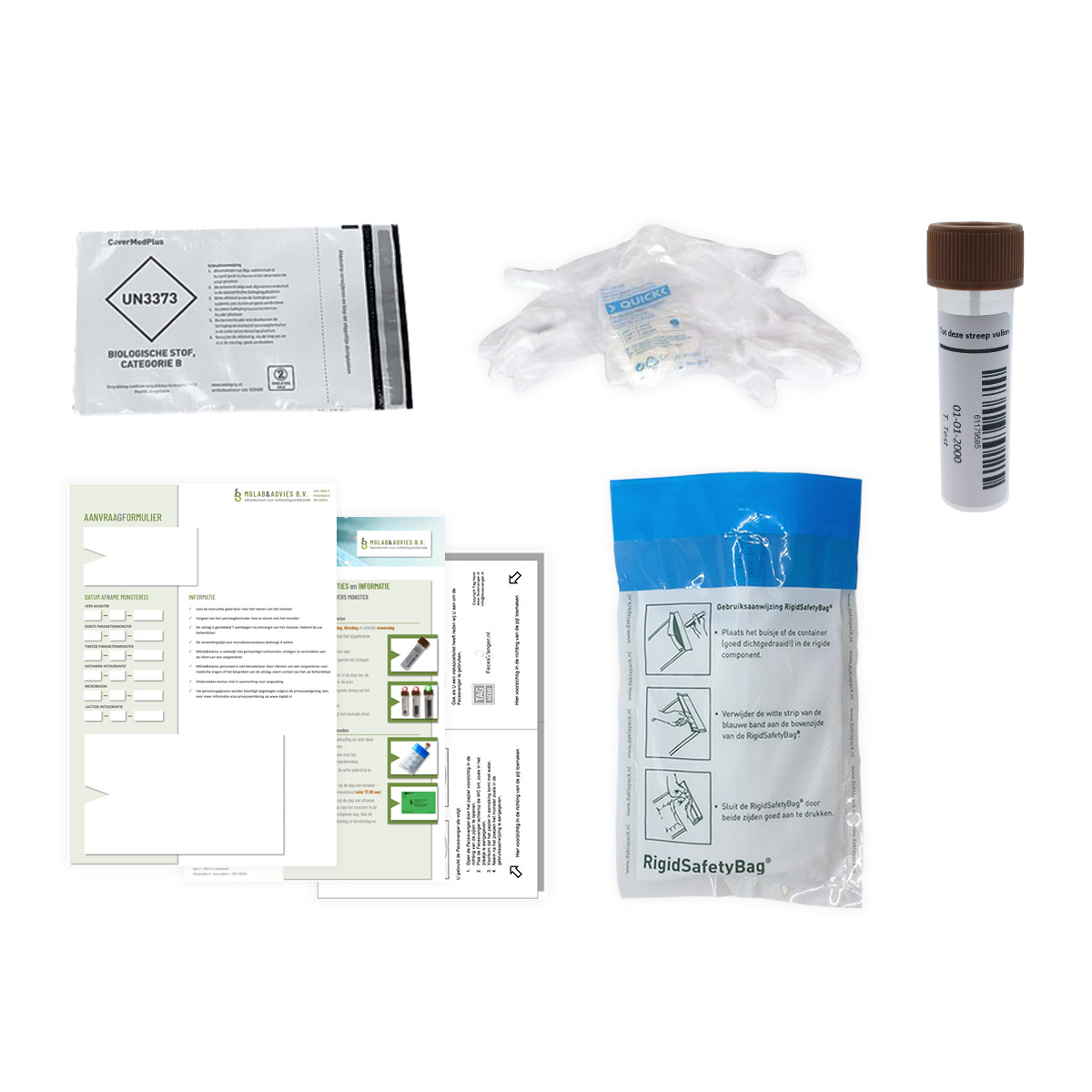
- You collect a small stool sample at home using the supplied collection materials.
- You package and send the sample to the laboratory according to the enclosed instructions.
- In the laboratory, the amount of histamine in the sample is measured. You then receive the laboratory result.
Results and next steps
How to assess the histamine level together with your symptoms and preparation.
The report shows the measured histamine level and the corresponding reference values. An elevated value after correct provocation can be a relevant indication that histamine is involved in your symptoms or is being processed less efficiently. The result can therefore help move from a general suspicion to a more targeted next step.
When interpreting the result, you should also consider the preparation, the timing of sample collection and your symptoms. If the result is elevated and this fits your symptom pattern, it may be useful to look more specifically at histamine-rich foods for a limited period. By then reintroducing products step by step, you and a professional can better assess which foods you do and do not tolerate.
Medical assessment remains important. Do you have persistent or severe symptoms, unexplained weight loss, blood in the stool, shortness of breath, fainting or other worrying symptoms? Discuss your symptoms with a doctor. A laboratory result does not replace a medical assessment.
Frequently asked questions
Answers to frequently asked questions about the histamine intolerance test.
No. The test measures histamine in stool, not the enzyme DAO. An elevated value after provocation can fit with reduced breakdown of histamine, for which DAO is one possible explanation. This does not establish a DAO deficiency.
Not on its own. There is no single laboratory value that can reliably establish histamine intolerance as a standalone diagnosis. The result must be assessed together with your symptoms, diet and other information.
The provocation deliberately gives your body extra histamine to process. The next stool is then examined to see how much histamine is still present. The idea is that, with good breakdown, histamine should fall sufficiently again. If the value remains elevated, this may indicate that breakdown is less efficient. Without proper provocation, the result may be low while it remains unclear how your body handles a higher histamine load.
Follow the supplied instructions for this. Do not choose a product that you know has previously caused a severe reaction. If you have any doubts about the safety of the provocation, discuss it with your doctor or healthcare provider first.
Do not stop medication on your own initiative. The preparation instructions may state that certain antihistamines can affect the measurement. Always discuss any temporary interruption with the doctor or prescriber who knows your medication.
The result can help investigate your symptoms more specifically. An elevated value after correct provocation can be an additional indication that histamine may play a role. This may be a reason to keep a structured record of your diet and symptoms for a while, specifically limit histamine-rich products and then assess step by step which products do or do not cause symptoms. In this way, you use the test as a tool for a more targeted approach, not as a standalone diagnosis.
It means that after the provocation, more histamine is present in the tested sample than expected according to the reference values used. Within this test setup, this may fit with reduced breakdown of histamine. However, it does not prove that you have a DAO deficiency or histamine intolerance.
Questions about this test?
Contact us if you would like to know whether this test suits your situation.
Do you have questions about this test or are you unsure whether it suits your symptoms? Please contact Darmklachten.nl. We will be happy to help you choose an appropriate test.
Order the histamine intolerance test
Measure the histamine level in stool after the prescribed provocation.
Would you like to investigate whether histamine may play a role in your symptoms and obtain more targeted information about this?
With this test, you measure the histamine level after a controlled provocation. An abnormal result can help determine whether further investigation into your personal response to histamine-rich foods is worthwhile.
You can order the histamine intolerance test at the top of this page.
Additional information
| Symptomen | Bloating, Chronic diarrhea, Diarrhea, Fatigue, Headache, Heart palpitations, Insomnia with intestinal complaints, Itching, Rumbling Bowels, Soft, mushy stools, Weight Loss |
|---|---|
| Aandoeningen |