Definition of digestion
Digestion is the process by which food is broken down in the body. The digestive process takes place in many different stages. The breakdown of easily digestible food begins in the mouth, where food is chewed and mixed with saliva. The stomach, bile and pancreatic enzymes each play a specific role in processing food. Some types of food, such as plant fiber, can only be broken down with the help of beneficial gut bacteria. Many factors can cause digestive problems. The stool may then contain undigested food, starch or fat.
We have a symbiotic relationship with the bacteria that make up our gut flora. Some fibers cannot be broken down by our intestines themselves, but they can be broken down by bacteria that live in the intestines. Fiber can therefore only be digested properly when enough of the right bacteria are present in the intestines. Healthy gut flora is therefore essential for good digestion.
The more beneficial and healthy bacteria live in the intestines, the better the fibers in vegetables and fruit can be digested. These beneficial bacteria must of course be nourished. Food for beneficial gut bacteria is called ‘probiotics’. Bacteria that support digestion feed on the fibers found in the leafy green parts of plants. If you never eat vegetables, the beneficial bacteria do not receive enough nourishment and their numbers decrease.
Healthy gut flora is extremely important for good digestion. If you experience gastrointestinal complaints or digestive problems, the gut flora test may be suitable. This test provides an extensive assessment of the health of the gut flora.
Causes of digestive problems
Digestive problems can be accompanied by various unpleasant symptoms. Factors associated with digestive problems include:
- Not chewing food properly
- Eating portions that are too large
- Eating fats and nuts (nuts contain a lot of fat)
- Overweight
- A lack of stomach acid
- Use of acid-suppressing medicines
- Inflammation of the small intestine, Crohn’s disease
- Inflammation of the large intestine, ulcerative colitis
- Bacterial infection of the small intestine, for example a Salmonella infection or an infection with Clostridium difficle
- Bacterial fermentation in the large intestine and gas formation in the intestines 7
- Infection with the parasite Giardia lamblia
- Gluten intolerance
- Food allergies
- A deficiency of pancreatic enzymes
- A gallbladder disorder
- A liver disorder

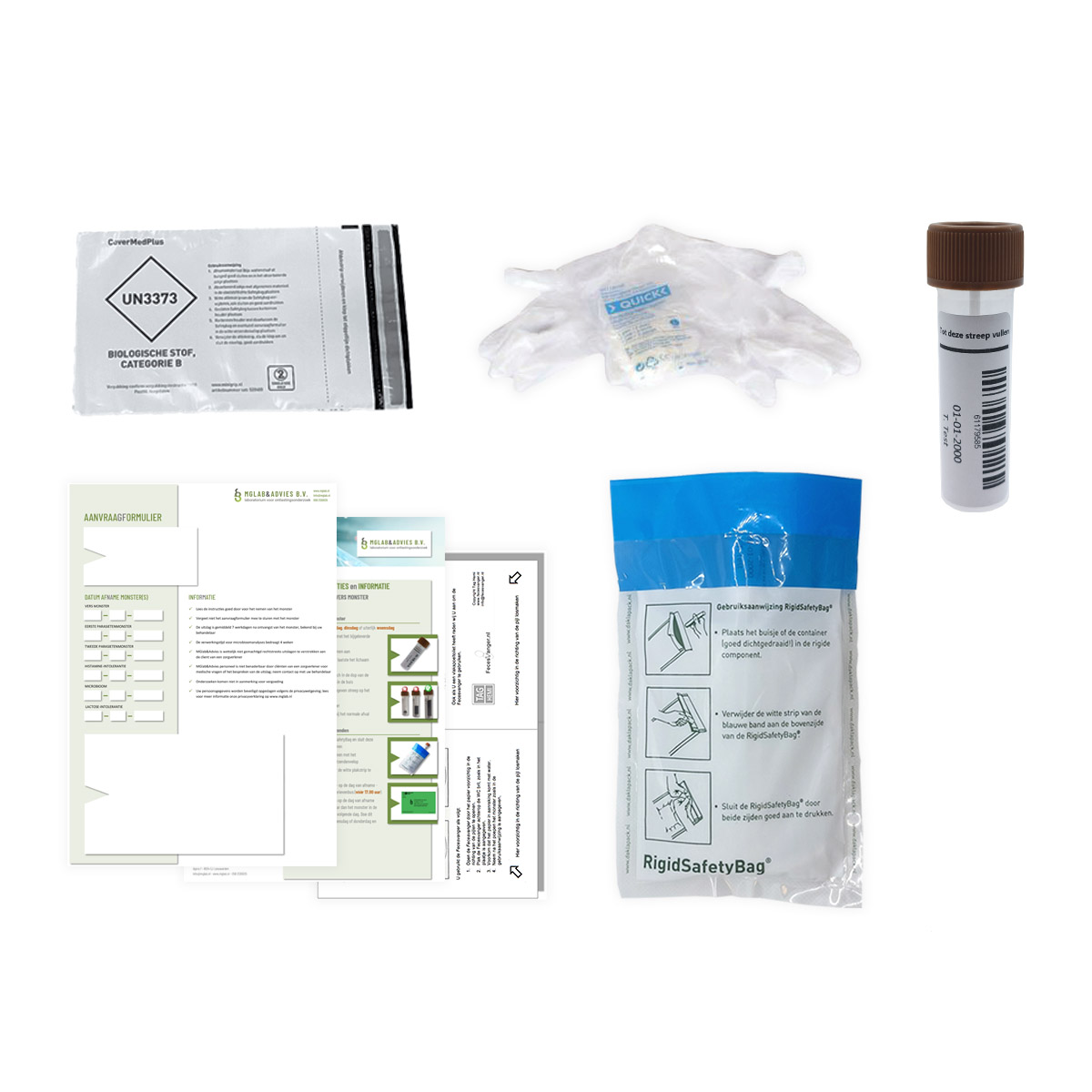
We recommend the following tests:

Symptoms associated with digestive problems
- Stomach complaints, heartburn
- Rumbling in the small intestine or pain around the navel
- A bloated abdomen
- Flatulence
- Allergic reactions
- Fatigue
The main cause of a stomach ulcer is infection with Helicobacter pylori. Many people carry this bacterium without experiencing symptoms. Carrying the bacterium does not mean that all of these people will develop a stomach ulcer. H. pylori may disappear spontaneously after a number of weeks. If symptoms persist, treatment to eradicate the bacterium is recommended. In some cases, an anti-inflammatory painkiller can also be the cause of a stomach ulcer. See also the article about stomach ulcers.
Available tests
Various tests are available to determine the cause of a digestive problem. Stool and blood testing can be performed. Stool testing can assess the following:
- Acidity, pH
- Undigested food left over during digestion
- The color and odor of the stool
- Fiber in the stool
- Fat content of the stool
- Starch content of the stool
- Gut flora
- Candida
- Bile salts
- Pancreatic enzymes
- Parasites
- Calprotectin
Blood testing can help determine whether:
- The body contains sufficient vitamins D and B12
- The body contains sufficient minerals, such as calcium
Treatment of digestive problems
Digestive problems can be addressed in several ways. If an underlying condition is present, such as a bacterial infection or a parasitic infection, that condition will need to be treated. If the problem is related to an unhealthy eating pattern, the diet will need to change. In many cases, our tests can help identify the cause of the digestive problem. Some possible approaches are listed below:
- Treat the underlying condition
- Rotate foods: eat something different each day and observe what agrees with you
- If stomach acid is deficient, add betaine HCl
- Eat light foods. Over millions of years, the stomach and intestines developed to process light, easily digestible foods: leafy greens, tubers, fruit and relatively small amounts of meat and fish. Soups and salads place little burden on the stomach.
About Darmklachten.nl
Darmklachten.nl is an initiative of MGlab, a laboratory specializing in stool testing. …read more