
Digestion laboratory test
€ 27,00
This test package examines several characteristics of the stool that provide insight into food digestion.
We assess fat, starch, plant fibres, pH, colour and consistency. Abnormal values can provide indications of reduced digestion or absorption of nutrients and can help determine whether additional testing is needed.
This laboratory test determines:
- pH (acidity)
- Fat
- Starch
- Plant fibres
- Colour
- Consistency
The result provides a practical overview of possible disturbances in digestion.
€ 27,00
Description
Digestive parameters – testing food digestion
Do you regularly experience bloating, flatulence or abnormal stools? The Digestive Parameters test looks not only at your complaints, but also directly at characteristics of the stool that can provide information about how food was processed at that time. This gives you additional information about fat and starch digestion, acidity and visible or microscopic food residues.
It is precisely the combination of these values that can help determine more specifically which next step may be useful.
Quick links
show
hide
Go directly to the information you are looking for.
When is this test suitable?
Targeted testing when you want to know more about food processing and the characteristics of your stool.
- You regularly have a bloated abdomen or flatulence after eating.
- Your stool is often loose, mushy, fatty or sticky.
- You regularly see undigested food residues.
- You want targeted testing to determine whether there are indications of abnormal fat or starch digestion.
This test is suitable for a targeted question about food digestion. It is particularly useful when complaints, stool pattern and other laboratory results are assessed together. With broader or persistent complaints, additional testing may be needed.
What do we test?
Different characteristics of the stool that together provide information about food processing.
Acidity (pH)
We measure how acidic or alkaline the stool is.
Fat content
We assess the amount of fat in the stool.
Starch
We check whether detectable starch residues are present in the sample.
Food residues and fibres
Visible residues of food and fibres are assessed.
Consistency and mucus
Characteristics such as stool firmness and any mucus are also taken into account.
Why can this test provide a lot of information?
Digestive complaints often cannot be determined from one symptom or one individual value.
Loose stools, flatulence or visible food residues can have different causes. The digestive parameters therefore add objective information from the stool sample to the picture of your complaints. Different aspects of digestion are assessed separately, including pH, fat content and starch and plant fibre residues.
The main strength lies in the pattern. A single abnormal value is rarely a diagnosis, but several values pointing in the same direction can help choose follow-up testing more effectively. For example, an abnormal fat content may be a reason to also look at pancreatic function, while large amounts of starch residues combined with loose stools and an abnormal pH may be more reason to consider diet, intestinal transit and other causes.
An apparently normal value can also be useful: it makes certain explanations less likely and helps avoid unnecessarily broad testing. The result is therefore best interpreted together with complaints, diet, stool consistency and any other investigations.
What can the result tell you?
The result shows whether there are clear abnormalities in the measured digestive characteristics in the sample tested.
A result within the reference values means that no clear abnormality was found in this sample for the characteristics measured. An increased fat content may be consistent with reduced fat digestion or absorption; starch residues may be consistent with incomplete breakdown or rapid intestinal transit; pH and stool characteristics provide additional context.
Because diet, intestinal transit and water content can vary from day to day, these parameters – like many other stool tests – are a snapshot.
Important: the test does not directly show the cause of an abnormality. It does not diagnose an enzyme deficiency, damage to the intestinal wall, an imbalanced gut flora or a specific intestinal condition.
Explanation of the values tested
What the different digestive parameters may indicate and how they are interpreted together.
Acidity (pH)
Gut bacteria convert nutrients and in doing so produce acids, among other substances. The pH can change due to diet, bacterial activity and intestinal transit. An abnormal pH is not specific on its own, but together with starch residues, consistency and complaints it can provide additional context about what was happening in the intestine at the time the sample was collected.
Fat content
Bile and digestive enzymes help break down fats, after which the small intestine absorbs them. More fat in the stool may be consistent with a problem with fat digestion or absorption, but the result is also influenced by what you ate beforehand.
For a representative impression, it is important that your usual diet contains sufficient fat in the days around sample collection. Large amounts of nuts and seeds can cause a falsely elevated fat result with this laboratory method. Therefore, always follow the current sampling instructions.
Starch
Starch from foods such as bread, potatoes, rice and pasta is broken down during digestion. Starch residues may be related to diet, incomplete breakdown or rapid intestinal transit. Especially in combination with pH, plant fibres and stool consistency, this parameter can help assess the pattern found.
Food residues, consistency and mucus
Visible food residues, plant fibres, stool firmness and any mucus help describe the stool pattern. These characteristics are not specific to a single disease, but are important for interpreting other results.
With very loose or watery stools, the sample is highly diluted. As a result, concentrations of certain faecal proteins may be lower and less reliable to interpret.
How does the test work?
From collecting the sample at home to assessing the different digestive parameters.
- You order the test through Darmklachten.nl.
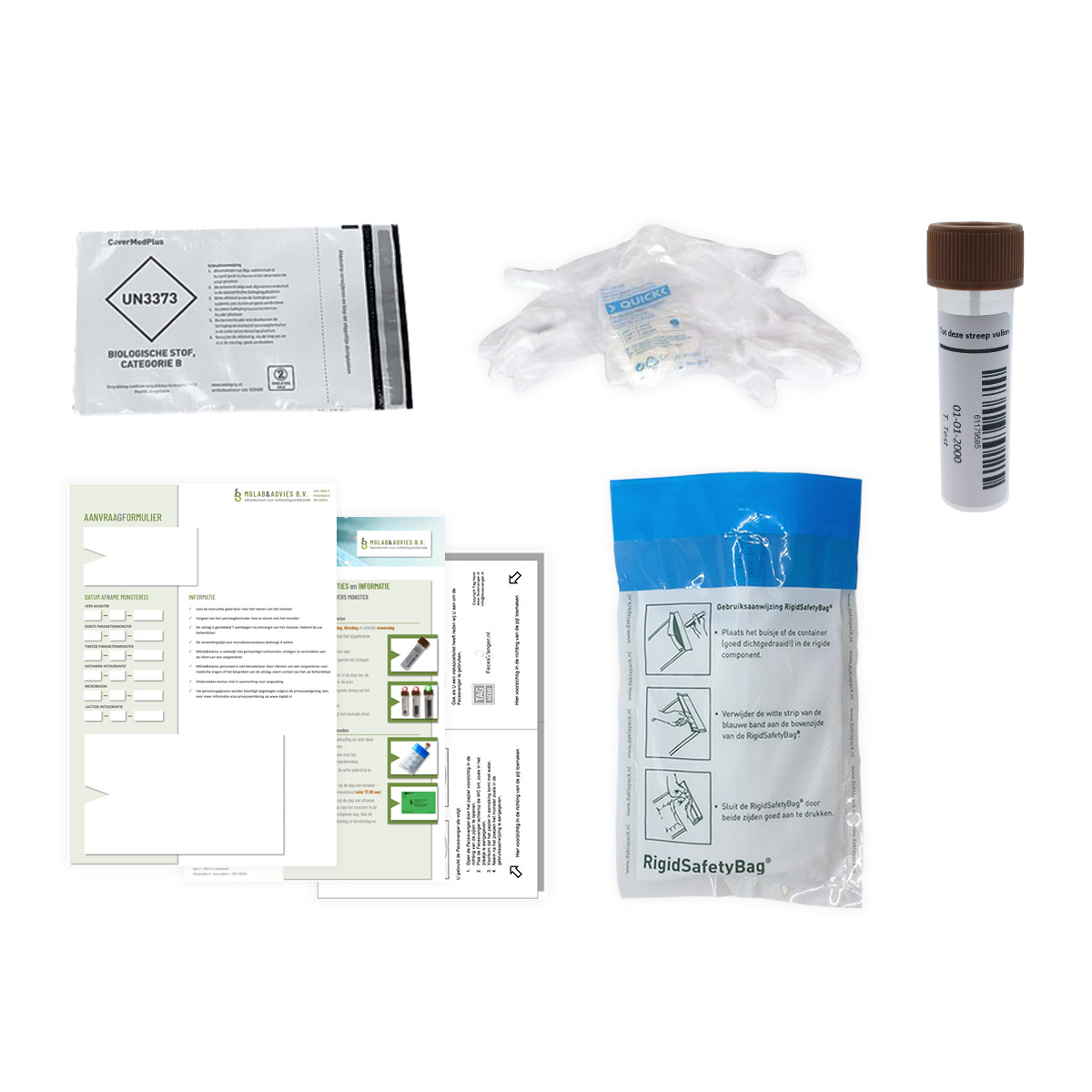
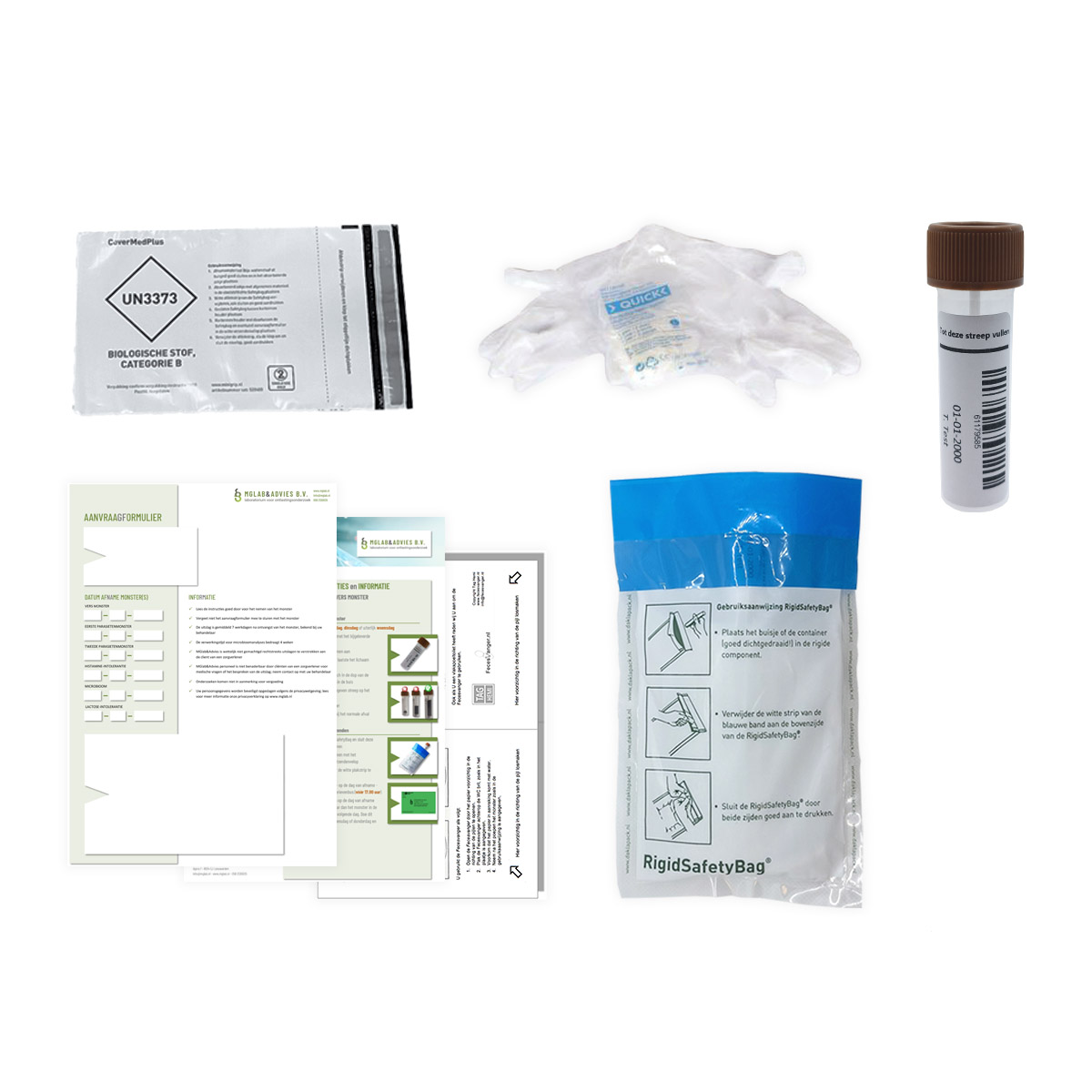
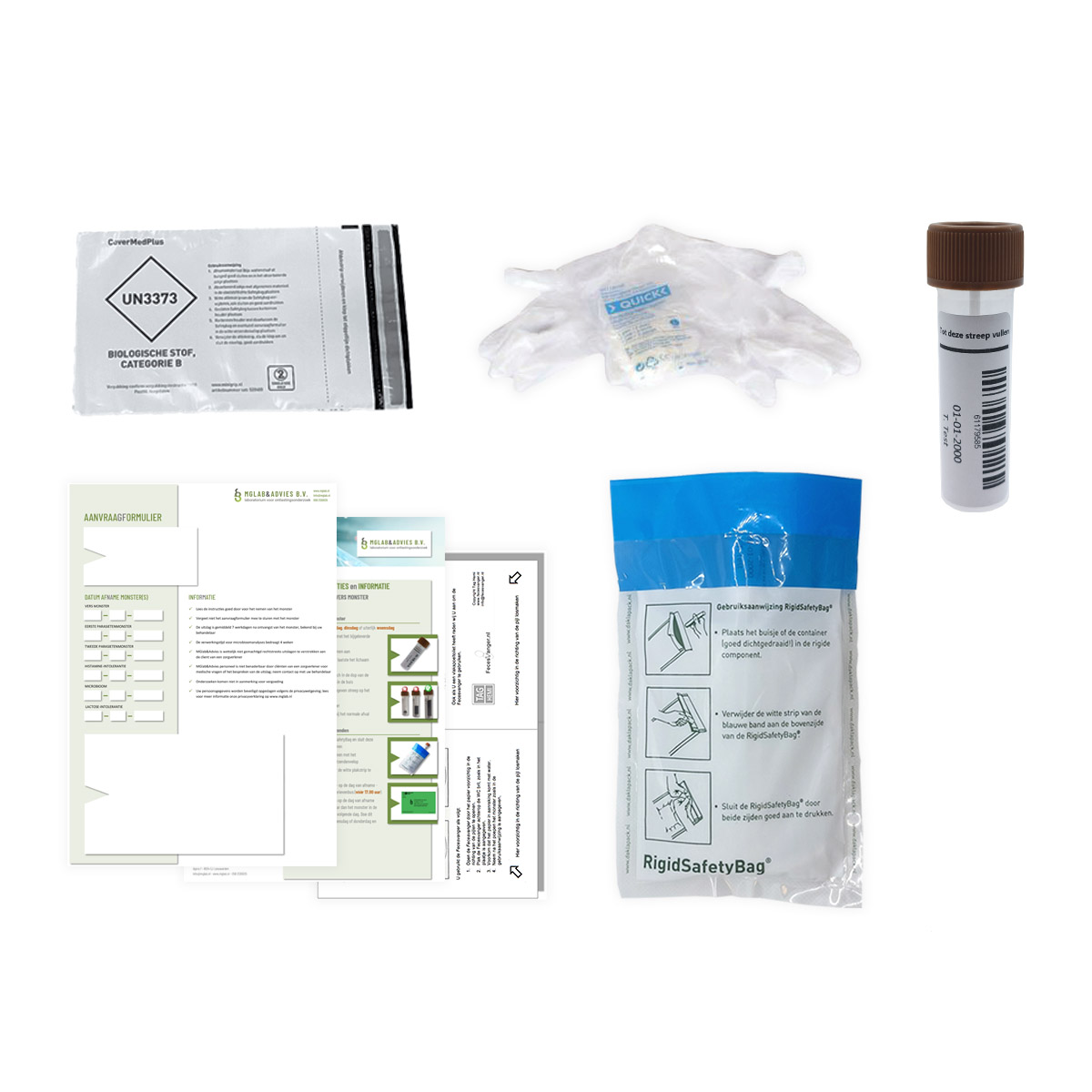
- You receive a sampling kit with instructions.
- You collect stool at home and send the sample according to the instructions.
- The laboratory assesses the requested parameters, including pH, fat content and starch and plant fibre residues.
- You receive a report with the results and assessment.
Results and next steps
How the pattern in the result can help choose targeted follow-up testing.
The report states the results and the corresponding reference value or assessment. Depending on the method, values are shown numerically or descriptively. In the event of abnormalities, we look at the overall picture.
For example, an increased fat content may be a reason to include faecal pancreatic elastase. With persistent diarrhoea or alarm symptoms, other tests such as calprotectin, Giardia testing or coeliac serology may be more appropriate.
A combination of tests can therefore provide much more information than a single value, provided the results are interpreted together with stool consistency, diet and complaints.
Frequently asked questions
Answers to frequently asked questions about the Digestive Parameters test.
No. The test does not measure enzyme production. If there is an appropriate indication, pancreatic elastase can be tested additionally.
No. The pH is partly influenced by bacterial processes, but it does not show which bacteria are present.
When the digestive parameters show a pattern that fits a specific follow-up question. Examples include fat content together with pancreatic elastase when investigating fat digestion, or consistency together with faecal protein markers such as zonulin or calprotectin. With loose or watery stools, dilution can affect the interpretation of concentrations. The digestive parameters then help place other results in the correct context.
No. Not all digestion and absorption problems cause abnormalities in these parameters.
Yes. The result relates to the stool sample that you submitted at that time. Diet, the speed of intestinal transit and the water content of the stool can influence the values measured. We therefore prefer to assess a result together with your complaints and the consistency of the sample. If results are unexpected or doubtful, repeating the test or performing additional testing may be useful.
Follow the current sampling instructions. For fat measurement, a normal fat intake is important; an extremely low-fat diet just before sample collection does not provide a good impression of the usual situation. Large amounts of nuts and seeds can instead cause a falsely elevated fat result with the method used and are therefore preferably avoided around sample collection. Do not change medication on your own initiative.
Questions about this test?
Contact us if you are unsure whether to choose this test or a more extensive stool test.
Are you unsure whether to choose this test or a more extensive stool test? Feel free to contact us for help with your choice.
Order Digestive Parameters
Targeted stool testing of characteristics of food digestion.
Would you like more insight into the digestion of your food?
The Digestive Parameters test provides additional information about fat and starch digestion, pH and characteristics of your stool, among other things.
You can order the test at the top of this page.