

Candida albicans Laboratory Test
€ 32,00
Candida and other yeasts are present everywhere in nature, including in soil, food and our bodies. The gut contains bacteria, yeasts and fungi that together help maintain a healthy environment. Yeasts are among the normal inhabitants of the mucous membranes in low numbers, but an increase in the gut can cause symptoms.
The CANDIDA module examines the number of cells per gram of stool of:
- Yeasts – including Candida albicans
- Fungi
€ 32,00
Description
Candida albicans stool test – testing for yeasts
Do you have chronic or recurring gastrointestinal complaints and want to know whether living yeasts may play a role? With this stool test, we examine how many living, culturable yeasts are present in your stool. We pay particular attention to Candida albicans. Other yeasts and fungi that grow on the culture medium are also assessed.
The result can provide additional information when looking for a possible explanation for your symptoms, but it cannot by itself show that Candida is the cause.
Quick links
show
hide
Go directly to the information you are looking for.
When is this test suitable?
An additional test for existing or recurring gastrointestinal complaints.
- You regularly experience bloating or a lot of flatulence.
- You have abdominal pain or abdominal discomfort without a clear explanation.
- Your stools have changed, for example diarrhoea, mushy stools or a changing bowel pattern.
- Your gastrointestinal complaints started or changed after a course of antibiotics.
- You want to know whether living, culturable yeasts, including Candida albicans, are present in your stool and in what amount.
These symptoms are not specific to Candida and can also have other causes. The test is therefore mainly intended as an additional investigation for existing gastrointestinal complaints. The result helps assess whether living, culturable yeasts were present in the stool at the time the sample was taken and in what amount.
What do we test?
The test maps living, culturable yeasts and any fungal growth in the stool sample.
Living yeasts
We determine the amount of living yeasts from your stool that can grow into colonies on the culture medium.
Candida albicans
Candida albicans is reported separately when it can be recognised with sufficient certainty on the basis of its growth pattern.
Other recognisable yeasts
Candida glabrata and Rhodotorula rubra may be reported separately when they can be recognised with sufficient certainty.
Other yeasts and fungi
Other yeast colonies are reported as ‘yeasts’. We also assess whether fungi grow on the culture medium used.
Method limit: with the current culture method, one visible colony corresponds to approximately 1,000 colony-forming units (CFU) per gram of stool. This is the practical detection limit of the method. Lower numbers of living yeasts may be present, but cannot be reliably detected with this culture setup.
What can the result tell you?
The report shows how many living, culturable yeasts were present in the stool sample tested.
A yeast is counted only when it can grow into a colony under the laboratory conditions used. If a colony is clearly recognisable, Candida albicans, Candida glabrata or Rhodotorula rubra may be reported separately. Other yeast species are reported as ‘yeasts’.
For people with chronic gastrointestinal complaints, this information may be relevant because the test shows whether detectable amounts of living yeasts were present at the time the sample was taken. A higher number of culturable yeasts may be a finding that is assessed together with your symptoms and other test results. However, the number alone cannot establish whether the yeasts are causing your symptoms.
Important: ‘living and culturable’ does not automatically mean that the yeast is causing an active infection in the gut. The test examines stool only and cannot detect or rule out a Candida infection in, for example, the mouth, vagina, skin or bloodstream.
Explanation of the values tested
What the different components of the report mean.
Candida albicans
Candida albicans is a yeast that can occur in humans, including in the mouth, gastrointestinal tract and vagina. With this stool test, we specifically look for living Candida cells that can grow on the culture medium.
The presence of Candida does not in itself mean that there is an infection. Symptoms elsewhere in the body require testing of material from that site.
Other yeasts
In addition to Candida albicans, other yeasts may also grow. When the growth pattern is sufficiently clear, Candida glabrata and Rhodotorula rubra may be reported separately.
Other colonies are not identified further to species level and appear in the result as ‘yeasts’.
Fungi
Yeasts and moulds both belong to the group of fungi. In this test, we look at whether fungal colonies grow in addition to yeasts.
If no fungal growth is visible, this is reported as negative.
How does the test work?
From receiving the sampling kit to the laboratory result.
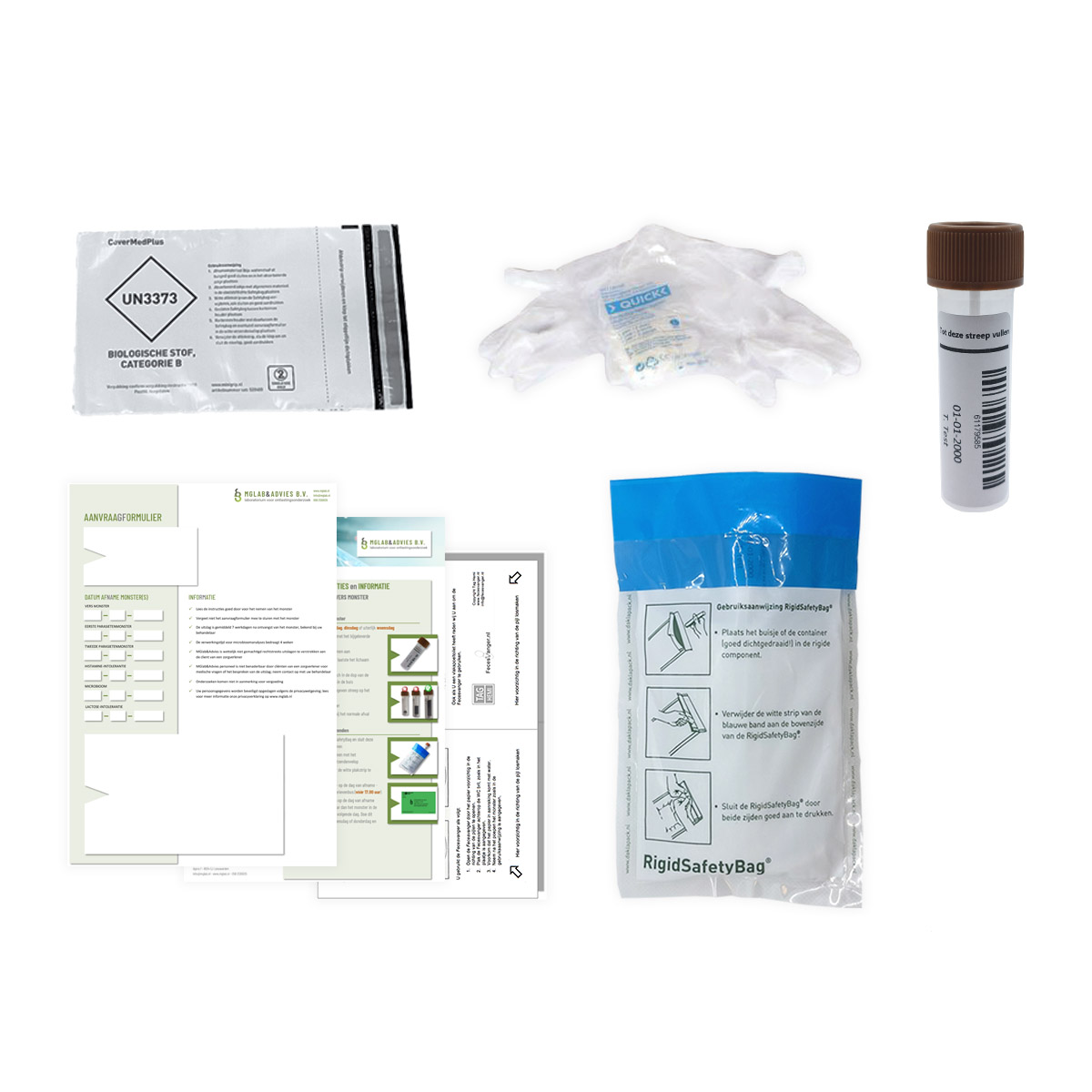
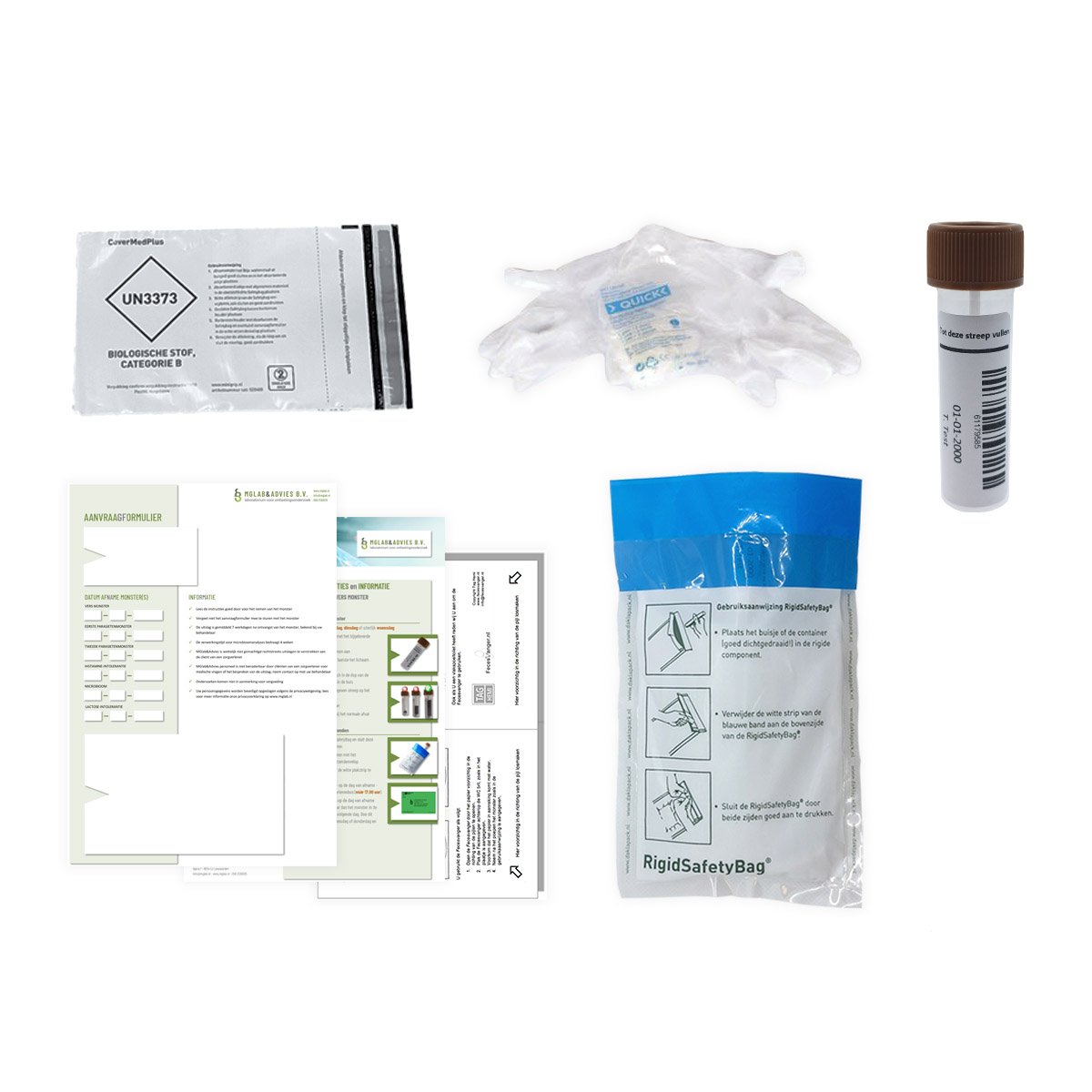
- You order the Candida albicans stool test and receive the required sampling materials with instructions.
- You collect a small amount of stool at home according to the enclosed instructions.
- You send the sample to the laboratory according to the enclosed instructions.
- In the laboratory, a fixed amount of the sample is placed on a special culture medium for yeasts.
- After culture, the colonies that have grown are assessed and counted. You then receive the laboratory result.
Results and next steps
How to read the laboratory finding and place it in context.
The report shows whether living, culturable yeasts were detected and in what amount. Candida albicans, Candida glabrata and Rhodotorula rubra are mentioned separately only when they can be recognised with sufficient certainty on the basis of the culture. Other yeast colonies are reported as ‘yeasts’.
A higher number of culturable yeasts is a laboratory finding. In someone with gastrointestinal complaints, it may provide relevant additional information, but it is not a diagnosis in itself. Its significance depends on your symptoms, medical history and any other test results.
Do you have persistent symptoms, symptoms in the mouth or vagina, or reduced immunity? It is then advisable to discuss the result and your symptoms with a doctor or another qualified healthcare professional.
Frequently asked questions
Answers to frequently asked questions about the Candida albicans stool test.
Yes. Candida albicans can occur in the gut and stool even without a Candida infection. Therefore, not only its presence is important; with this culture we also look at the amount of living yeast cells that can grow. A higher count on its own also does not prove that Candida is the cause of your symptoms.
No. The test measures living, culturable yeasts in stool. A positive or higher result does not in itself diagnose candidiasis and does not prove that Candida is the cause of your symptoms.
No. If oral or vaginal candidiasis is suspected, material from the affected site must be tested. A stool sample cannot detect or rule out a Candida infection elsewhere in the body.
With the current culture method, one visible colony corresponds to approximately 1,000 CFU per gram of stool. This is the practical detection limit of the method. Lower numbers of living yeasts may be present, but cannot be reliably detected with this culture setup.
No. ‘Living and culturable’ means that yeast cells from the sample were able to grow into a colony under laboratory conditions. This shows that they were viable, but not that they were causing an active infection in the gut at that time or were the cause of your symptoms.
No. Candida albicans, Candida glabrata and Rhodotorula rubra are reported by name only when the colony characteristics are sufficiently clear. Other yeasts detected are reported as ‘yeasts’.
Questions about this test?
Contact us if you would like to know whether this test suits your situation.
Do you have questions about this test or are you unsure whether it suits your symptoms? Please contact Darmklachten.nl. We will be happy to help you choose an appropriate test.
Order the Candida albicans stool test
Testing for living, culturable yeasts in your stool.
Would you like to know whether living, culturable yeasts, including Candida albicans, are present in your stool and in what amount?
You can order the Candida albicans stool test at the top of this page.