
What you need to know about soft, mushy stools
Under normal circumstances, food moves from the stomach to the small intestine. In the large intestine, the food mass is thickened before leaving the body at regular intervals in the form of stool. Normal human stool is firm, well formed and brown in colour due to remnants of our blood. The brown colour of stool ranges from light brown (similar to peanut butter) to dark brown (similar to chocolate spread). Bile and bilirubin come from red blood cells and are responsible for the brown colour. During an infection, intestinal transit speeds up, so less fluid is absorbed and the stool remains loose. When stool has an abnormal colour and/or is soft, sticky and not well formed, this may indicate an underlying condition. It is not normal for stool to keep sticking to the toilet bowl and for you to need toilet paper several times when wiping.
 Post-infectious syndrome
In some cases, intestinal symptoms continue after an acute episode of diarrhoea. If bacteria do not disappear on their own, the inflammation can become chronic. This is also known as post-infectious syndrome. It can cause abdominal cramps, flatulence, bloating, soft, mushy stools or diarrhoea. These symptoms can persist for years.
Symptoms associated with soft, mushy stools
- Bloated abdomen
- Flatulence
- Occasional periods of diarrhoea
- Abdominal pain and cramps
- Nausea
- Possible blood, pus or mucus in the stool
- Fever, headache, exhaustion and dehydration may occur
Tests for soft, mushy stools
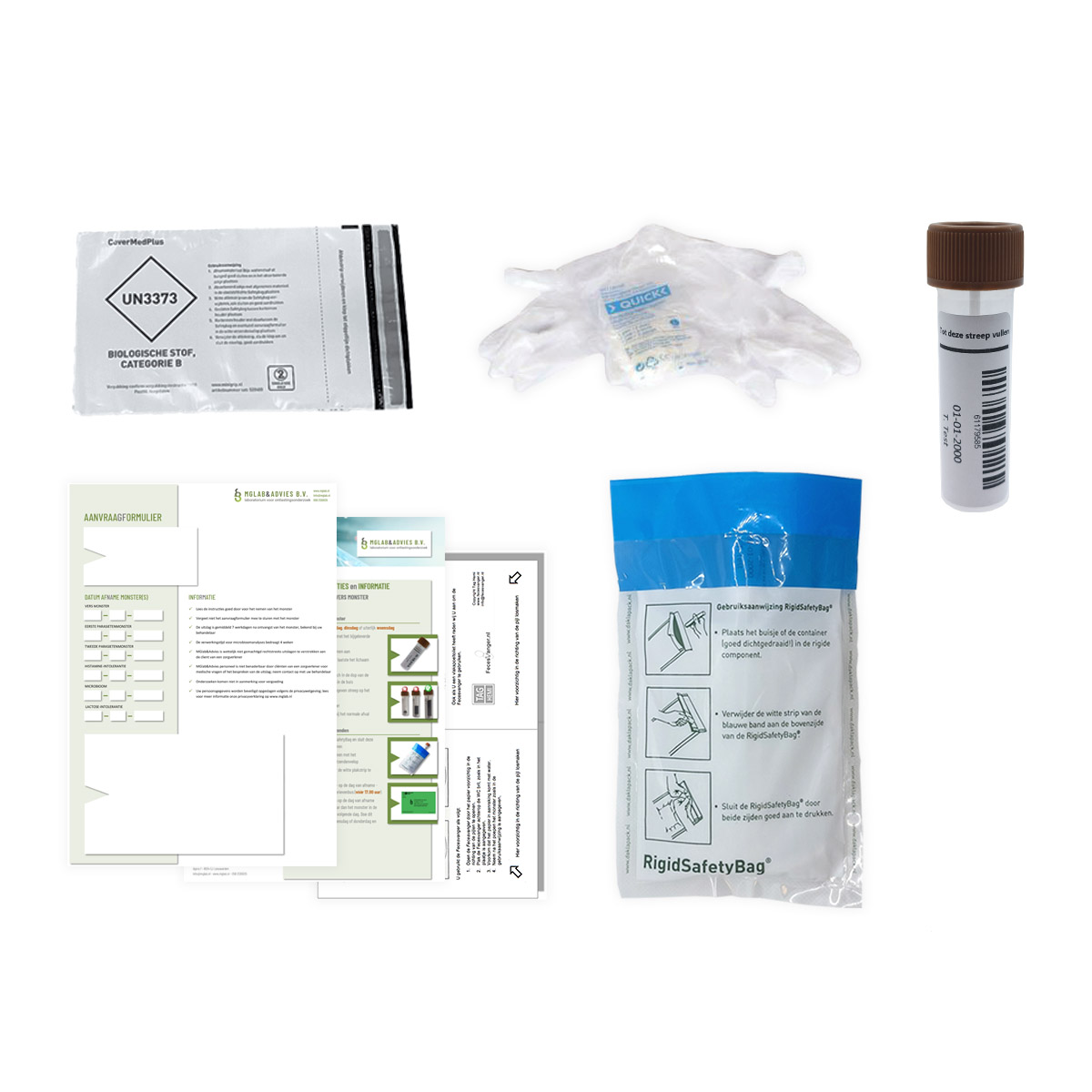
If soft, mushy stools that stick to the toilet bowl persist, stool testing via Darmklachten.nl may help identify a cause. See our recommended test packages and individual modules below.
- Sale

 +
+Abnormal bowel movements – diarrhea
Original price was: € 563,00.€ 450,00Current price is: € 450,00. meer informatie




Causes of soft, mushy stools
- Intestinal parasites
After infection with single-celled intestinal parasites, symptoms generally do not appear until several days later. In many cases, the consistency of the stool varies. Symptoms such as flatulence, bloating, nausea and increased urgency may persist for years. Examples include Dientamoeba fragilis and Blastocystis hominis. Diarrhoea is uncommon with Dientamoeba fragilis infection, but soft, mushy stools can occur. With Blastocystis hominis, symptoms are milder, although nausea is more common. - Abnormal gut flora, developing after antibiotic use
Diarrhoea may occur during or after a course of antibiotics. A culture of the gut flora can show whether the numbers of bacteria in the intestine are reduced or whether there is an increase in yeasts such as Candida albicans. Diarrhoea can also be caused by acid-reducing medication, heart medication, cholesterol-lowering drugs and antidepressants. If the symptoms started after taking medication, it may be possible to try switching to another medication. - Gluten intolerance
When someone has gluten intolerance, coeliac disease, diarrhoea occurs after eating grains that contain gluten. The protein gluten is found in rye, wheat, kamut and spelt. Diarrhoea, abdominal pain and bloating occur particularly in children. Their intestinal villi are more severely damaged than those of adults. - Lactose intolerance
15% of people in the Netherlands are unable to break down milk sugar. Symptoms may arise when intestinal bacteria break down undigested lactose in the intestine. Substances and gases that irritate the intestine are then released. In addition, undigested lactose attracts water, resulting in more watery stools. Diarrhoea may occur after drinking a glass of milk, but also due to hidden lactose added to foods and medicines. Flatulence, bloating and diarrhoea can be caused by an intolerance to milk sugar. - Food allergy
Milk, eggs, soy, wheat, peanuts and nuts are among the ten most common food allergies. With a nickel allergy, skin symptoms are caused by contact with nickel. Nuts, seeds and grains have a high nickel content and can cause internal symptoms. The same applies to a latex allergy. These are also known as cross-reactions. - Histamine intolerance
Histamine is released in the intestine during allergic reactions or after eating certain foods. High histamine levels in the intestine can cause diarrhoea. Histamine levels can rise due to a deficiency of the enzyme DAO, which breaks down histamine in the intestine. After eating aged cheese or chocolate and drinking red wine, histamine levels can become particularly high if there is a DAO deficiency. Foods with a high histamine content, such as sauerkraut or certain types of fish, can also cause symptoms. - Chemical colourings or additives
Aspartame, sorbitol and fructose are food additives that can cause diarrhoea and bloating. - Nickel or latex allergy
- Side effects of medication
- Candida
- Lack of stomach acid
- Bile-related problems
- Inflammation, autoimmune diseases
- Pancreatic disorders
More information about the tests
- Digestive parameters: pH, fat, starch, colour and consistency of the stool – read more…
- Gut flora analysis – Examination of part of the gut microbiota – read more…
- Intestinal parasites – Testing for infections with intestinal parasites – read more…
- Calprotectin – Inflammatory marker for Crohn’s disease and ulcerative colitis – read more…
- Beta-defensin-2 – Anti-inflammatory substance produced exclusively in the large intestine that helps protect it – read more
- Bile acids – Fat digestion – read more…
- Pancreatic elastase – Breakdown of fat, starch and proteins – read more…
- Antigliadin and anti-ht-Transglutaminase – Markers for gluten intolerance – read more…
- Histamine intolerance – Testing for the absence of the enzyme diamine oxidase – read more…

About darmklachten.nl
Darmklachten.nl is an initiative of MGlab&Advies, a laboratory specialising in stool testing. …read more