
What do worms do in the intestines?
There are several types of worms that can be present in the human intestine. These are known as multicellular parasites. The word “parasite” comes from two Greek words: “para” (beside) and “sitos” (food). More literally, these words refer to a person who sits down at someone else’s table and eats along with them. Worms in the intestines essentially do the same. They can take nutrients from the body and this can lead to weight loss. People become infected with worm eggs. These then develop into larvae in the intestine and eventually become adult worms in the intestines. The adult worms in turn lay eggs that leave the body through the stool. These eggs are not visible to the naked eye. We explain which complaints and symptoms this can cause.
Symptoms of worms in the intestines
Do you or your child have worms in the intestines? Worms in the intestines can cause gastrointestinal complaints. How can you recognise intestinal worms in yourself or your child? Look out for the following symptoms:
- Abdominal pain
- Nausea
- Weight loss
- Itching

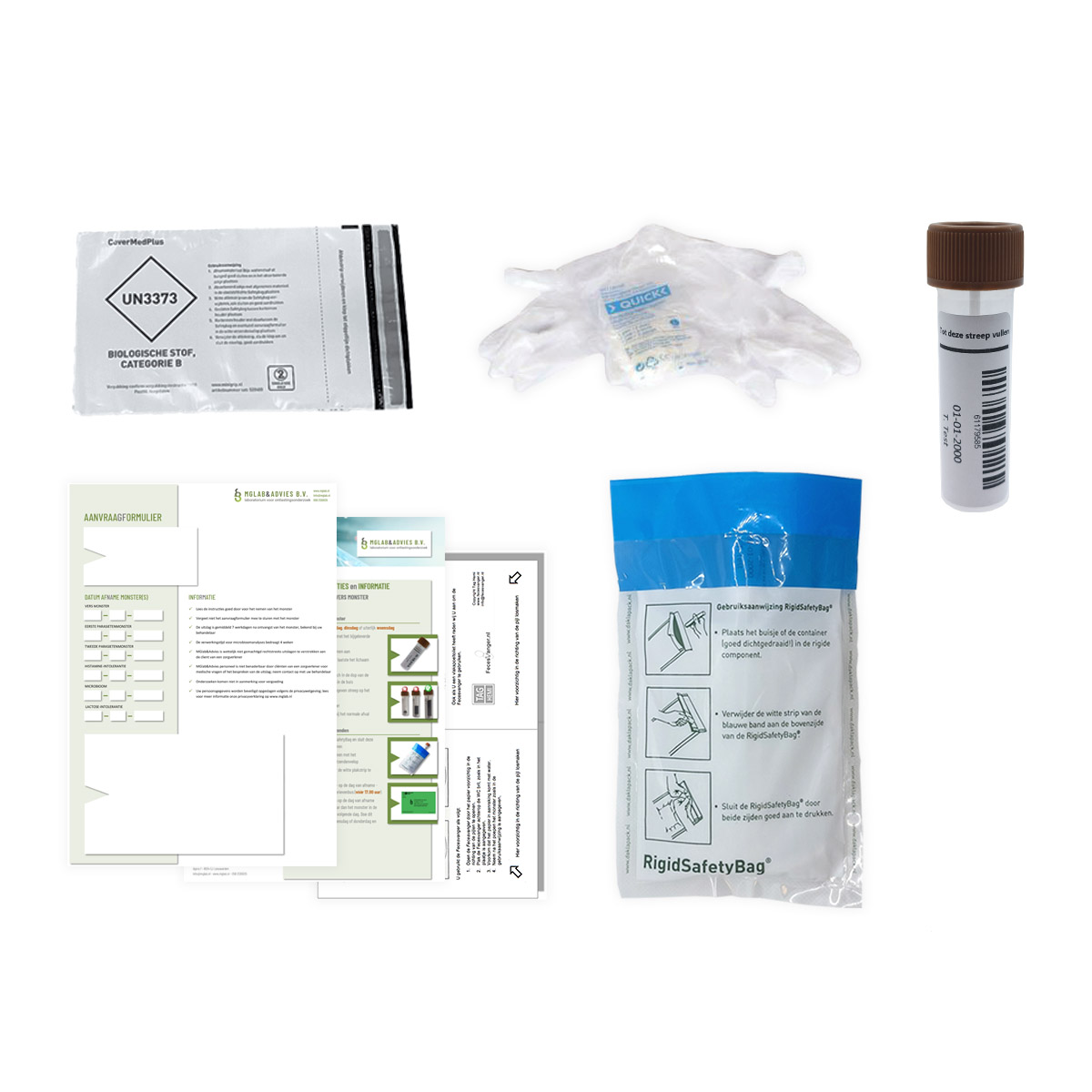
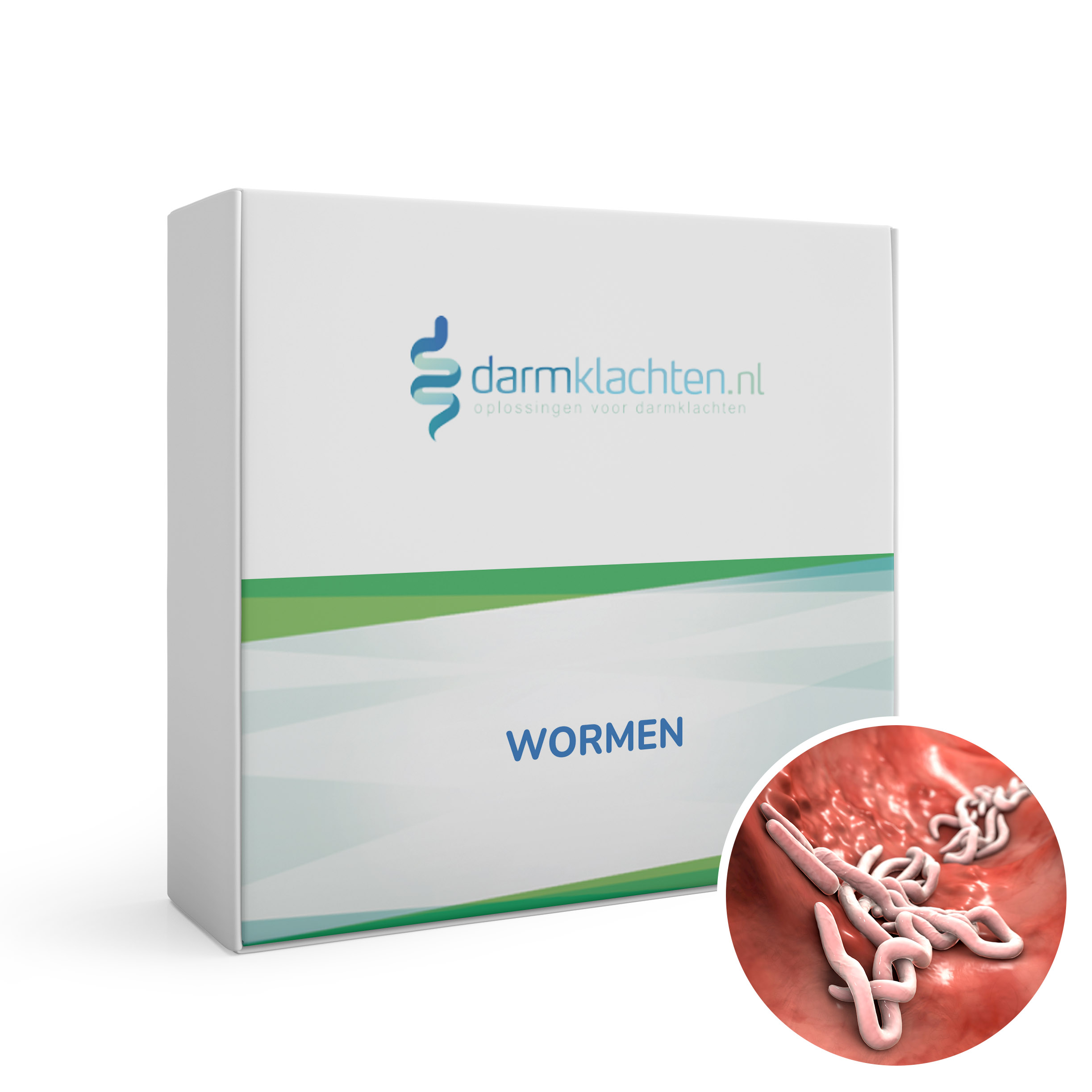
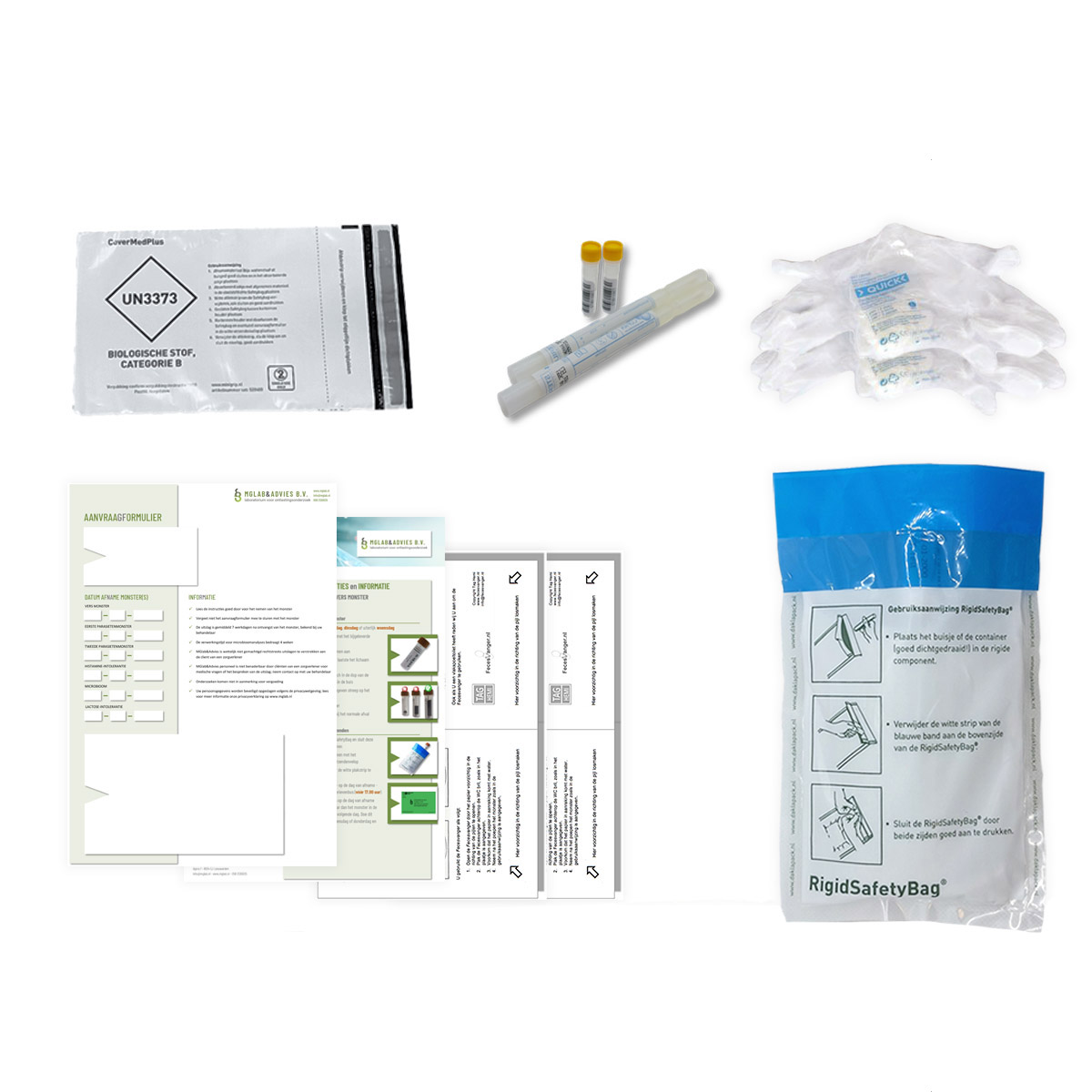
We recommend the following tests:

Types of worms in the intestines
The most common worm found in the intestines is the pinworm. Other worms can also be present in the intestines, although these are very rare. These include:
- Whipworm (Trichuris)
- Roundworm (Ascaris)
- Hookworm (Ankylostoma)
Below you can read more about the different types of worms that can occur in the intestines.
The whipworm (Trichuris trichiura)
Infection with this worm generally does not cause symptoms of disease. Under unhygienic conditions, the eggs of this worm enter the body through food. In some cases, infection can also occur through contact with pigs or dogs, or by eating meat that has not been fully cooked.
The roundworm (Ascaris lumbricoides)
It is estimated that a quarter of the world’s population is infected with roundworm. This worm lays many eggs in the intestines, which are passed out in the stool. Infection in Europe causes almost no symptoms and is also uncommon.
The dog roundworm (Toxocara canis)
Approximately 5% of adult dogs and 15–36% of adult stray and kennel dogs are infected with the dog roundworm Toxocara canis. People usually become infected with these intestinal worms through hand contact with dog faeces. The most common sources of infection are therefore sandpits, playgrounds, parks and garden soil.
The hookworm (Ankylostoma duodenale)
Hookworm infection is often acquired in tropical countries. Some people with these intestinal worms experience symptoms such as itching. Gastrointestinal complaints are generally mild with this worm. An important consequence of hookworm infection can be anaemia.
The tapeworm (Taenia solium)
The tapeworm is an intestinal worm that occurs mainly in pigs. Tapeworm infection can only be acquired abroad. The worm is transmitted through faeces and undercooked pork. This intestinal worm can cause symptoms such as painless swelling of the skin or lumps beneath the skin.
The herring worm (Anisakis)
The herring worm, or Anisakis, is a type of worm found mainly in marine fish such as cod, mackerel and herring. This intestinal worm can cause gastrointestinal complaints.
Risk of infection with intestinal worms
Worm infection can occur through animals and by eating undercooked pork or beef. Unwashed vegetables and fruit can also contain worm eggs. Infected people can pass on the eggs if they do not wash their hands properly. In tropical regions there are worms that can enter the home. These do not occur in the Netherlands.
Testing yourself or your child for worms in the intestines
Worms and their eggs can be identified under a microscope. This is done by sending stool to the laboratory. In the laboratory, the stool is examined under a microscope for worm eggs. Sometimes people regularly see thread-like structures in the stool that resemble worms. If you see a worm or thread-like structure, you are advised not to flush it away. Put it in a glass jar and have it sent to the laboratory. In many cases, the laboratory finds strands of mucus that resemble worms but have a different structure under the microscope from that of actual worms. Do you have complaints or symptoms associated with intestinal worms? You can easily order a test from us to test yourself or your child for worms in the intestines. The stool will then be tested for all the worm eggs listed above.
About Darmklachten.nl
Darmklachten.nl is an initiative of MGlab, a laboratory specialising in stool testing. …read more