


Fatigue & Insomnia package
Original price was: € 503,00.€ 397,00Current price is: € 397,00.
The FATIGUE & INSOMNIA package combines several modules to investigate the cause of fatigue and insomnia in relation to gastrointestinal complaints:
Original price was: € 503,00.€ 397,00Current price is: € 397,00.
Description
Fatigue & Insomnia package – comprehensive testing for intestinal symptoms
Do you have intestinal symptoms and also often feel tired, poorly rested or sleep badly? Fatigue and sleep problems can have many different causes. When these symptoms occur together with intestinal complaints, testing various processes in the gut may provide additional information.
This package combines testing of selected gut bacteria, gluten-related markers, histamine, immune and inflammation markers, and six intestinal parasites. The test does not determine the single cause of your fatigue or insomnia, but it may reveal possible gut-related leads for further investigation.
Quick links
show
hide
Go directly to the information you are looking for.
When is this package suitable?
Additional testing when fatigue or poor sleep occurs together with recurrent intestinal symptoms.
- You have experienced fatigue for a longer period and also have intestinal symptoms.
- You sleep poorly, wake up regularly or do not feel sufficiently rested after sleep, and you also have digestive symptoms.
- In addition to fatigue, you may have abdominal pain, bloating, gas, diarrhea or variable stools.
- Your symptoms regularly seem to be related to food.
- In addition to intestinal symptoms, you also experience symptoms such as headache, skin reactions, itching, palpitations or a restless feeling and want to investigate several possible leads at the same time.
- Previous testing has not provided enough direction and you want a broader look at factors in the gut that may be relevant.
Important: fatigue and sleep problems can also have other causes, such as anemia, thyroid disorders, sleep disorders, infections, medication use, or psychological and physical strain. This stool test is not a substitute for appropriate medical evaluation.
What do we test?
The package combines selected gut flora, gluten-related markers, histamine, immune markers, inflammation markers and six intestinal parasites.
Gut flora panel 1
Enterobacteriaceae and E. coli, Enterococcus spp., Lactobacillus spp. and Bifidobacterium spp.
Gluten-related markers and sIgA
Total secretory IgA, anti-human tissue transglutaminase and anti-gliadin sIgA in stool.
Histamine
Measurement of histamine in the material tested.
EDN
Eosinophil-derived neurotoxin: a marker that can provide information about eosinophilic immune activity.
Calprotectin and beta-defensin-2
Markers of inflammatory activity and local immune defense in the gut.
Lactoferrin and transferrin
Additional measurements of inflammatory activity and possible blood components in the stool.
Six intestinal parasites
Dientamoeba fragilis, Blastocystis hominis, Giardia lamblia, Cryptosporidium spp., Entamoeba histolytica and Cyclospora cayetanensis.
The package investigates various gut-related factors; it does not measure sleep quality or directly identify the general causes of fatigue.
What can the result tell you?
Different stool markers can each point toward a different possible direction for follow-up.
When fatigue or insomnia occurs together with long-term intestinal symptoms, you can investigate whether there are specific findings that warrant further attention. The selected markers offer several possible directions for further investigation:
- Gut flora: how are the selected bacterial groups represented, and how does the pattern fit with your stool pattern and the other results?
- Secretory IgA and gluten-related markers: are there additional findings related to local mucosal immune defense or gluten? If celiac disease is suspected, standard blood testing remains important.
- Histamine: is the measured concentration abnormal when symptoms occur, for example, around meals? This may provide a reason to look more closely at diet and the pattern of symptoms.
- EDN: are there signs of increased eosinophilic immune activity? The combination with histamine and other immune markers may lead to a more targeted follow-up question.
- Calprotectin and lactoferrin: are there signs of inflammatory activity that warrant standard medical follow-up?
- Beta-defensin-2: is there an abnormality in an additional marker of local immune defense, for example alongside EDN or a detected organism?
- Transferrin: are there indications of blood components in the stool? An abnormal result may be a reason for medical assessment.
- Parasites: is DNA from one of the six organisms tested present? The clinical significance differs by species and symptom pattern.
The overall pattern is important. Elevated inflammation markers with persistent diarrhea or detected Giardia with long-term intestinal symptoms may be a reason for more targeted follow-up. The results do not prove that the intestinal findings are causing your fatigue or insomnia.
Explanation of the markers tested
What each measurement means and why the results are assessed together.
Each value is assessed separately. A single abnormality rarely tells the whole story; the combination with your symptoms and other laboratory findings determines which follow-up question may be useful.
Gut flora panel 1
This panel tests Enterobacteriaceae and E. coli, Enterococcus, Lactobacillus and Bifidobacterium. It is a selected part of the gut flora, not a complete microbiome analysis.
A high or low value does not establish a diagnosis. The pattern may provide a reason to assess diet, intestinal transit or other factors more specifically.
Secretory IgA (sIgA)
Secretory IgA is an antibody involved in local mucosal immune defense. An abnormal value may provide additional information about immune activity.
The measurement does not by itself identify which trigger or condition is causing a change.
Gluten-related antibodies
Anti-gliadin sIgA and anti-tissue transglutaminase are tested in stool. Abnormal values may provide a reason to discuss gluten-related symptoms in more detail.
These measurements do not diagnose celiac disease and do not rule it out. If celiac disease is suspected, standard medical testing, including blood tests, is needed.
Histamine
Histamine is a substance naturally produced by the body that is involved, among other things, in immune responses and processes in the gastrointestinal tract. An abnormal result is not a diagnosis of histamine intolerance.
The value is considered alongside food-related symptoms and any findings for EDN, sIgA and beta-defensin-2.
EDN
Eosinophil-derived neurotoxin is released by eosinophils, a type of white blood cell. An elevated value may fit increased eosinophilic immune activity in the gastrointestinal tract.
The test does not identify the cause and cannot diagnose a food allergy. Other immune markers may provide additional context.
Calprotectin
Calprotectin is a commonly used stool marker of inflammatory activity in the gut. A value within the reference range makes clear active inflammation less likely.
An elevated value may be a reason for medical follow-up, depending on the level, symptoms and other findings.
Beta-defensin-2
This protein is involved in the immune defense of the intestinal mucosa. An elevated value may fit activation of local immune defense.
The marker is less specific than calprotectin and is interpreted as an additional finding. A combination with EDN or a parasite finding does not prove a causal relationship.
Lactoferrin
Lactoferrin is found, among other places, in white blood cells and may increase in stool with inflammatory activity.
Alongside calprotectin, the value can help determine whether medical follow-up for inflammation may be appropriate.
Transferrin
Transferrin is a blood protein that can be measured in stool as an additional indication of blood components.
An abnormal result is not a diagnosis on its own. Interpretation depends on the laboratory method, other values and your symptoms.
Six intestinal parasites
Targeted PCR is used to look for DNA from Dientamoeba fragilis, Blastocystis hominis, Giardia lamblia, Cryptosporidium spp., Entamoeba histolytica and Cyclospora cayetanensis.
The significance varies by organism. Some may occur without symptoms; others are known causes of intestinal infections. A positive DNA result does not prove that the organism is causing all of your symptoms.
How does the test work?
From collecting the stool material to reporting the requested measurements.
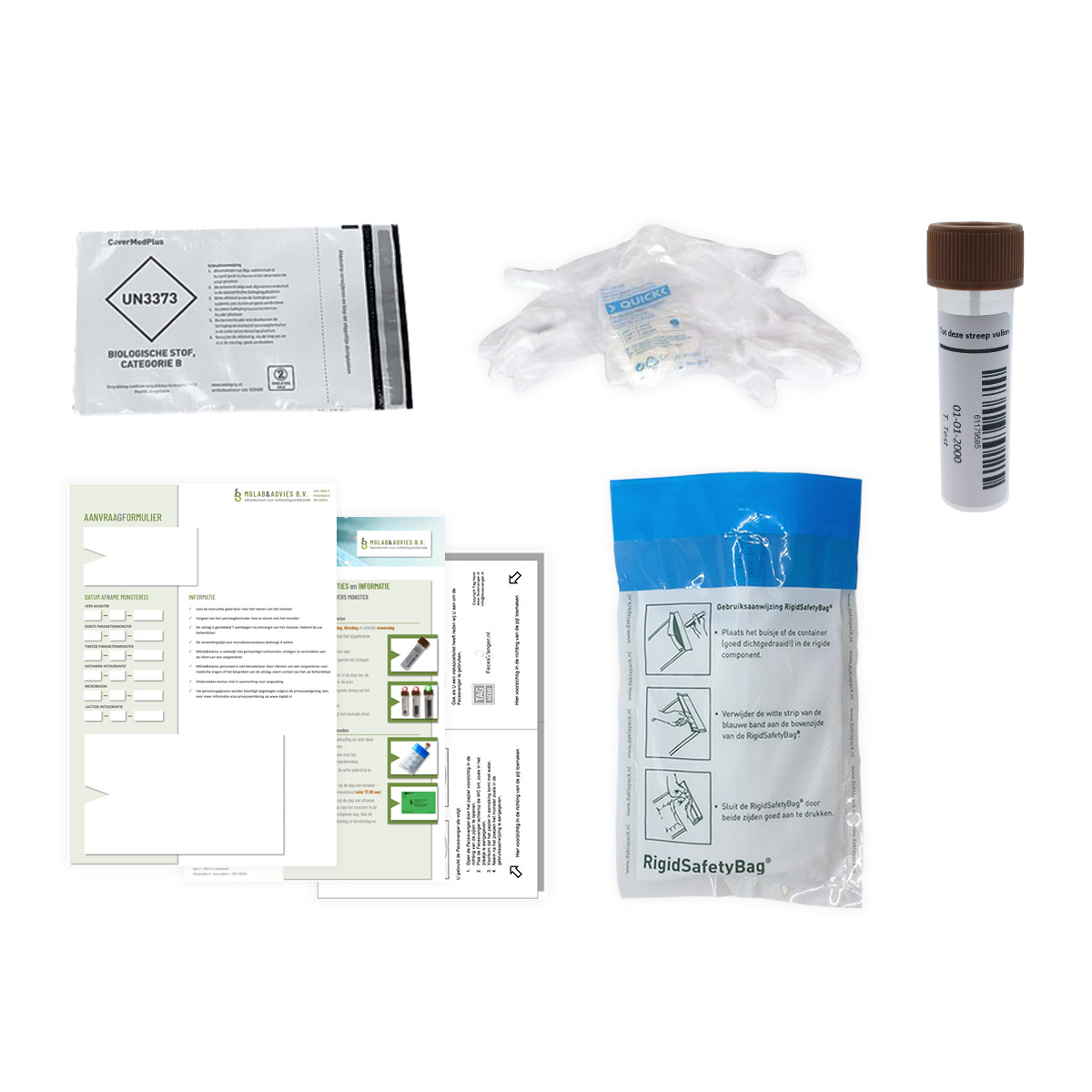
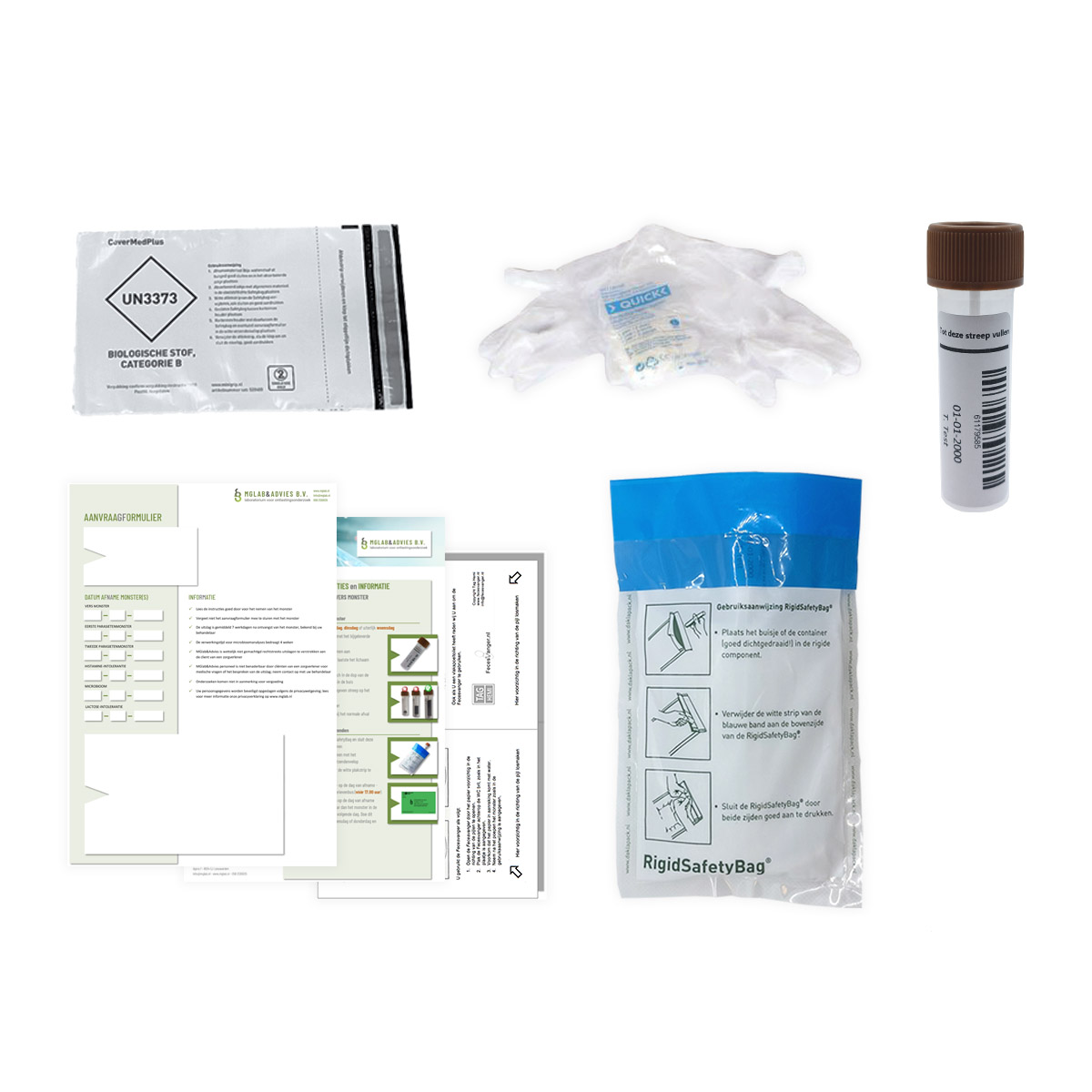
- You order the Fatigue & Insomnia package and receive the required collection materials with instructions.
- You collect the required stool samples at home. Different analyses may require separate tubes or collections.
- You package and send the samples according to the instructions provided.
- The laboratory performs the different measurements.
- You receive the report for the tests requested.
Results and next steps
Your symptom pattern, medical history and the combination of results determine which next step is appropriate.
The report shows the value or assessment found for each component tested. What matters is not only which values are abnormal, but also which abnormalities occur together and how they fit with your symptoms, diet, medication and previous tests.
Elevated histamine together with EDN and other immune markers may, for example, provide a reason to discuss food- and immune-related factors. Elevated calprotectin and lactoferrin may be a reason to investigate inflammatory activity further medically. If an intestinal parasite is detected, targeted follow-up testing or a discussion about treatment may be appropriate.
If you have medical questions about the meaning of the result, a diagnosis or treatment, discuss relevant findings with your treating physician or another appropriately registered physician.
When medical assessment takes priority: if you have visible blood in the stool, black stools, unexplained weight loss, anemia, persistent fever, severe diarrhea or rapidly worsening symptoms, standard medical assessment is important. If symptoms are severe or worsening quickly, contact your general practitioner or out-of-hours medical service.
Frequently asked questions
Answers to questions about the combination of gut testing, fatigue and sleep problems.
When fatigue or poor sleep occurs together with intestinal symptoms, it can be useful to look at inflammatory activity, local immune defense, food-related findings and parasites at the same time. A specific result can then help guide further testing, for example when an intestinal infection or celiac disease is suspected.
Review the pattern and your symptoms together with your healthcare provider. Elevated calprotectin and lactoferrin call for a different next step than elevated EDN and histamine. If a relevant parasite is found, targeted diagnostics or a discussion about treatment may be appropriate.
The composition of the sample also matters. With watery stool, some concentrations may appear lower because of dilution; this does not apply to all methods to the same extent. The results are most useful when symptoms, medication, diet and previous tests are also taken into account.
Questions about this package?
Help choosing between this comprehensive package and more targeted testing.
Are you unsure whether the Fatigue & Insomnia package fits your symptoms or whether more targeted testing would be sufficient? Contact Darmklachten.nl. We will be happy to help you choose an appropriate test.
Order the Fatigue & Insomnia package
Broad additional stool testing when intestinal symptoms occur together with fatigue or sleep problems.
Do you regularly experience fatigue or poor sleep in addition to intestinal symptoms and want to investigate several possible gut-related leads at the same time?
You can order the Fatigue & Insomnia package at the top of this page.
Additional information
Related products
 +
Chronic gastrointestinal complaints – Irritable Bowel Syndrome (IBS) package
Price range: € 350,00 through € 475,00 meer informatie