Bacterial infection
An acute bacterial infection of the small intestine can be caused by a number of specific bacteria. In most cases, the following bacterial species can cause such an acute infection:
- Campylobacter spp.
- Shigella spp.
- Salmonella spp.
- Yersinia spp.
- Klebsiella spp.
These bacteria live in the intestines of animals and humans and are excreted in the stool. Infection can occur through contact with stool, by eating contaminated food or through contaminated water. Infection does not always cause symptoms. It is estimated that approximately 1.7 to 5 billion cases of diarrhea occur each year, most of them in developing countries. Young children there experience diarrhea on average three times per year. The total number of deaths is estimated at 1.2 million annually.
Bacterial infections also occur in the Western world. Shigella bacteria, for example, are a common cause of dysentery worldwide. In the United States, around half a million people are infected with Shigella spp. each year. In the Netherlands, approximately 50,000 people are infected with Salmonella spp. each year.
Symptoms of a bacterial infection
Symptoms can develop quickly with a bacterial infection, including:
- Nausea
- Vomiting
- Blood, pus or mucus in the stool
- Fever
- Headache
- Exhaustion and sometimes dehydration
Culturing only these bacteria obviously does not provide a complete picture of the gut flora, but such an analysis can show whether the gut flora has decreased. A decrease in gut flora is called dysbiosis.
In the gut flora, 99% of bacteria are anaerobic, meaning that they cannot tolerate oxygen. For this reason, these bacteria cannot be cultured in the laboratory. When bacteria are cultured, they are exposed to oxygen and die, making culture impossible. The gut flora can therefore only be mapped using genetic techniques. A technique has been developed relatively recently that can determine the ribosomal RNA (the 16S gene) of bacteria. Such a test is called a microbiome test.
The DNA of gut bacteria contains an enormous amount of genetic information, much more than human DNA, which contains 25,000 gene pairs. The gut microbiome contains 2,500,000 gene pairs. It is worth noting that the vast majority of the genes available to humans are non-human: 99% of our genes are bacterial. The body is, in effect, a vessel filled with bacteria.

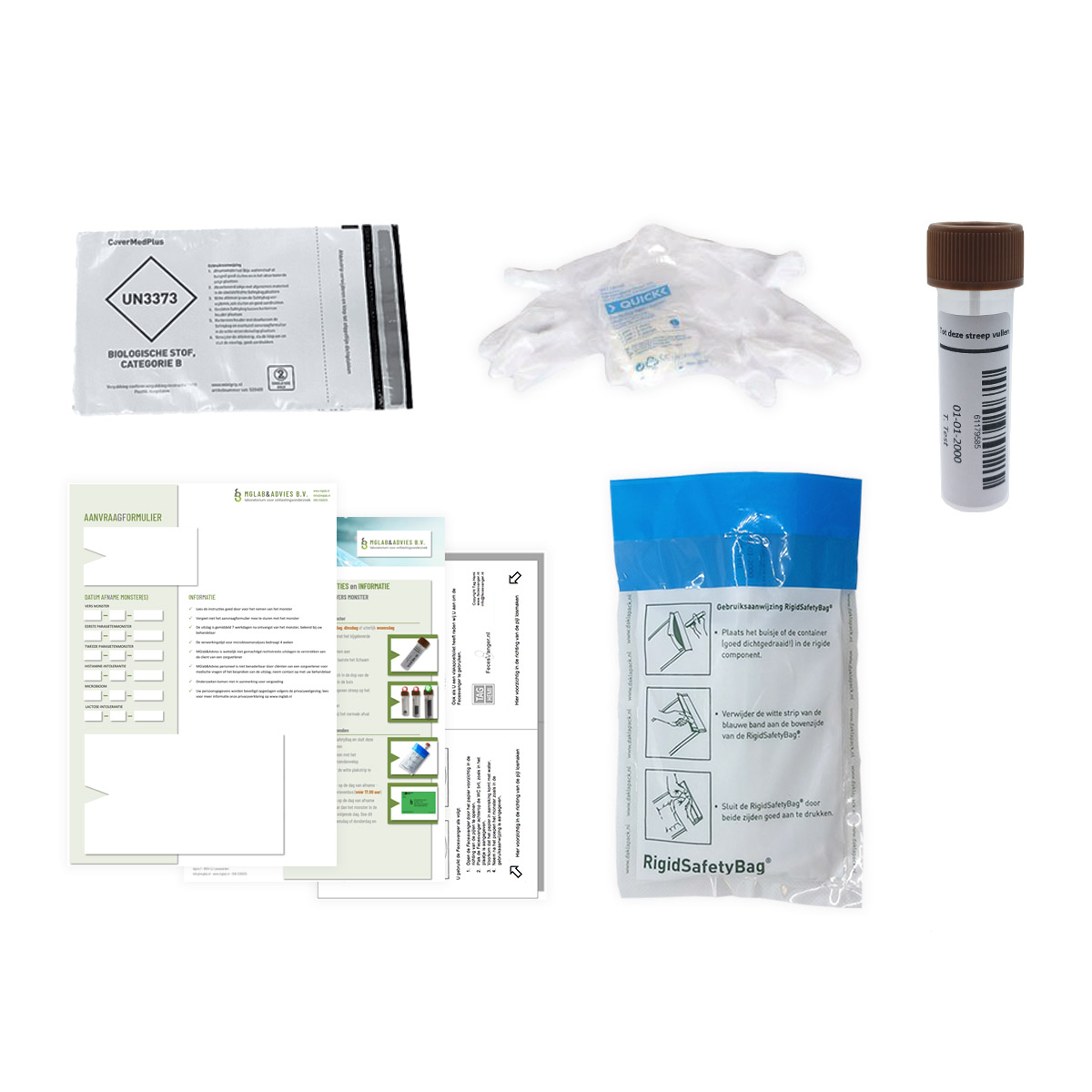
We recommend the following tests:




Causes of bacterial infection
Campylobacter spp. Infection with Campylobacter spp. can cause diarrhea. Infection is often acquired by eating contaminated chicken. Symptoms develop in only 3–5% of Campylobacter spp. infections. Complications caused by this bacterium include:
- Abscesses in various organs
- Pneumonia
- Joint inflammation
- Fever
- Kidney failure
- Sepsis (blood poisoning)
An infection can result in Guillain-Barré syndrome, a muscle disorder in which sudden loss of strength occurs. Two to three hundred people develop this syndrome each year.
Shigella spp. Infection with Shigella spp. in people with a healthy immune system lasts no longer than 5 to 7 days. Infected people may experience a mild fever. This bacterium can also cause diarrhea, which usually resolves without antibiotic treatment. However, it can take several months before bowel movements return completely to normal. For this reason, treatment is sometimes chosen after all. Shigella rarely occurs in animals. It is mainly a human disease, although Shigella can occur in animals such as monkeys and chimpanzees.
Salmonella spp. There are several Salmonella species. The most important and most common species in the Netherlands are S.typhimurium and S.typhimurium. The Salmonella species that occur only in humans are S.typhi and S.paratyphi. Other Salmonella species can occur in both humans and animals.
Yersinia spp. An infectious disease can be caused by the bacterium Y.enterocolitica, an infection that occurs most commonly in young children. The characteristic symptoms develop 4–7 days after exposure and can persist for 1–3 weeks or longer.
Clostridium difficile. Clostridium difficile occurs regularly. Infection can be acquired through the hands or in hospital, but not through food. Clostridium difficile is an anaerobic, spore-forming bacterium that can cause diarrhea when the normal gut flora is disturbed. Clostridium difficile type 027 is a dangerous variant of this bacterium. People with a healthy immune system have little to fear, but older people and people in poor health may be unable to break down the toxins produced by this bacterium. The use of acid-suppressing medicines increases the risk of infection.
Diagnosis
Because most infections do not cause complications and resolve spontaneously, a diagnosis is often not made. When a diagnosis is made, it is based on detecting the bacterium in the stool. However, an infected person does not continuously excrete the bacterium that caused the infection. To make the correct diagnosis, stool must therefore be collected on three consecutive days. In most cases, diagnosis is made by PCR and by detecting toxins.
Risk factors for a bacterial infection
Infection in humans occurs mainly through eating contaminated meat, eggs or other contaminated products. The distribution of causes of bacterial infection is as follows:
- Eggs (39%)
- Pork (25%)
- Chicken (21%)
- Beef (11%)
- Other products (4%)
A bacterial infection can also be acquired through contact with people or animals, for example through contact with an infected family member or pet. Childcare centers and healthcare facilities can also be a source of infection. Other possible sources include:
- Sexual contact with an infected person
- The hands of people who prepare food
- The toilet
- Water contaminated with stool
Treatment
In principle, no treatment is started. If complications occur, antibiotics may be used. Antibiotics are prescribed only in severe cases. Shigella spp. and Clostridium difficile are often resistant to antibiotics.
Prevention
Thoroughly heating food and maintaining good hygiene during food preparation can prevent a large proportion of infections. If young children frequently have diarrhea, this can lead to malnutrition, growth delay and reduced intellectual development. In such cases, it is important to continue providing healthy food. If the child is breastfed, breastfeeding should be continued.
Homemade solutions of water, sugar and salt can help prevent severe dehydration. Antibiotics, although rarely used in these situations, may be recommended in some cases, such as bloody diarrhea and high fever.
About Darmklachten.nl
Darmklachten.nl is an initiative of MGlab, a laboratory specializing in stool testing. …read more