
Definition of colon cancer
Colon cancer is a tumour that develops from the wall of the large intestine. The cancer cells often develop from a polyp. Colon cancer is the third most common form of cancer in the Netherlands. In 2015, an estimated 14,400 people were diagnosed with colon cancer. The number of cases of colon cancer increases every year. The cancer can develop in the large intestine and in the rectum. Colon cancer occurs almost exclusively in people over the age of 50. If colon cancer develops at the age of 75 or older, people often do not die from it.
Stages of colon cancer
Colon cancer begins with changes in the cells of the intestinal mucosa. These accumulate to form a polyp (adenoma). Further changes then occur in the cells of the polyp. Eventually, cancer cells develop from these changes; these are referred to as adenocarcinoma.
With chronic inflammation, the cells of the intestinal mucosa change and ‘degenerate’ or ‘disorganised’ cells may develop. At an early stage this is referred to as dysplasia. This process can progress to cancer growth and form a dysplasia carcinoma. The progression of colon cancer is classified into stages I through IV. At present, in half of people with colon cancer, the cancer is not detected until a late stage (stage III or IV). Although stool testing misses many diagnoses, it does offer the possibility of detecting cancer in time. A diagnosis made at an early stage saves lives.

Lynch syndrome
The most common hereditary form of colon cancer is Lynch syndrome, or hereditary non-polyposis colorectal carcinoma (HNPCC-Lynch). In 5% of all colon-cancer cases, a hereditary factor is present and Lynch syndrome is involved. Hereditary colon cancer usually develops before the age of 50, whereas non-hereditary colon cancer usually occurs after the age of 50.
With Lynch syndrome too, the cancer develops from an intestinal polyp. One difference from non-hereditary colon cancer is that the tumour is located at the beginning of the large intestine, at the transition to the small intestine. Lynch syndrome is associated with a slightly increased risk of cancer of the small intestine, bladder or renal pelvis.
Symptoms of colon cancer
Symptoms may include:
- A changing bowel pattern
- Constipation
- Diarrhoea
- Weight loss
- In some cases there is blood in the stool, but this blood loss is usually invisible.
These symptoms are not specific to colon cancer. The complaints can also occur with a food allergy or infection with single-celled parasites.
Testing for colon cancer
Stool testing. People with colon cancer do not always experience symptoms. Some patients become concerned about their health when they develop abdominal complaints or when their bowel pattern changes. They then wonder whether they have colon cancer.
For people over the age of 50 who experience the symptoms listed above, it is recommended to request several tests. Stool testing can serve as a first diagnostic step in this situation. In many cases, the doctor will request a test for traces of blood. Several analyses can be used to detect a tumour or inflammation. It is useful to request several tests, because this increases the chance of detecting cancer at an early stage. The occult blood test is an analysis used to detect invisible traces of blood in the stool. In many cases of colon cancer there is no blood loss, or it occurs only at a late stage. Stool testing can be used to analyse the following values:
- Calprotectin
- Lactoferrin
- Beta-defensin
- Transferrin
- M2PK
- Alpha-1 antitrypsin
- Acidity and the numbers of Lactobacillus.
These markers can also be elevated in an intestinal infection such as ulcerative colitis or in the presence of polyps. If values are elevated, an internal examination is required to determine whether the abnormal values are caused by inflammation or by colon cancer.
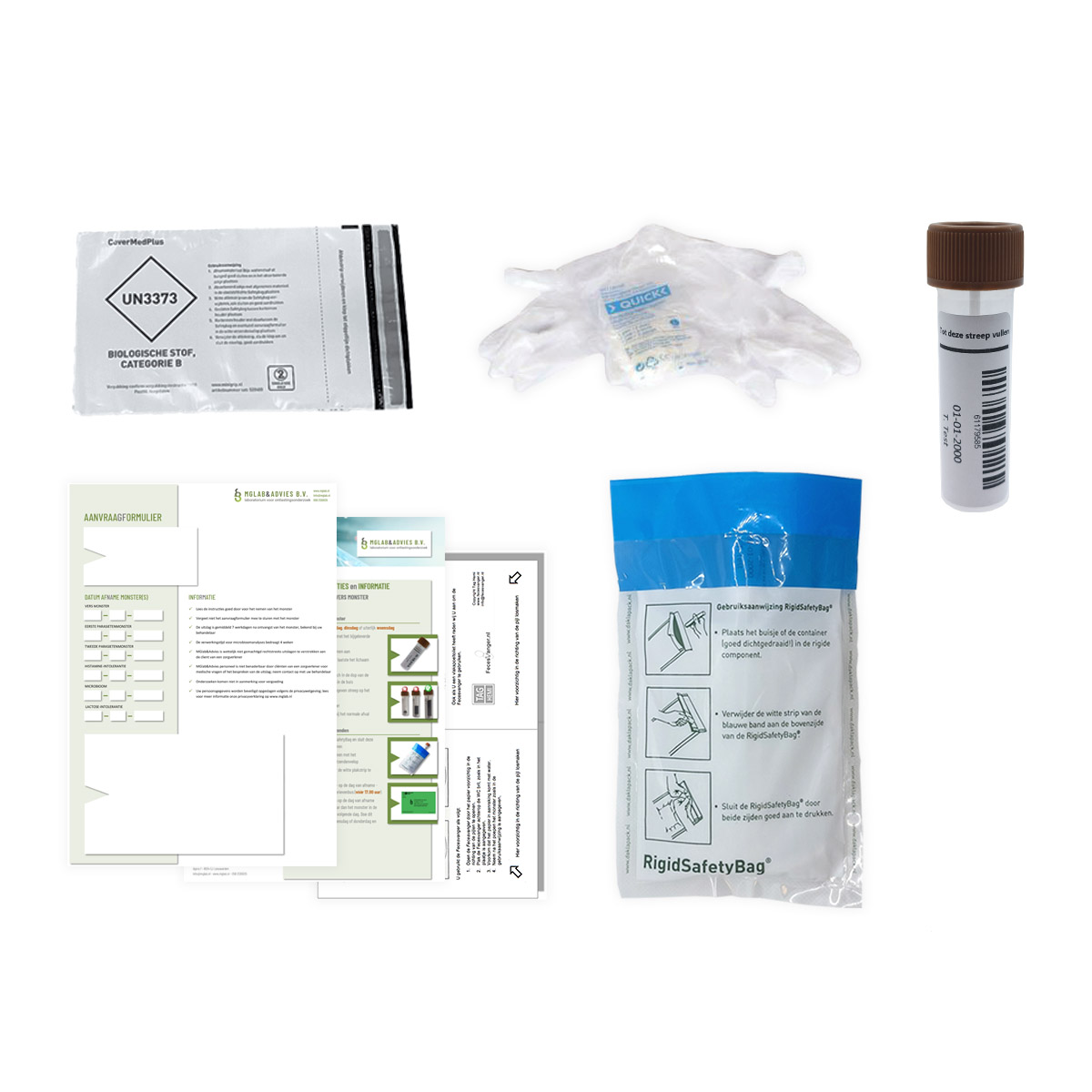
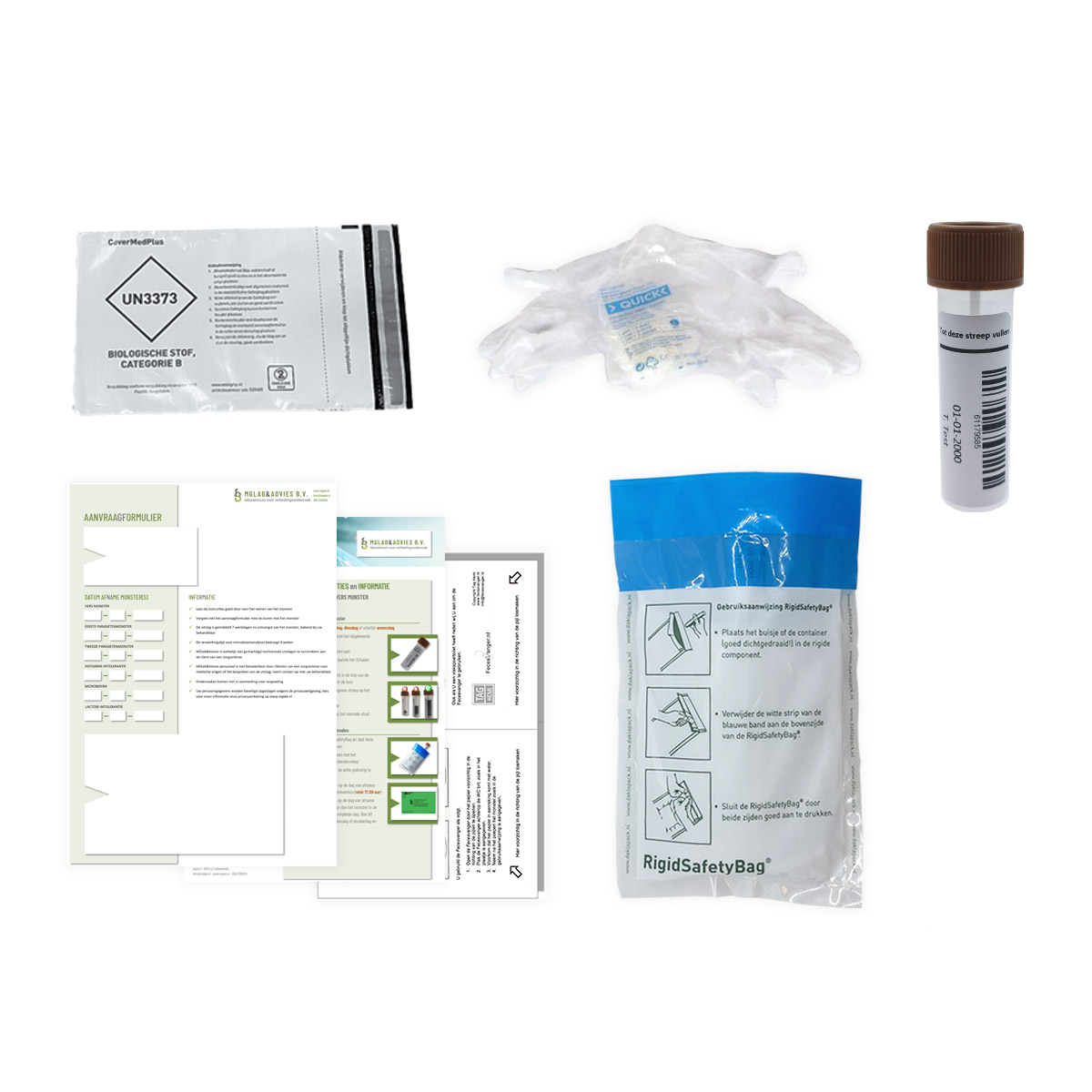
We recommend the following tests:
- Sale

 +
+Gut flora & Inflammation package
Original price was: € 226,00.€ 200,00Current price is: € 200,00. meer informatie




Benefits of stool testing
Extensive intestinal testing can detect colon cancer at an early stage. This also makes it possible to begin treatment sooner. The advantage of requesting several stool tests is that this is more sensitive, making it possible to identify an abnormality sooner. These tests can also detect intestinal inflammation. The tests should be regarded as a preliminary selection. When values are elevated, there is a much greater chance that abnormalities are present that can be identified by endoscopy or colonoscopy. Stool testing is non-invasive and has no complications. In addition, the test is not expensive.
Colonoscopy
During a colonoscopy, the doctor examines the lining of the large intestine. This procedure is not without risk. One serious complication occurs per 500 examinations. A tear or hole can develop in the intestinal wall during the examination; this is known as a perforation. The risk of perforation is greater when the intestine is inflamed, and this can have serious and sometimes even fatal consequences.
Risk factors that contribute to the development of colon cancer
People who are overweight and people who smoke have an increased risk of colon cancer. Certain groups have a higher risk, particularly when colon cancer occurs in the family. The likelihood of developing colon cancer is 15% higher if one of the parents has had colon cancer. Regular check-ups are then important. There are also several other situations associated with an increased risk of colon cancer:
- A high acidity value (pH) of the stool.
- Chronic dental inflammation. Harmful bacteria in the mouth can enter the intestine.
- People with type 2 diabetes have a 10-times greater risk of colon cancer than people without type 2 diabetes. One in one hundred people with type 2 diabetes has malignant conditions of the large intestine.
- Lack of exercise.
- Alcohol abuse.
- High sugar consumption.
- Consumption of the wrong fats and too much meat. It has been shown that frequent consumption of meat and foods high in fat, particularly trans fats and animal fats, increases the risk of colon cancer. Consumption of such foods can cause an increase in bile-resistant bacteria such as Alistipes.
Whether eating meat actually increases the risk of colon cancer cannot be fully proven. This is because people who eat meat often also eat fewer vegetables than vegetarians and people who do not eat meat but do eat fish. People who eat meat also generally consume more alcohol.
Treatment of colon cancer
In cases of gastrointestinal complaints or blood loss, polyps are often observed during a colonoscopy. These are removed. This is done by placing a loop of metal wire around the polyp and then cutting it off. Removal of polyps is called polypectomy. Removing a piece of intestinal tissue is called a biopsy. The piece of intestinal tissue (biopsy sample) is then examined under a microscope. If cancer cells are found, surgery follows in which, if possible, part of the large intestine is removed. Whether this is possible depends on the stage of the colon cancer, the patient’s age and the patient’s health. In some cases, additional chemotherapy is required.
Prevention
A fibre-rich diet, green vegetables (which have a high folic-acid content) and B vitamins play a protective role against colon cancer. The number of cases of colon cancer has increased over the years, particularly among people who follow a low-fibre diet. The following is recommended to help prevent colon cancer:
- Frequent consumption of oily fish.
- Eating a fibre-rich diet.
- Consumption of vegetables. This lowers the acidity of the stool.
- Consumption of green vegetables because of their folic-acid content.
- Consumption of Brussels sprouts and broccoli. These inhibit the growth of cancer cells. Other types of cabbage do this as well, but to a lesser extent.
- Calcium intake. Calcium inhibits harmful bile substances and has a preventive effect against cancer cells in the intestine and rectum. An intake of 1200 mg of calcium per day is recommended. Green vegetables contain 1200 mg per kilogram.
- Use of spices such as turmeric.
- Intake of Lactobacillus GG (LGG).
- Low consumption of grains and starchy products.
The advice is to limit starch intake and to eat a large salad containing plenty of leafy vegetables at lunchtime, eat fish and use organically grown products.
About Darmklachten.nl
Darmklachten.nl is an initiative of MGlab&Advies, a laboratory specialising in stool testing. …read more