
What you need to know about acute diarrhoea
Every year, millions of people worldwide experience a period of diarrhoea. Diarrhoea is loose, unformed stool that may occur several times to as many as 20 times a day. With diarrhoea, it is often difficult to hold in the stool. There are two forms of diarrhoea: acute and chronic. With the first form, the symptoms resolve on their own within a few days; chronic diarrhoea lasts longer than three weeks. The stool may contain mucus or blood, may sometimes be watery, or may alternate with normally formed stools or constipation. Acute diarrhoea is often caused by a bacterium, virus or single-celled parasites, although other causes are also possible. In the case of travellers’ diarrhoea or diarrhoea caused by food poisoning, symptoms usually occur within eight hours and are accompanied by complaints such as malaise, vomiting, headache or fever. Sometimes several people in the same environment are infected.
When acute diarrhoea occurs, treatment is often not necessary because the symptoms disappear on their own after a few days. If the cause is a bacterium or parasite, medication may be prescribed in some cases. Treatment of a bacterial infection often focuses on preventing complications such as dehydration.
 Risk factors for acute diarrhoea
In most cases, infection with bacteria, viruses or single-celled parasites occurs by eating contaminated food or through direct contact with infected people and animals. Food can contain parasites through contact with the hands of an infected person, while swimming water can also contain the parasite Giarda lamblia. Millions of international travellers experience intestinal symptoms known as ‘travellers’ diarrhoea’ each year. The risk of infection is increased in certain areas of Central and South America, Mexico, Africa and the Middle East. Most of Asia, as well as Eastern Europe and the Caribbean islands, also pose a risk. Other risk factors include places such as nursery schools, where viral infections can spread quickly. Young adults are often infected more readily, possibly due to poorer hygiene and lower immunity. Other groups susceptible to infection include people with weakened immune systems, diabetes or inflammatory bowel disease. People who use acid-suppressing medication are less protected because stomach acid kills bacteria.
Symptoms of acute diarrhoea
- Watery or loose stools
- Abdominal pain and cramps
- Nausea
- Sometimes blood, pus or mucus in the stool
- Fever, headache, exhaustion and dehydration may occur
- With dehydration there may be thirst, a dry mouth and skin, little urination and dark urine; dizziness or light-headedness may occur.
Tests for acute diarrhoea
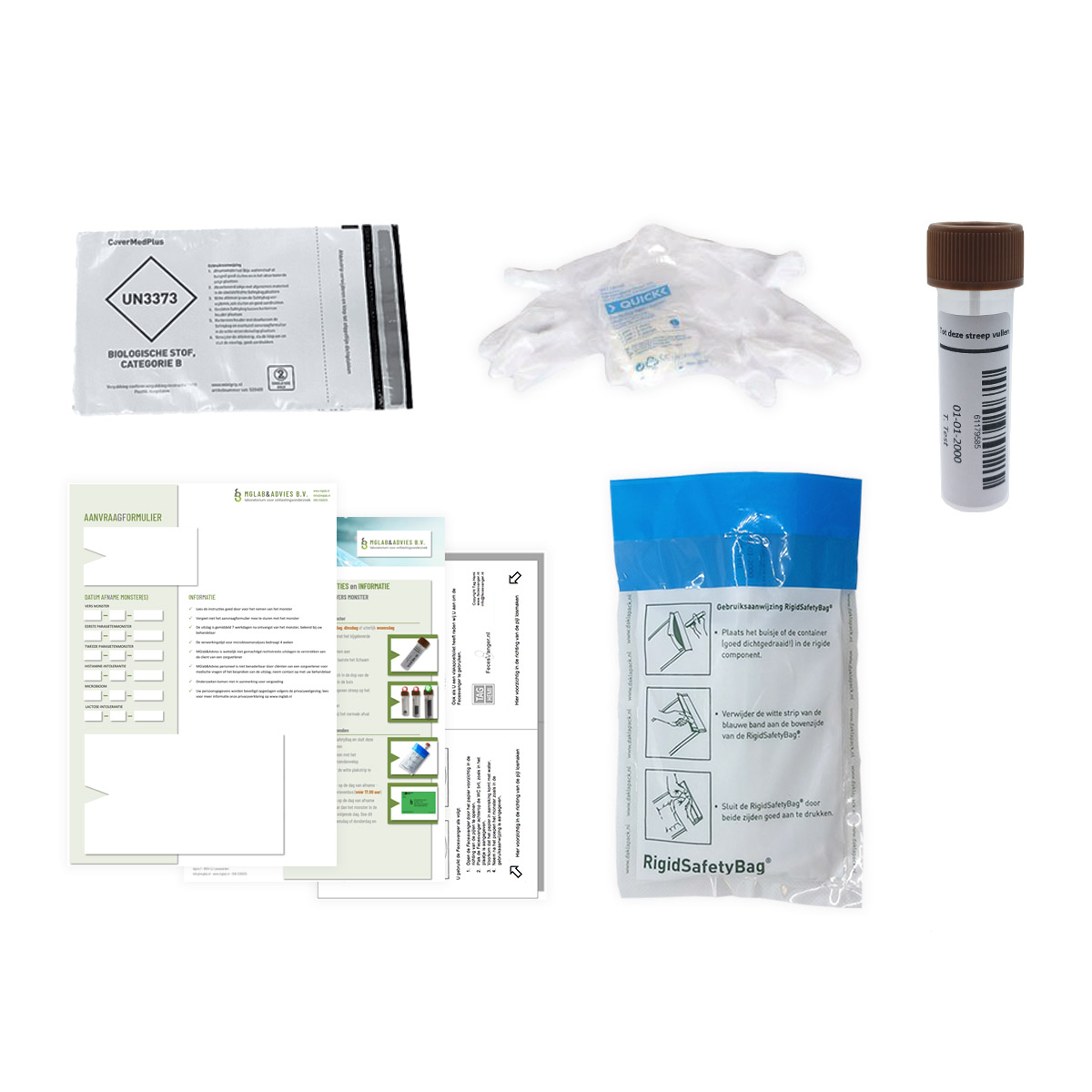
In cases of acute diarrhoea, stool testing via Darmklachten.nl may help. See our recommended test packages and individual modules below.



Causes of acute diarrhoea
Bacterial infection:
With a bacterial infection, symptoms usually resolve on their own after several days to a week. Some adults may be left with chronic intestinal symptoms. In some cases, eye inflammation, pain when urinating or weight disorders (reactive arthritis) occur, and these symptoms may persist for weeks or even years. Important causes of acute diarrhoea include the bacteria:
- Campylobacter jejuni
- Shigella spp.
- Salmonella spp,
- Yersinia enterocolitica
- Klebsiella spp.
- Clostridioides difficile
Parasitic infection:
Infection of the small intestine with the single-celled parasites Giardia lamblia and Cryptosporidium spp. regularly causes sudden severe diarrhoea. The symptoms do not appear until several days later and are not related to food, although they may sometimes be related to water.
Viral infection:
Rotavirus infection is the most common cause of (severe) acute diarrhoea. The virus is transmitted via the stool of an infected person. Of children admitted to hospital with diarrhoea, 37% test positive for rotavirus. Norovirus is a group of viruses that ranks second; most norovirus infections are mild. Adenoviruses cause acute diarrhoea and mainly infect young children. A large number of children who attend day-care centres become infected there. In most cases, no testing is performed because the symptoms disappear on their own within a short period. Severe diarrhoea can lead to dehydration, especially in young children and older people.
More information about the tests
- Giardia lamblia – Small-intestinal parasite – read more…
- Cryptosporidium spp. – Small-intestinal parasite – read more…
- Bacterial infection with Salmonella, Campylobacter, Shigella, Yersinia and Clostridioides diffile – read more…
About darmklachten.nl
Darmklachten.nl is an initiative of MGlab&Advies, a laboratory specialising in stool testing. …read more